

Born in Israel, Branded 'Illegal': Heartbreak of 43 Filipino Youths Taking Court Action To Fight for IDF
Israeli-raised 20-year-olds challenge state policy branding them illegal residents
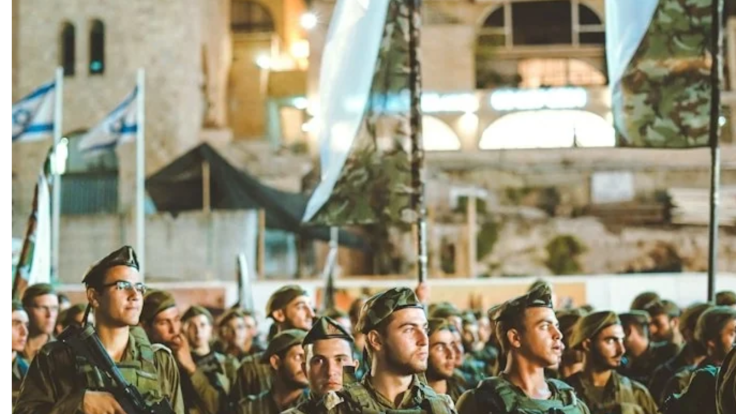
Forty-three young people born in Israel to Filipino migrant workers have mounted a constitutional challenge before the Supreme Court, demanding the formal right to enlist in the Israel Defence Forces.
Sitting as the High Court of Justice in Jerusalem, the tribunal is being urged by the group to overturn a rigid military recruitment bar that treats individuals educated entirely in Hebrew schools as unauthorised migrants.
The petitioners, including several 20-year-olds who have completed state secondary schooling, argue that statutory defence provisions permit the recruitment of customary residents regardless of naturalised citizenship status.
However, the State Attorney's Office has firmly resisted the move, formally categorising the applicants as individuals residing in Israel illegally whilst petitioning justices to freeze proceedings until a new coalition government takes office following upcoming general elections.
The domestic legal showdown surfaces amidst fierce scrutiny on social media, where the bid to join the Israeli armed forces has provoked polarised reactions against the backdrop of provisional orders issued by the International Court of Justice in The Hague regarding military operations across the Gaza Strip.
Born In Israel, Barred From Its Army
The young people were born in Israel to parents who came from the Philippines as migrant workers, Ynet reported on 2 November. Four of them, all 20, spoke to the outlet: John Ray Dalisay, Moliv Vicente, Mariel Aya Ay and Rain Arfon.
All four finished high school some time ago. Without recognised status, they cannot receive draft notices, Ynet reported, and those who graduated in recent years live in Israel without legal standing.
Children born to migrant workers in earlier years were granted legal status under a series of government decisions, Ynet reported. Those born around 20 years ago missed out, and repeated attempts during the outgoing government's term to fix their status failed.
Born in Israel, barred from IDF service: 43 young people fight to enlist
— Ynet Global (@ynetnews) November 2, 2026
'There are enough of us to form an entire company': Children of Filipino migrant workers who grew up in Israel want to enlist in the military, but despite a w...https://t.co/rQ1pNXCQFS pic.twitter.com/8U2UjsrvU0
In 2006 and 2010, Israeli authorities granted permanent visas to nearly 5,000 people, Sigal Rozen of the Hotline for Refugees and Migrants told AFP in 2019. At the time, about 28,000 Filipinos lived in Israel, many working as caregivers and domestic helpers.
In 2019, members of 36 families, 24 of them Filipino, were arrested and told to leave the country, the Inquirer reported. Children who had never set foot in the Philippines faced expulsion.
'I was born here,' 11-year-old Sivan Noel said at the time, calling the situation 'really unfair'. 'There are enough of us to form an entire company,' Dalisay told Ynet, referring to the military unit.
A Petition to the High Court
In late 2025, the four joined about 40 others in a petition to Israel's Supreme Court, sitting as the High Court of Justice. Lawyers Zari Hazan, Meital Lupolianski and Dror Strum filed it on behalf of 43 people.
This time, the group turned to the Defence Ministry instead of the Interior Ministry. Their argument rests on the Defence Service Law, which refers to 'permanent residents and persons ordinarily residing' in Israel as eligible to serve.
The petitioners say that wording allows recruitment regardless of citizenship. Current IDF policy, however, limits enlistment to citizens and permanent residents whose status has been recognised, according to Ynet.
Dalisay said he had hoped to enlist in March. He described the wait as a waste of time but said his motivation remains strong, telling Ynet that 'every postponement gives me more determination'.
State Says They Live in Israel 'Illegally'
In October, the State Attorney's Office responded on behalf of the Defence Ministry and the Population and Immigration Authority. It described the group as 'individuals residing in Israel illegally who are not entitled to any legal status in the country.'
The state argued that the question must be settled by political leaders and asked the court to wait until a new government is formed. It pointed to the election period, the issue's sensitivity, and the absence of a serving interior minister.
The young people fear the delay pushes their futures further out of reach. 'It's really close to the elections. We don't know what will happen by then. We just hope they'll address our situation,' Vicente said.
Dalisay said both sides would benefit if they were allowed to serve. He told Ynet it feels as though the issue is simply being handed to the next government.
Online Fury Over 'Right To Commit Genocide'
The story prompted a sharply different reaction online. When Ynet shared it on X, one user quoted the post with a scathing verdict: 'Fighting for their right to commit genocide, can you get any more pathetic and any more reprehensible than that.'
fighting for their right to commit genocide, can you get any more pathetic and any more reprehensible than that https://t.co/WzKh0jRLs8
— Alkaline Stingray 碱性魔鬼鱼 (@WingdingsPerson) November 3, 2026
That reply had been viewed more than 7,000 times as of Tuesday 3 November. It is one user's opinion and does not establish the motives or views of the 43 petitioners, but it reflects the anger Israel's military campaign in Gaza has stirred around the world.
South Africa brought a case against Israel at the International Court of Justice in December 2023, alleging violations of the Genocide Convention in Gaza. The court has issued provisional measures, which are not a final ruling that Israel committed genocide. Israel strongly rejects the accusation and says its military operations target Hamas, not civilians.
None of the 43 has served in the IDF. Their petition asks for one thing: the right to enlist in the army of the country where they were born.
For now, their status hangs on a court the state has asked to defer its decision, and on a government that has yet to be formed. Until then, they remain what the state calls them: residents without status in the country where they were born.
© Copyright IBTimes 2026. All rights reserved.