JD Vance Silently Rebels Over Trump AI Image Comparing Himself to Jesus Christ as Religious Backlash Explodes
The Catholic vice president drew a firm line between his boss and the Son of God — even as Trump doubled down on the divine imagery
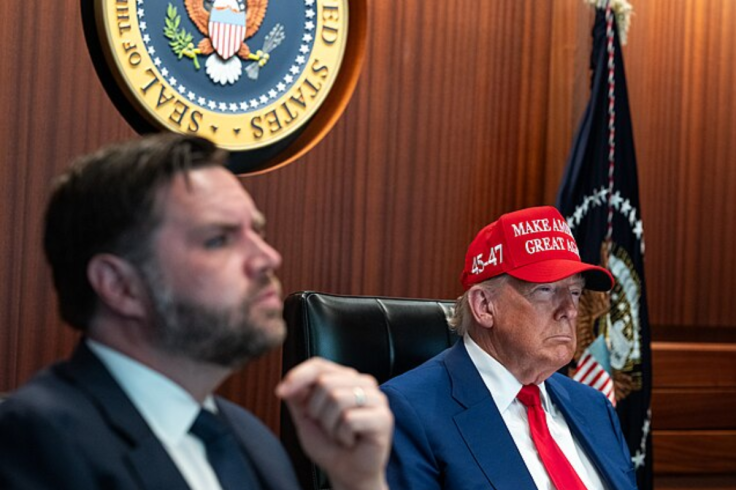
Vice President JD Vance quietly but unmistakably broke with Donald Trump after the president posted, then deleted, an AI-generated image depicting himself as Jesus Christ, igniting one of the sharpest religious controversies of the administration's second term and jolting the religious right.
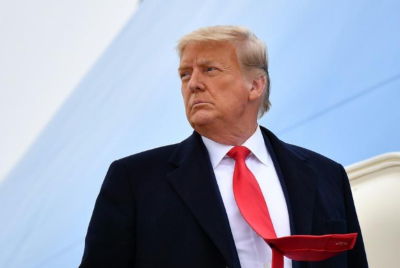
The incident began on Sunday, 13 April 2026, when Trump's Truth Social account published an AI-generated image showing him in a white robe, suffused in divine light, placing his hand over a bedridden patient as a nurse, a soldier and a praying woman looked on in apparent reverence. American flags, bald eagles, the Statue of Liberty and fighter jets adorned the background. A shadowy, demonic-looking figure lurked in the corner. The post arrived on Orthodox Easter Sunday, and in the middle of a very public feud Trump had ignited with the newly elected Pope Leo XIV, the Chicago-born pontiff he had branded 'WEAK on Crime, and terrible for Foreign Policy' in a 334-word Truth Social tirade.
Vance Draws A Line In The Sand
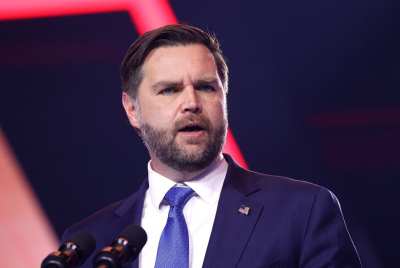
By Tuesday, 27 May 2026, Vance sat down with NBC News for a wide-ranging interview touching on faith, Iran and his forthcoming memoir, Communion, about his personal journey to Catholicism. The conversation took a pointed turn when the vice president was asked whether he saw parallels between Trump and the mysterious 'stranger' in a parable by philosopher Basil Mitchell, a work Vance has repeatedly cited as formative in his own religious thinking.
In Mitchell's parable, a partisan places absolute trust in a stranger he believes is 'on our side', even when evidence sometimes seems to contradict that faith. The stranger is widely understood to represent God or Jesus. Vance has invoked the parable to explain his own evolving belief, and NBC News pressed him on whether Trump fit the same mould.
He refused. 'I am certainly not going to compare the stranger in the parable who ultimately is Jesus to the president of the United States, as much as I love the president,' Vance told NBC News on Tuesday.
Vance attempted to redirect the question, acknowledging that Trump's supporters had developed a kind of political faith in the president's methods. 'I guess people on the internet call it "trust the plan," right?' he said. 'There are plan-trusters out there, and I think that's important, because to get anything done, sometimes it takes a long time, and sometimes it takes patience.'
JUST IN: 🇺🇸 President Trump posts image portraying himself as Jesus Christ. pic.twitter.com/utqhVoLgQ8
— Remarks (@remarks) April 13, 2026
A Post That Shook The Religious Right
The original Truth Social post landed with immediate force. Trump deleted it on Monday, 14 April 2026, but not before it had spread widely and provoked an unusually sharp backlash from within his own coalition.
Illinois Bishop John Paprocki issued a formal statement on Facebook, calling the image 'deeply offensive to Catholics especially during this sacred time'. 'President Trump owes an apology to Catholics and all people of good will,' Paprocki wrote. The New York State Catholic Conference, the public policy arm of the state's Catholic bishops, released its own statement on X, instructing simply: 'Do not mock us.'
Trump's Defiant Response And The Vatican's Rebuff
Trump did not apologise. Speaking to reporters at the White House on Monday, he denied the image depicted him as Christ at all. 'I did post it, and I thought it was me as a doctor,' Trump told reporters, according to CNN's chief White House correspondent Kaitlan Collins, who was present. 'Had to do with the Red Cross as a Red Cross worker, which we support. And only the fake news could come up with that one.' He added: 'I do make people better. I make people a lot better.'
Trump then doubled down, sharing a second AI-generated image on Truth Social depicting himself as 'the chosen one', captioning it: 'The Radical Left Lunatics might not like this, but I think it is quite nice!!!!'
Pope Leo XIV, en route to Algiers when asked about the escalating row, was measured but direct. 'I don't want to get into a debate with him,' the pontiff said of Trump, before adding: 'I have no fear of the Trump administration.'
The timing of Trump's post was not incidental. Relations between the White House and the Vatican had already deteriorated sharply. Leo had publicly criticised the administration's prosecution of the war in Iran, a conflict Trump viewed as a foreign-policy triumph. The Jesus post appeared to many observers as an act of deliberate provocation, posted hours after Trump's broadside against the Holy See.
The Radical Left Lunatics might not like this, but I think it is quite nice!!! President DJT
— Commentary Donald J Trump Truth Social Posts On X (@TrumpTruthOnX) April 15, 2026
(TS: 15 Apr 08:34 ET) pic.twitter.com/t86zAuMOk0
Vance, Catholicism And The 2028 Question
Vance's measured distance from the Jesus controversy carries weight beyond the immediate political moment. He converted to Catholicism in 2019 at age 35 and has described the faith as central to his worldview. He is currently writing Communion, a memoir about his faith journey due out in June 2026. In the same NBC News interview, he praised Pope Leo's first encyclical, Magnifica Humanitas, on human dignity and artificial intelligence, as 'very profound, and the sort of thing that you would expect and hope from a leader of the Church.'
The vice president has frequently found himself caught between his Catholic faith and the administration's policies. He has clashed publicly with Vatican authorities over the Trump administration's immigration agenda, which prominent Catholic advocates argue contravenes core Christian teaching on the dignity of migrants. Earlier this year, he also delivered a tribute to the late conservative activist Charlie Kirk, telling the assembled crowd he had 'talked more about Jesus Christ in the past two weeks than I have my entire time in public life.'
With 2028 presidential speculation intensifying, Vance's refusal to conflate Trump with the divine is not merely a theological position, it is a political one. Whatever faith coalition he intends to build must be able to withstand a question his boss has now made unavoidable.
In drawing a careful line between Donald Trump and the Son of God, JD Vance has made clear that, for him at least, there are limits to loyalty, and they begin at Calvary.
© Copyright IBTimes 2026. All rights reserved.
- Recommended For You