

Khalil Ismail's Bet: Neural Interfaces Will Become Objects of Desire
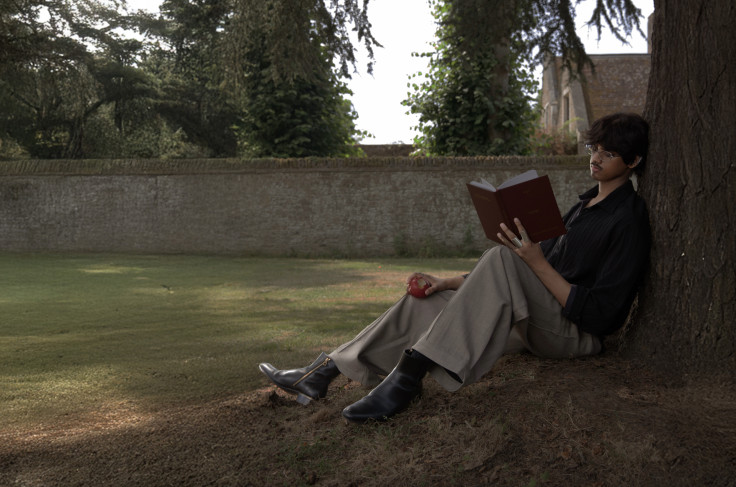
Long before Voyage became Khalil Ismail's Maison for Mind Computing, there was a child looking at an iPhone and refusing to treat it like an ordinary object. TouchID had just arrived, and what fascinated him was not convenience. It was recognition. A sheet of glass could sense a person. A device could respond to identity.
"I remember thinking, this thing knows who I am," Ismail says. "That felt magical to me. It was not just authentication. It was personhood becoming part of an interface."
That early fixation became a throughline. By about age 9, Ismail knew he wanted to build technology that made people feel seen. The phrase sounds funny until the rest of his story is known. His version of being seen was technical, material, embodied, and deeply concerned with how objects make people feel about themselves.
At 16, he designed and built a new kind of wheelchair from scratch. The project received a national innovation award at Buckingham Palace, but the more revealing part was the motive behind it. Ismail was not trying to make a medical device look less bad. He was thinking about status, dignity, and the way an object can either reinforce stigma or quietly fight it.
"I hated the assumption that assistive technology had to look apologetic," he says. "Even then, I was thinking about technology as something that could carry pride."
That instinct now sits at the center of Voyage. The company is developing a new field it calls Mind Computing, with a long-term focus on non-invasive neural interfaces. Yet Ismail does not talk like a founder trying to squeeze the mind into the next gadget category. He talks like someone who has spent years circling one question from every possible direction: what makes a person willing to let technology come close?
His answer did not come from one field. It came from moving between several and never fully accepting the borders around any of them.
Ismail studied design and engineering, later pursuing work through Imperial College London and the Royal College of Art. He describes those years as a collision of rooms, disciplines, and temperaments. Engineers, physicists, biologists, sculptors, painters, and designers forced him to rethink what adoptable technology actually requires. Function mattered. So did material intelligence. So did the quiet, irrational feeling that makes one object desirable and another forgettable.
"At RCA and Imperial, I started to understand that adoption is not a final polish you add to technology," he says. "Through fashion design projects at RCA, I began thinking more seriously about taste, identity, and the cultural life of objects." Those projects also led to conversations connected to Louis Vuitton. Before Voyage, Ismail also moved through some of the most influential environments in consumer technology and research. He worked at Apple in spatial computing, where he was involved in software engineering and interaction architecture. He later joined Microsoft AI in product management, working on new intelligent surfaces. He collaborated with Snap Inc. on wearable computing prototypes. He conducted research at MIT Media Lab on neural interfaces and memory augmentation during sleep, while also working at Harvard on AI interpretability, pedagogy, and multimodality.
He was also recognized and inducted through the Royal Academy of Engineering and the Royal Commission for the Exhibition of 1851, the institution behind the Great Exhibition. For Ismail, the connection mattered because the South Kensington world has long treated design and engineering as a combined endeavor. He also had dinner with HRH The Princess Royal, president of the commission, and spoke with her about neural interfacing.
It would be easy to flatten that into a résumé. Ismail resists that kind of reading. For him, the value was not the sequence of institutions. It was the discomfort of realizing that none of them, alone, could answer the problem he cared about.
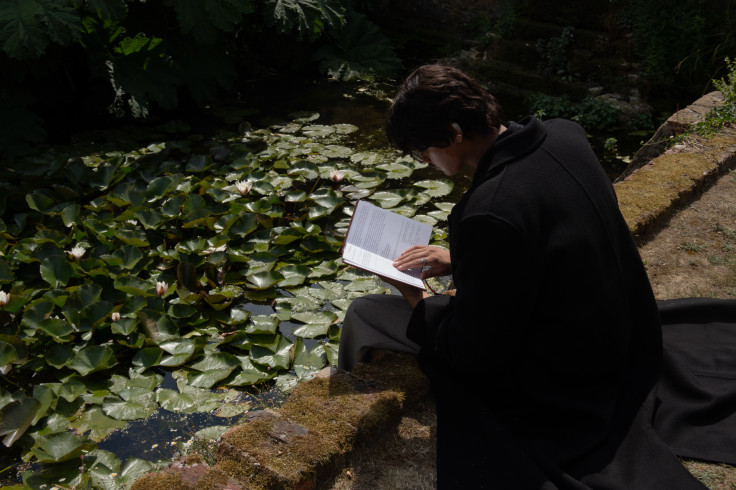
"Big tech taught me a lot, but it did not feed my soul," he says. "Research gave me depth, but the field could feel trapped inside its own assumptions. Art school cracked something open. It made the adoption problem feel as serious as the technical problem."
That adoption problem became sharper during his time in Cambridge, Massachusetts. Ismail moved between MIT and Harvard, often running from one campus to the other or catching power naps on the T. In one world, he was studying neural interfaces, memory, computational neuroscience, and the brain as a measurable system. In another, he was thinking about AI, learning, interpretation, and multimodal systems. The thesis that became Voyage began to form in the space between them.
He saw a field obsessed with signal quality, lab constraints, clinical pathways, and technical proof. Those were important, but they did not explain how neural interfaces could become part of everyday life. They did not explain why someone would wear one consistently enough to create meaningful data in real-world contexts. They did not explain trust.
Most of the field, as Ismail saw it, was looking bottom-up from sensors, signals, and technical constraints. He was also looking top-down from the human embrace of such a device. Before a neural interface could become part of daily life, someone had to want it close enough to the body and intimate enough to matter.
"The missing layer was desire," Ismail says. "Not desire as marketing gloss, but desire as the human reason the object exists in someone's life. Without that, the technology never gets close enough to understand real context."
His path into neuroscience was not conventional either. Before neural data, there was language. Ismail wrote stories as a child, then became captivated by poetry around age 12. He wanted to know why a few lines could shift his internal state so powerfully. That curiosity led him from linguistics and etymology into cognition, behavior, and eventually neuroscience.
"Poetry was the first thing that made me ask what was happening inside the mind," he says. "How could a string of words create a physical feeling? That question never left me."
After Cambridge, he returned to London with the sense that his life had narrowed in the best possible way. He continued building prototypes in his apartment and refining the philosophy behind Voyage. He audited neuroscience lectures at Imperial and spent time in jewelry workshops at the Royal College of Art, trying to understand how deep technology and adornment could meet without reducing either one.
A small fund from Boston eventually reached out. Ismail was not actively seeking capital, but one conversation led the investors to fly to London that same evening. They spent hours in his apartment, looking at equations and neural diagrams written across glass windows. Soon after, he accepted his first institutional funding as a solo founder.
The early team came together in a way that matched the company's nature. Ivan Bokarev was introduced to Ismail while temporarily homeless in London. Ismail gave him a couch to sleep on. A walk through Hyde Park, expected to be a technical discussion, turned into a three-hour philosophical debate. Ismail hired him immediately.
"I knew within that conversation," he says. "We were not just solving engineering problems. We were trying to understand what kind of human future would make the engineering worth doing."
Bokarev later introduced Hiteyjit Singh Gujral. Ismail recognized the same restlessness in him. When Gujral described himself as a neuroscientist who disliked neuroscience, Ismail heard not cynicism, but refusal. That mattered. Voyage was being built for people willing to question the shape of the field itself.
Today, Ismail has language for the instinct that followed him through those rooms: designer, engineer, philosopher, builder. Voyage gives that instinct a home and, in his language, a maison for the mind.
The company is not trying to position neural interfaces as medical equipment disguised for consumers, or as science fiction dressed in luxury language. It is trying to create a cultural and technical home for a more intimate interface with intelligent systems.
For Ismail, the goal is not to make machines more human. It is to make technology better at preserving what is human.
"I do not want AI to become another character in my life. I do not think of AI as a friend. It is a tool," he says. "I want it to become an extension of intent, something that helps me think, create, and stay present without taking agency away."
That is why Voyage begins, in his telling, from the inside out. From thought to form. From feeling to signal. From poetry to engineering. From the mind to the object that may one day help express it.
Khalil Ismail's story is of someone who has been building toward the same problem since childhood, even before he had the language for it. The object changed. The fields changed. The institutions changed.
The question that began with a fingerprint on glass has become the question behind Voyage: what would technology look like if it were built to recognize not only what a person wants to do, but how deeply they want to remain themselves?
© Copyright IBTimes 2026. All rights reserved.