

From War Boss to Trump's Beggar? Netanyahu's Desperate Iran Plea Exposes a Stunning Power Shift
Netanyahu is invoking Iran to push for a unity government, but Eisenkot refuses to offer him a political lifeline
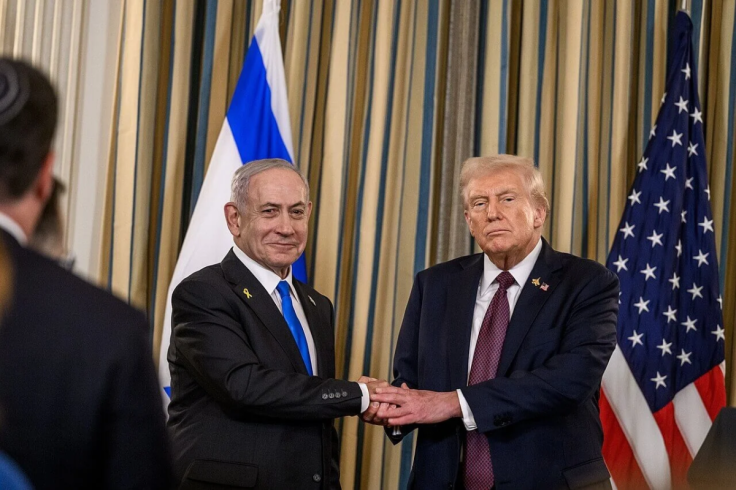
Benjamin Netanyahu is reaching across Israel's political divide with an increasingly urgent appeal for unity. But the man he needs most, opposition leader Gadi Eisenkot, is refusing to let the prime minister turn a national security argument into a political lifeline.
In a video statement on 14 November, Netanyahu urged Eisenkot to enter negotiations 'without preconditions', arguing that Israel needs a broad government to confront what he described as an existential threat from Iran.
🚨🇮🇷🇮🇱 Netanyahu is calling on his biggest political rival to JOIN FORCES against Iran, warning that Tehran is rebuilding its nuclear program.
— Mario Nawfal (@MarioNawfal) November 14, 2026
And he wants to eliminate the threat “once and for all.”
Iran's leadership would not hesitate to use nuclear weapons against Israel. He…
He claimed Tehran was working to restore its nuclear programme and warned that a government dependent on Arab-led parties would be unable to protect Israel.
Eisenkot Rejects Netanyahu's Political Lifeline
Eisenkot dismissed the appeal as 'more spin', insisting that talks between their parties were already scheduled before Netanyahu released his video.
The confrontation exposes the central obstacle to a deal. Eisenkot has indicated that Likud lawmakers could join a unity government, but only under his leadership. A senior source in his political orbit was quoted as saying compromises were possible, 'but not on the matter of prime minister'.
🚨🇮🇱 ISRAEL | EISENKOT: NETANYAHU UNITY CALL IS "ANOTHER SPIN"
— Deeploomatic (@Deeploomatic) November 14, 2026
Netanyahu urged talks "without preconditions," warning Iran is reviving its nuclear program. Eisenkot said Yashar-Likud talks were already set for Sunday and dared Likud to back his Knesset speaker pick Tuesday.… pic.twitter.com/bzUwxcXCaB
Netanyahu's latest video did not explicitly say he must lead the proposed government. However, his previous appeals have included calls for unity under his leadership, leaving the question of who would occupy the prime minister's office at the heart of the negotiations.
Election Numbers Leave Israel in Political Deadlock
The parliamentary arithmetic makes the manoeuvring even more consequential. Netanyahu's bloc holds 53 seats in the 120-member Knesset, while Eisenkot's opposition alliance has 48. The two Arab-led factions, Ra'am and the Joint List, hold another 19 seats combined. None of the blocs has secured the 61 seats needed for a conventional majority.
President Isaac Herzog gave Eisenkot the first opportunity to form a government on 8 November, after 67 lawmakers recommended him, compared with 46 for Netanyahu. Those recommendations do not amount to an agreed coalition, however, and Eisenkot still faces difficult negotiations.
Ra'am Arrest Allegations Add Another Explosive Twist
A separate controversy has added another explosive dimension to the political crisis. Israel's Channel 12 reported allegations that Netanyahu's chief of staff, Ido Norden, supplied police with information that led to the election-day arrests of three men associated with Ra'am. The men were subsequently released after the information was reportedly found to be unfounded.
Netanyahu's office rejected claims of improper involvement, saying Norden had passed on information he received to police and threatening legal action over allegations of further involvement.
Channel 12 also reported that Shin Bet chief David Zini sought permission to wiretap five Arab lawmakers, but the attorney general's office rejected the request. These claims have not been independently established.
Eisenkot has called for an investigation, accusing Netanyahu and his associates of threatening Israeli democracy. Likud condemned his remarks as 'outrageous incitement'.
Netanyahu's Iran Push Adds International Pressure
The stakes extend beyond coalition arithmetic. The Financial Times has reported, citing a person briefed on the discussions, that Netanyahu has been calling US President Donald Trump daily to urge renewed military action against Iran. That account has not been publicly confirmed by either leader.
Eisenkot has until 6 December to form a government, with a possible extension to 20 December. If he fails, the political deadlock could give Netanyahu another opportunity.
For now, Netanyahu is asking for unity. Eisenkot is offering a possible place for Likud, but not for Netanyahu at the top. And that may prove to be the one compromise the prime minister cannot secure.
© Copyright IBTimes 2026. All rights reserved.