

Russian Oligarchs Fear Putin but Quietly Weigh Russia's Future as the Kremlin's Grip Still Holds
Russia's business elite remain dependent on Kremlin ties despite their vast fortunes, and face serious risks if they challenge the president
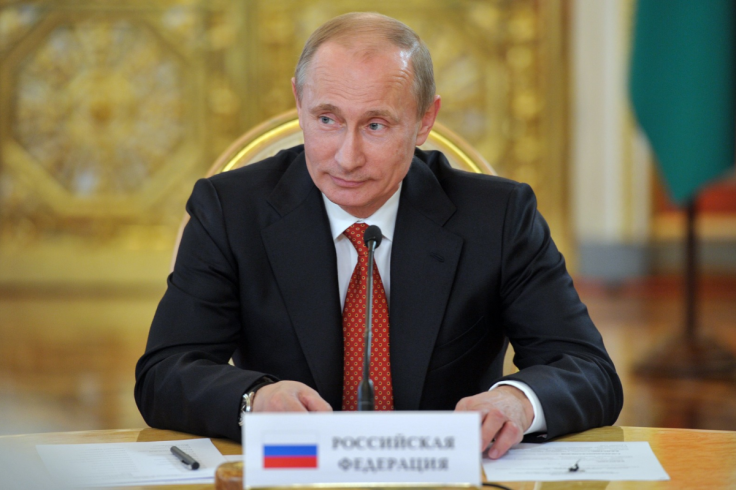
Russia's wealthiest businessmen have not organised opposition to Vladimir Putin, even as they privately consider what might follow him. Their fortunes have not given them independent political power, according to analysts and people who have interviewed them.
Forbes' 2026 billionaire ranking included 155 Russians, whose combined estimated wealth reached approximately $695.5 billion (£526.3 billion). Analysts say much of their influence still depends on their relationships with Putin and the Kremlin.
Putin has held power in Russia as president or prime minister since 1999. In a Reuters interview on 4 June 2026, he was asked whether he intended to remain in power until 2036. 'Only God knows if we have enough health,' he replied. He said it was too early to discuss whether he would run again in 2030.
If Putin resigned or died in office, Prime Minister Mikhail Mishustin would temporarily assume presidential duties under Russia's constitution. An early presidential election would have to be held within three months. Analysts cited in the reporting do not expect Mishustin to wield the same authority as Putin.
Melnichenko's Public Intervention
In July 2026, fertiliser magnate Andrey Melnichenko gave an interview to The Economist, discussing the war in Ukraine, Western security concerns and Russia's political future.
Melnichenko did not call for Putin to step down or openly condemn the invasion. He did argue for an end to one-man rule and for Russia to engage more closely with the world.
Ostrovsky, who interviewed him, described their conversations as involving 'tense and heated discussions'. He said he believed the businessman was thinking through his responses rather than delivering prepared statements.
It is unclear whether the Kremlin was aware of or approved the intervention. No other tycoons publicly joined him, while analysts say the risks of organising collective opposition remain substantial.
The Risks of Challenging the Kremlin
Those risks have a history. In 2003, oil magnate Mikhail Khodorkovsky, then Russia's richest man, publicly accused Putin of presiding over corruption. He was arrested later that year and subsequently convicted of economic offences, including fraud, tax evasion and embezzlement. He spent more than 10 years in detention before his release in December 2013. Khodorkovsky denied the charges, while critics described his prosecution as politically motivated.
On 24 February 2022, hours after launching the full-scale invasion of Ukraine, Putin summoned 37 of Russia's wealthiest businessmen to the Kremlin. In footage released by the Kremlin, they sat masked across a vast hall as he urged them to support the government, production, the economy and employment.
Since the invasion, the Kremlin has used a combination of rewards and penalties to maintain influence over the business elite. Some businessmen who criticised the war have faced asset seizures, while businesses aligned with the government have benefited from lucrative state contracts, according to the reporting.
Western sanctions have also restricted many Russian businessmen who have been sanctioned. Browder said those affected could no longer move freely with their private jets or moor their yachts in many European ports. He said oligarchs understood that challenging Putin could mean losing their assets or their freedom.
Prokopenko said some wealthy Russians had changed how they referred to Putin in private. Nicknames such as 'Nachalnik', meaning 'boss', or 'Perviy', meaning 'first', have given way in some cases to 'Ded', meaning 'granddad' or 'old man', a term she said carries a degree of contempt.
Scenarios After Putin
Analysts cited in the reporting identify three possibilities for Russia after Putin: a return to democracy, the emergence of another authoritarian leader, or a political system dominated by powerful business clans. They consider a democratic transition the least likely, given the weakening of democratic institutions under Putin.
© Copyright IBTimes 2026. All rights reserved.