

Former Oxford Philosopher Nick Bostrom Says AI Superintelligence Could Extend Human Lifespans to 1,400 Years
The former Oxford professor says his estimate assumes ageing deaths can be eliminated, but stresses it is hypothetical, with no clinical evidence
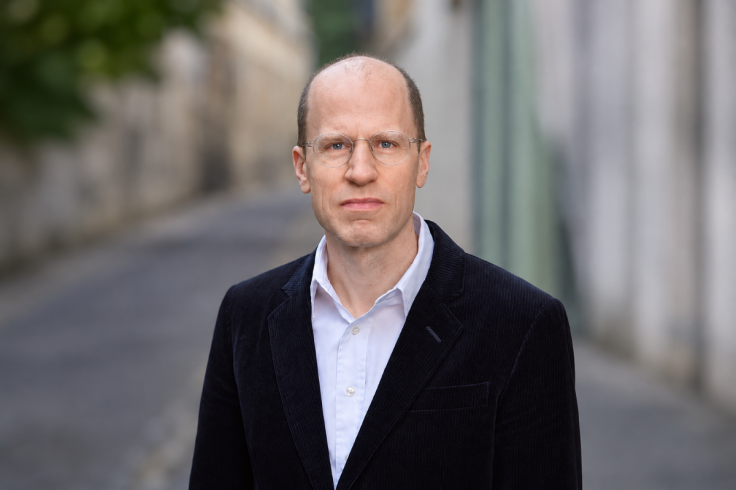
Former Oxford University professor Nick Bostrom has suggested that AI superintelligence could help extend human life expectancy to between 1,200 and 1,400 years. Speaking on The a16z Show, released on 19 November 2026, the philosopher discussed how advanced AI might help humanity overcome biological ageing.
The remarks followed his 2026 working paper, Optimal Timing for Superintelligence, which examines the competing risks of accelerating and delaying AI development. Bostrom argues that postponing technological advances could also delay medical discoveries capable of saving lives.
However, his estimate remains hypothetical. Neither the paper nor the interview presents clinical evidence demonstrating that humans could achieve such extraordinary longevity.
How Nick Bostrom Links AI Superintelligence to 1,400-Year Lifespans
Bostrom, the former founding director of Oxford University's Future of Humanity Institute, bases his estimate on a hypothetical reduction in mortality.
His working paper cites annual mortality rates of approximately 0.05 per cent to 0.08 per cent among healthy individuals aged 20 to 25 in developed countries.
Using 0.07 per cent as a constant annual mortality rate produces an expected remaining lifespan of approximately 1,400 years.
The crucial assumption is that the risk of dying would no longer increase as people grew older.
Individuals would still face dangers unrelated to biological ageing, including accidents and infectious diseases.
Speaking on The a16z Show, Bostrom suggested that safely developing superintelligence could accelerate biomedical discoveries and reduce other causes of premature death.
Discussing his estimated life expectancy of between 1,200 and 1,400 years, Bostrom added: 'And that maybe is a quite conservative lower bound.'
Nick Bostrom: superintelligence could let us live 1,400 years
— agim𓍯 (@aGim_asf) November 23, 2026
"Successfully developing safe superintelligence, I think, could lead to enormous breakthroughs in biomedicine and in anti-aging interventions that could radically extend the lifespan of currently existing people."… pic.twitter.com/kuKWJSl1a0
The distinction between life expectancy and maximum lifespan is important.
His calculation represents an average under hypothetical conditions rather than a guarantee that any individual would survive for fourteen centuries.
Among the possibilities discussed in his paper are regenerating neurons lost to Alzheimer's disease and developing targeted cancer treatments without the severe side effects of conventional chemotherapy.
These examples illustrate the kinds of medical advances Bostrom believes superintelligence might enable.
Why Nick Bostrom Believes Delaying AI Superintelligence Could Cost Lives
The prospect of substantially longer lives forms part of Bostrom's broader examination of when humanity should develop and deploy increasingly powerful AI systems.
His working paper considers catastrophic AI risks alongside the consequences of postponing medical breakthroughs.
Further safety research might reduce the likelihood of disaster, but waiting could also postpone treatments for potentially fatal illnesses.
Bostrom illustrates this dilemma through a medical analogy. A patient might postpone a risky operation while waiting for a safer procedure. However, the underlying illness would continue to threaten their health.
His mathematical models suggest that the preferred timing depends on the initial danger, the pace of safety improvements and the potential benefits of successful deployment.
The analysis focuses primarily on people who are already alive, rather than attempting to calculate the consequences for all possible future generations.
Bostrom also distinguishes between developing advanced AI capabilities and putting those systems into widespread use.
Under certain assumptions, his models favour accelerating development towards artificial general intelligence before temporarily delaying full deployment.
Such a pause could provide additional opportunities to address safety concerns without indefinitely postponing potential medical advances.
Bostrom's paper nevertheless warns that poorly implemented pauses could cause more harm than good.
© Copyright IBTimes 2026. All rights reserved.