

Republicans Redrew North Carolina District to Help Their Candidate Win, but Made It So Large Her Campaign Became Harder
The revised district covers 20 counties, creating a difficult travel challenge for Republican candidate Laurie Buckhout
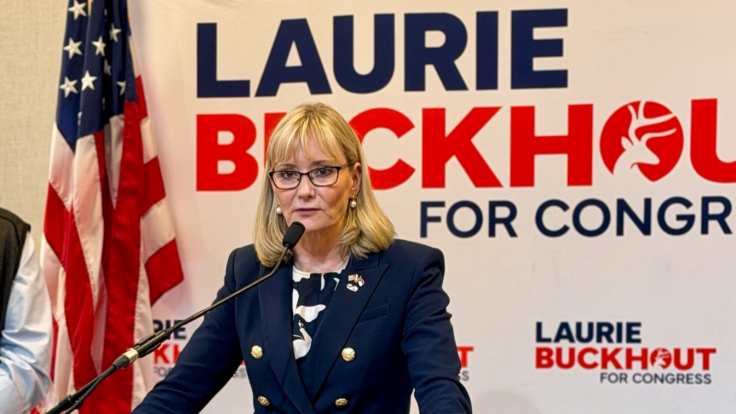
North Carolina Republicans redrew the First Congressional District to improve their party's chances of winning the seat, but the expanded boundaries have created an unexpected challenge for their candidate, Laurie Buckhout: reaching voters across a vast and geographically fragmented constituency.
The district now covers 20 counties, roughly a quarter of the state, according to Republican county commissioner Robert Thompson. Even though he supports Buckhout, Thompson questioned whether expanding the constituency was a sensible strategy.
'I'm not sure if that was a good idea or not,' he said, pointing to the difficulty of campaigning across such a large area.
The redistricting was intended to strengthen the Republican position in a competitive seat. However, the new boundaries have also made the practical business of meeting voters more demanding.
Why Republicans Changed the District Boundaries
North Carolina's Republican-controlled legislature enacted the revised congressional map on 22 October 2025, ahead of the 2026 midterm elections. The changes reshaped the First Congressional District, represented by Democrat Don Davis.
Davis defeated Buckhout by approximately 6,300 votes in 2024, despite Donald Trump narrowly carrying the district. Republicans subsequently altered its boundaries, removing heavily Democratic areas with substantial Black populations, including parts of Wilson County, and adding more Republican-leaning rural communities along the Virginia border and the coast.
The new map was designed to give Republicans a stronger electoral advantage. However, bringing together more distant communities also created a constituency that demands considerable travel from candidates seeking to establish a presence throughout the district.
Rural Geography Makes Campaigning More Difficult
Thompson, a Tyrrell County commissioner and Buckhout voter, said the district's size could work against the Republican candidate. 'Twenty counties. It's a quarter of the state. I'm not sure if that was a good idea or not ... It is a big area to cover. I think that's part of it,' he said.
The challenge is particularly apparent in coastal communities, where travel can depend on limited roads and ferry connections. On the Outer Banks, closures on Highway 12 and disrupted ferry services can turn relatively short journeys into lengthy trips.
Aida Havel, a local county commission candidate who lives on Hatteras Island, described a journey to Kill Devil Hills that took four hours after she encountered ferry and road disruption. The experience illustrates how difficult it can be to move between communities in the region. For congressional candidates, such distances can limit the time available for public meetings, local events, and face-to-face conversations with residents.
Davis Has Made More Reported Visits to the Outer Banks
The coastal area also highlights a difference in the candidates' reported campaign presence. Havel said Davis had visited the Outer Banks five times during the year. Buckhout, by comparison, had visited once, to Havel's knowledge, stopping in Rodanthe without travelling further south on Hatteras Island.
Havel said she welcomed being represented by Davis, adding that her previous representative, Republican Greg Murphy, had not visited Hatteras Island during the 11 years she had lived there. She said residents had struggled to attract attention when dealing with coastal property damage and disruption.
The Guardian reported that Buckhout's campaign did not respond to its repeated requests for comment, while Davis's campaign staff told the publication that the congressman was unavailable.
The figures reflect Havel's account rather than a complete record of either candidate's campaign activity. They nevertheless illustrate why visibility in remote communities could matter in a district with such a wide geographical reach.
A Partisan Advantage Comes With a Practical Cost
Advertising spending and reservations in the congressional contest have reached $52.9 million (approximately £40 million), making it the most expensive US House general election race of 2026. The figure includes adverts already aired and future bookings, rather than spending by the candidates' campaigns alone.
But money spent on advertising cannot remove the distances between communities or replace direct contact with voters.
Republicans may have reshaped the district to improve their electoral prospects, but the resulting geography presents Buckhout with a substantial organisational task. The map may change which voters determine the outcome, yet winning their support still requires candidates to reach them.
© Copyright IBTimes 2026. All rights reserved.