

'Ousted' Andrew Forced to 'Open His Own Front Door' After Humiliating Royal Lodge Eviction
Prince Andrew's midnight departure from Royal Lodge signals a fast Palace push for distance as reports suggest staff at Sandringham are refusing to work for him.
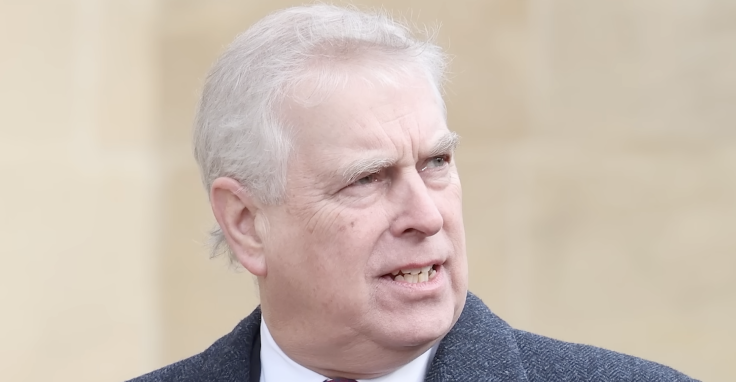
A little after midnight, the headlights slipped out of Windsor and pointed east, as if secrecy could still do some useful work.
Andrew Mountbatten-Windsor, formerly the Duke of York, now just a surname with a long echo, had left Royal Lodge, the 30-room residence he had called home for more than two decades, and done it early.
The BBC reported the move followed the latest release of Jeffrey Epstein files, an ugly drip-feed of association that Andrew denies, but which continues to stain the institution his family spends its life trying to protect.
The timing matters because it tells you what the Palace won't say out loud: when the story shifts, the monarchy moves. And when it moves, it moves fast—sometimes under the cover of darkness.
Andrew's immediate destination is Wood Farm Cottage, tucked within the Sandringham estate in Norfolk, a place with its own royal afterlife. It was where Prince Philip lived much of his retirement, away from the formalities and the constant choreography of public duty. In a different family, Wood Farm might read as pastoral consolation. Here, it feels more like enforced quiet, exile with good broadband and better security.

Andrew Windsor And The Royal Lodge Exit: No One Wants To Own
Buckingham Palace has been trying, for years now, to draw a line between Andrew and the rest of the Royal Family. The line keeps getting smudged. Reuters reported that a friend of Andrew's told The Sun it became 'evident' that Andrew had to leave after the latest Epstein documents, adding that the departure was 'so embarrassing' he chose to go 'under the cover of darkness.'
Embarrassment is an underrated engine of royal decision-making. It doesn't show up in constitutional textbooks, but it has a way of turning private discomfort into public action. The narrative is simple enough: a disgraced royal downsizes. Yet the detail doing the real work is not the number of rooms he's left behind, but the implied message—King Charles wants distance, and he wants it now.
Over the past week, there has been a spate of incidents where journalists have heckled members of the Royal Family during official engagements, seeking to confront them about the conduct of Andrew Mountbatten-Windsor.
— The Royalist Society (@theroyalistsuk) February 5, 2026
Members of the Royal Family are not responsible or… pic.twitter.com/UX6NEmKPAt
Andrew is expected to move again, to a smaller property on the same estate called Marsh Farm, once renovations are finished. People reported this is planned for around April, after a temporary stay at Wood Farm. Hello! has described the security work at Marsh Farm—CCTV, fencing, and adjustments to the Sandringham no-fly zone—practical measures that also underline the point: this is not a man simply 'moving house.'
Andrew Windsor And The Staff Who Would Rather Not Answer The Door
If there is a detail that captures Andrew's reduced standing with almost cruel neatness, it is this: he may have to open his own front door.
People reports that staff on the King's Sandringham estate are refusing to serve Andrew at his new base, citing The Sun's reporting that employees have been told they do not have to work for him if they feel uncomfortable—'There is already quite a list saying no thanks,' one source claimed. Another line, repeated in coverage, is even more cutting: 'There is understandably a lot of disquiet as he is now a total pariah.'

On paper, it's an HR footnote. In reality, it's a social verdict.
Palace households are built on discretion, loyalty and ritual. When staff decline to serve a family member, it is more than a workplace preference; it's a signal that the normal protections of rank no longer apply. The most startling thing about the reports is how openly they frame the refusal, as if everyone has quietly agreed that the old rules—deference, silence, smooth functioning—have limits.
There is also, sources claim, a strategic worry. If Andrew settles too comfortably at Wood Farm while Marsh Farm is finished, he might resist the next move. People quoting sources close to the situation, doubting that the family will be able to push him out of Wood Farm, which is described as a place he has long preferred—'rather than Marsh Farm.' That may sound like property gossip, but it hints at a larger tension: how do you manage a problem you cannot quite remove, only relocate?
What cannot be ignored, in all of this, is the odd inversion of royal life. A man born into near-unlimited service is now being defined by the prospect of doing something so small it's almost comic: answering his own door. The comedy is the point—and the punishment.
Buckingham Palace has not publicly commented on the reported move or Andrew's future living arrangements.
© Copyright IBTimes 2026. All rights reserved.