

Gov. Josh Shapiro's $15 Minimum Wage Plan Could Eliminate 78,345 Pennsylvania Jobs, Think Tank Warns
An estimate assumes an immediate Pennsylvania minimum wage increase and elimination of the separate tipped minimum wage
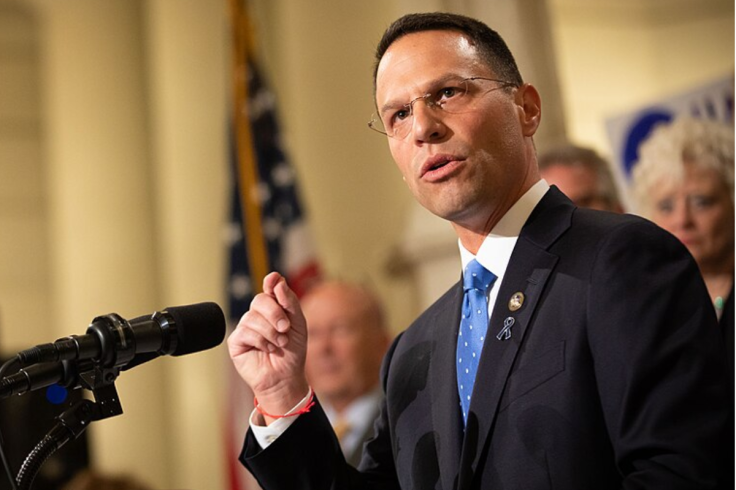
Pennsylvania could lose 78,345 jobs under an immediate increase in its minimum wage to $15 (£11.47) an hour that also eliminates the separate tipped rate, the pro-business Employment Policies Institute projected this week.
Gov. Josh Shapiro supports a $15 minimum wage, a proposal that previously failed to advance. Democrats reportedly secured control of the Legislature, including the state Senate for the first time since 1993, opening a route for legislation in the session beginning in January.
'A $15 minimum wage will be a reality in Pennsylvania,' Shapiro stated in a social media post. 'Bold change is possible when we focus on the commonsense things that folks want done.'
Pennsylvania Minimum Wage Forecast Depends on Implementation
The institute's estimate assumes an increase from $7.25 to $15 (£5.54 to £11.47) an hour without a phase-in and with the elimination of the tipped minimum wage. The institute reported employing Congressional Budget Office methodology for its calculations.
Preserving the tipped wage would reduce the institute's projected losses to 55,174 jobs. Both figures are estimates of possible employment effects, rather than counts of jobs already lost.
The distinction is central to the forecast. The available reporting does not establish that Shapiro's proposal includes every condition underlying the higher estimate.
Restaurants and food service would account for 53% of losses under that projection, the institute estimated. Teenagers aged 16 to 19 would account for 52% of projected losses under a $15 minimum wage.
'A $15 minimum wage would put tens of thousands of Pennsylvanians out of work,' stated Rebekah Paxton, the institute's research director.
Peter C. Earle of the free-market American Institute for Economic Research suggested that roughly 80,000 lost jobs could be a conservative estimate. He linked the possible total to labour demand, employers' adjustments and implementation timing.
Tipped Pay Shapes the Pennsylvania Minimum Wage Debate
Pennsylvania's tipped minimum was reported as $2.83 (£2.16) an hour, with a maximum tip credit of $4.42 (£3.38). Sean Higgins, an analyst at the libertarian Competitive Enterprise Institute, described pending legislation that would raise the tipped minimum to $9 (£6.88) an hour.
That arrangement differs from both eliminating the separate tipped rate and preserving the existing rate, the two scenarios described in the institute's forecast.
Higgins argued that losing 80,000 jobs 'is entirely plausible', contending that many restaurants and service businesses could not afford workers at the proposed rates.
Pennsylvania Minimum Wage Supporters Dispute the Scale of Job Losses
Angelica Gianchandani, a New York University marketing instructor who supports the increase, cited an Independent Fiscal Office estimate of about 15,600 lost jobs. It remains unclear whether that estimate assumes the same implementation timetable and tipped-wage arrangements as the institute's forecast.
The Keystone Research Center estimates that the proposal would affect 1.34 million workers, more than 21% of Pennsylvania's workforce. That includes nearly 776,000 earning below $15 an hour and another 568,000 affected through upward pay-scale adjustments.
Supporters also challenged the institute's approach. Labour economist Michael Reich of the University of California at Berkeley's Center on Wage and Employment Dynamics criticised its inclusion of a 'disproportionate number' of negative studies.
'It purports to be objective, but is not.'
Holly Sklar, chief executive of Business for a Fair Minimum Wage, cited research indicating no major job losses as neighbouring New York raised its hourly minimum to $16 (£12.23) in 2026.
Gianchandani argued that higher earnings would circulate through local businesses.
'When working people earn more, that money is spent locally, often at the same businesses, weighing the cost,' she stated. 'AI can automate tasks, but it cannot replace human judgment.'
© Copyright IBTimes 2026. All rights reserved.