

Ex-MAGA Ally Tells Donald Trump He 'Got Whooped in the Midterms' Over 'Stupid Pointless War'
A former MAGA loyalist turns Trump's petrol-price claims into another battle over war, economic hardship and political accountability
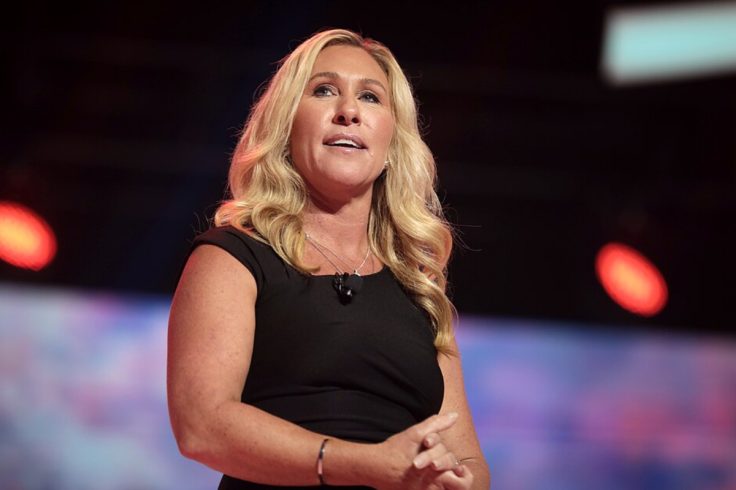
Former Georgia congresswoman Marjorie Taylor Greene accused President Donald Trump of driving up US petrol prices through his confrontation with Iran on Wednesday, 18 November 2026, while blaming him for Republicans' midterm election defeats.
In an X post, Greene said Trump had 'got whooped in the midterms' and rejected a suggestion he shared that falling petrol prices had been held back until after voting. Her criticism was another escalation in a dispute with the president she once fiercely supported.
Democrats won control of both congressional chambers in the 3 November elections, although their majorities will begin in January 2027. Neither Greene nor Trump provided evidence establishing a link between the election and the timing of the price decline.
The price of gas dropped after the election because you got whooped in the midterms BECAUSE YOU have been psychotically threatening to basically nuke Iran.
— Marjorie Taylor Greene 🇺🇸 (@mtgreenee) November 18, 2026
So the market reacted.
But the real bullshit is that YOU drove up the price of gas/diesel with your stupid pointless war… pic.twitter.com/G14lmD5W54
Trump's Petrol Price Claim Conflicts With Earlier Declines
On Tuesday, 17 November, Trump reposted another Truth Social user's message celebrating falling pump prices. Adding his own comment, he wrote: 'Biggest drop in gasoline in 18 years. Notice that they waited until after the "Election?"'
The remark implied somebody had delayed the fall, but did not identify who 'they' were or offer evidence of intervention. His assertion about an 18-year record is also disputed.
Figures from the US Energy Information Administration show average regular petrol prices of $4.153 (£3.18) a gallon on 2 November, the day before voting, $3.995 (£3.05) on 9 November and $3.805 (£2.91) on 16 November. Prices had already been declining for weeks before election day.
GasBuddy analyst Patrick De Haan said recent daily drops were substantial but not the biggest in 18 years, according to his company's figures. Fuel-market analysts have also cited crude oil movements and seasonal demand, rather than evidence of election-related manipulation.
Greene presented a different explanation, claiming Trump had been threatening to 'basically nuke Iran'. She argued that markets responded to his rhetoric and accused him of raising petrol and diesel costs with what she called his 'stupid pointless war' and 'psychobabble'.
However, Greene supplied no analysis establishing that Trump's conduct caused the price movements or substantiating her portrayal of his nuclear threats.
Greene's Trump Feud Intensifies After Midterm Defeat
Greene had already criticised Trump's electoral influence on 25 October. Responding to footage of his rally in Perry, Georgia, she called him a 'curse to Republican candidates' and claimed he had threatened to withhold assistance from Georgia because of disagreements over who contacted him.
The subsequent Democratic victories gave her another opportunity to attack his political judgement. The results confirm Republican losses, but do not establish that Trump's decisions alone caused them.
In a separate X post published late on 18 November in Washington, Greene mocked pro-Trump social media accounts. 'I hear MAGA accounts are getting paid for posts,' she wrote, joking about possible rates for slogans and conspiracy-related memes.
I hear MAGA accounts are getting paid for posts.
— Marjorie Taylor Greene 🇺🇸 (@mtgreenee) November 19, 2026
I know I’m late to the game here, but what’s the going rate for WWG1WGA? 😂
Is there a rate for Patriots in control?
How about Q+++ Memes with the storm arriving and an American bald eagle and a nuclear bomb?
She provided no evidence that the accounts she targeted were receiving payments. Her remarks were framed as questions and jokes, rather than documentation of any arrangement.
Trump withdrew his endorsement of Greene in November 2025 after disagreements involving the handling of government records related to convicted sex offender Jeffrey Epstein, alongside disputes over foreign policy. She resigned from the House on 5 January 2026.
The latest exchanges highlight a political split, but leave the economic argument unsettled. Official data confirm declining petrol prices; they do not support either politician's suggestion that one election result or political decision explains the timing.
© Copyright IBTimes 2026. All rights reserved.