

Pennsylvania House Passes Bill Letting Domestic Abuse Victims Change Locks as Republicans Vote Against It
House Bill 72 proposes crucial tenant protections for domestic abuse victims, including lease termination and lock changes
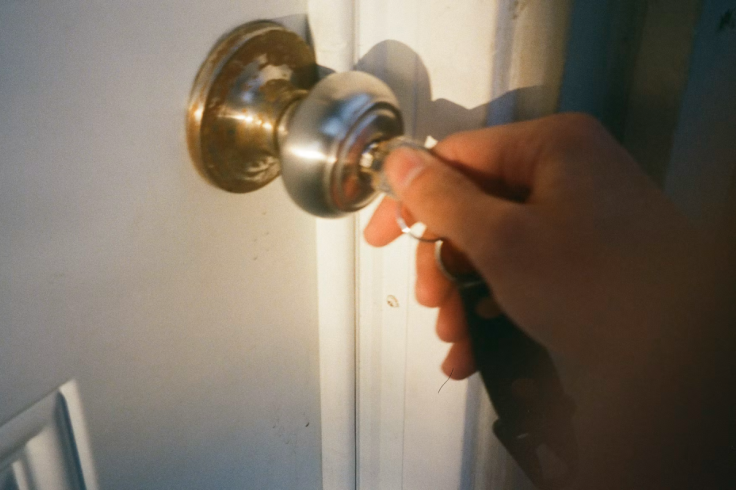
Domestic abuse victims in Pennsylvania would gain the right to change the locks on their rented homes and walk away from a lease without penalty under a bill that cleared the state House against opposition from most Republicans.
House Bill 72 passed by 118 votes to 83, and the tally has resurfaced online months later as campaigners circulate the roll call.
The measure rewrites Pennsylvania's 75-year-old landlord and tenant law to create a set of protections for tenants who are victims of domestic violence, sexual violence or stalking, covering lease termination, lock changes and the conduct of landlords. It has been sitting in a state Senate committee since the start of May, and it has not become law.
What House Bill 72 Would Change for Tenants
The bill is broader than the lock provision that has drawn attention. House Bill 72 inserts a new Article V-C into the Landlord and Tenant Act of 1951, the statute that has governed rental relationships in the Commonwealth since April of that year, and the new article runs to five sections.
Two of those sections carry the substance. Section 502-C allows an eligible tenant to be released from a lease early if they need to relocate because of a qualifying act or crime and give their landlord notice in the manner the bill sets out.
Section 504-C establishes the right to change the locks on a dwelling unit, a right the bill text makes subject to conditions and requires to be exercised in a professional manner at the tenant's own expense.
The remaining sections handle definitions, paperwork and landlord conduct. Section 503-C requires the Office of Victim Advocate to develop a certification form and publish it on its website, which a tenant uses to document their eligibility, and Section 505-C prohibits landlords from taking certain actions against tenants who invoke the article.
The protections extend beyond the tenant personally, reaching those whose household member or, in defined circumstances, immediate family member has been victimised.
The 118 to 83 Vote and Where the Bill Came From
The legislation is the work of one Delaware County Democrat. Representative Lisa Borowski introduced House Bill 72 on 14 January 2025 with 27 co-sponsors, of whom all but one, Representative Mark Gillen, were Democrats, making it a near-party-line measure from the day it was filed.
It moved slowly and then quickly. The House Judiciary Committee reported the bill as amended on 13 April 2026, the chamber amended it again on second consideration on 28 April, and the Appropriations Committee re-reported it the following day by 23 votes to 14. Final passage came on the same day, 29 April 2026, by 118 to 83.
The arithmetic explains the political framing around the vote. Two of the chamber's 203 seats were vacant at the time, so all sitting members cast a vote, and Democrats held a one-seat majority, so a 118-vote yes column means a number of Republicans crossed over while the great majority of the no votes came from their caucus.
Readers wanting the individual breakdown can consult the House roll call for the vote, which lists every member by name.
A Bill Still Sitting in the Senate
Passage in one chamber is not the end of the process, and House Bill 72 has gone no further. The bill was engrossed on 29 April 2026 and referred to the Senate Urban Affairs and Housing Committee on 1 May 2026, where it has remained.
Borowski has been down this road before. She authored a similar measure in the previous legislative session, House Bill 1441, which amended the same landlord and tenant statute and passed the House in June 2024 before expiring without becoming law. The current bill faces the same obstacle, a Senate that has not scheduled it.
The practical question the bill addresses is a familiar one for advocates. A victim who flees a rented home remains liable for the rent under existing law unless the landlord agrees otherwise, and a victim who stays has no statutory right to change the locks that an abuser holds a key to. House Bill 72 would resolve both, at the tenant's cost and on production of documentation certified through the Office of Victim Advocate.
Until the Senate acts, the protections exist only on paper in Harrisburg, and the roll call now circulating records a vote taken more than four months ago.
© Copyright IBTimes 2026. All rights reserved.