Dana Carr's Early Release: Mother Who Allowed Toddler's Murder Set to Walk Free for Christmas
Justice takes a back seat as overcrowded prisons open their doors to those who enabled the unthinkable

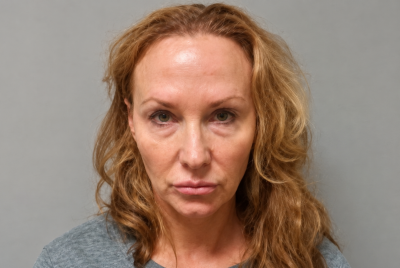
Dana Carr's expected early release from prison before Christmas has reignited anger over England and Wales' emergency prison release scheme, with the family of murdered two-year-old Maya Chappell accusing ministers of failing victims while prioritising overcrowded prisons.
Carr, 27, was jailed in December 2023 after admitting child cruelty and causing or allowing the death of her daughter. She is expected to become eligible for release after serving roughly one-third of her sentence under changes introduced to ease severe pressure on the prison system.
Her former partner, Michael Daymond, was convicted of murdering Maya and is serving a life sentence with a minimum term of 20 years. Unlike Carr, he is not eligible for the early release scheme. For Maya's relatives, however, Carr's imminent release has reopened wounds they say never had the chance to heal.
Murder That Shocked the Country
Maya Chappell died in September 2022 after suffering catastrophic injuries at the family home in Shotton Colliery, County Durham.
Prosecutors told the court that Daymond violently shook the toddler, causing fatal brain injuries. During the trial, evidence showed Maya had suffered repeated abuse before her death while Carr failed to intervene or seek help despite clear warning signs.
The court heard Carr exchanged text messages with Daymond attempting to explain away Maya's visible injuries and later gave misleading accounts about how the child had been hurt. Investigators also revealed that while paramedics fought to save Maya's life, Daymond telephoned the Department for Work and Pensions to ask about his Universal Credit payments.
Maya died in hospital two days later. The case became one of the UK's most disturbing child protection failures, prompting renewed scrutiny of safeguarding systems designed to identify children at risk of abuse.
Early Release Policy Draws Renewed Criticism
Carr's expected release comes under the government's revised early release programme, introduced to relieve record pressure on prison capacity. Following public criticism, ministers later removed around 1,000 offenders, including rapists and the most serious child sex offenders, from eligibility.
Justice Minister Alex Norris defended the broader policy, arguing that abandoning it entirely would create an unsustainable prison overcrowding crisis. Speaking to the BBC, Norris said expanding the list of excluded offenders much further would leave the government unable to manage prison capacity safely.
The explanation has done little to reassure Maya's family. Her great-aunt, Gemma Chappell, has become one of the leading voices calling for reform, arguing that the policy sends an inconsistent message about which victims receive protection.
Speaking publicly, Chappell questioned why some categories of offenders had been excluded while others convicted in child death cases remained eligible for earlier release. She also expressed concern that Carr's release could place other vulnerable children at risk in the future.
Next month, Carr will have spent approximately the same amount of time in custody as Maya was alive before her death, a comparison relatives say illustrates the imbalance they see in the justice system.
Campaign for 'Maya's Law' Continues
Since Maya's death, members of her family have campaigned for legal reforms known as 'Maya's Law.' The proposed changes seek stronger safeguarding measures, greater accountability for parents who fail to protect children from abuse and improvements to how agencies identify children at risk.
Campaigners argue Maya's death exposed weaknesses across multiple parts of the child protection system and believe legislative reform is necessary to reduce the risk of similar tragedies. Although the campaign has attracted public support, no legislation bearing Maya's name has yet been introduced.
Other Families Raise Similar Concerns
The controversy surrounding Carr's release has coincided with criticism from other high-profile victims' families affected by the same early release policy. Among them is the family of Police Constable Andrew Harper, who was killed in 2019 after being dragged behind a vehicle driven by teenagers attempting to steal a quad bike.
Two of those convicted over Harper's death, Jessie Cole and Albert Bowers, are expected to become eligible for release in early 2027 after receiving 13-year manslaughter sentences. Following Harper's death, Parliament passed Harper's Law, creating mandatory life sentences for those convicted of killing emergency workers in certain circumstances.
However, because the law cannot be applied retrospectively, it does not affect the sentences already imposed in Harper's case. His widow, Lissie Harper, has described the prospect of the men's release as 'a disgusting betrayal,' while Thames Valley Chief Constable Jason Hogg said the decision risks damaging confidence among emergency service personnel.
Reports indicate Justice Secretary Alex Norris personally contacted Andrew Harper's mother, Debbie Adlam, to explain the government's position and apologise for the distress caused. According to Adlam, ministers argued the early release programme remains necessary to prevent prisons exceeding safe operating capacity.
Debate Over Justice and Prison Capacity
The issue has quickly become politically charged. Conservative leader Kemi Badenoch accused the government of failing victims by only partially revising the scheme, arguing ministers should go further in excluding offenders convicted in serious violence and child death cases.
Supporters of the policy counter that prison overcrowding has reached crisis levels and that emergency measures are unavoidable without major expansion of prison capacity.
For Maya Chappell's family, however, those broader policy debates offer little comfort. As Christmas approaches, they are preparing for the prospect that Carr will leave prison while continuing to campaign for reforms they believe could help prevent another family from experiencing the same loss.
Whether the government revisits the early release policy further remains uncertain. For now, Maya's case has become one of the clearest examples of the difficult balance ministers face between managing an overcrowded prison system and maintaining public confidence that justice is being served.
© Copyright IBTimes 2026. All rights reserved.
- Recommended For You