

Prince William Issued Dire Warning by Historian Over 'Pipe Dream' Harry Rift
Historian warns William ignoring Harry could hurt monarchy's youth appeal

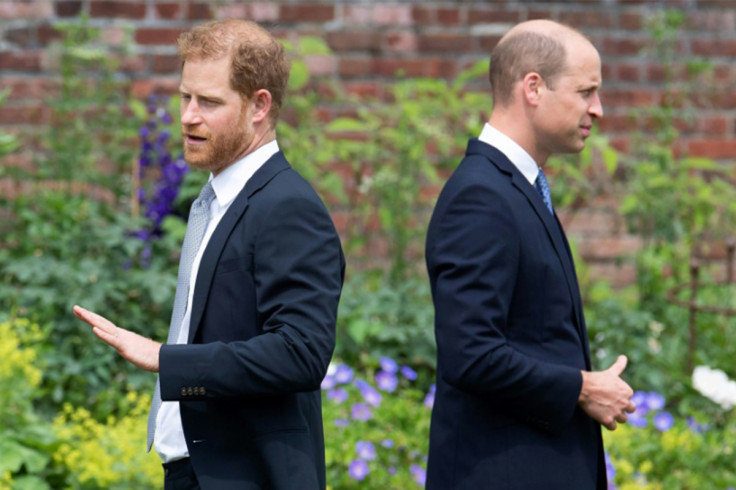
The weight of the crown has never felt heavier for the Prince of Wales. As William navigates an increasingly precarious path towards kingship, a respected historian has delivered a sobering assessment: his bitter estrangement from Prince Harry could prove fatal to the monarchy's future — yet reconciliation remains nothing more than a 'pipe dream'.
At 43, the Prince of Wales faces challenges his grandmother never imagined. While William remains one of the royal family's most popular figures, the institution itself teeters on a precipice of declining public support — particularly among younger Britons who view the monarchy not as a cherished tradition, but as an anachronism in desperate need of retirement. It is against this backdrop that royal historian Dr. Tessa Dunlop has issued her stark warning: William's refusal to reconcile with his younger brother could prove disastrous for his reign.
The Problem With Playing King Without Your 'Spare'
Writing in The i Paper, Dunlop — who holds a BA in Modern History from Oxford, an MA with distinction, and a PhD in History — argued that the monarchy's greatest strength has always been its ability to project stability and unity. The late Queen Elizabeth II embodied this throughout her 70-year reign, serving as what Dunlop described as 'the nation's symbolic repository in an increasingly divided world'.
'At its best the royal family is the nation's symbolic repository in an increasingly divided world. The late Queen Elizabeth II has always been the obvious model for William's future reign: a unifying figure, a point of stability across the generations and crucially a monarch who comes to the throne without the baggage of his father,' Dunlop wrote.
Yet any hopes William harbours of emulating his grandmother's unifying presence are threatened by the very public warfare with Harry, 41. The brothers, once inseparable in their grief and duty, have not been on speaking terms since Harry published his incendiary memoir Spare in 2023.
'Yet any hopes of that will be dashed if he cannot bring himself to offer Harry a rapprochement. Forgiveness, after all, is an essential prerequisite for a future defender of the faith,' Dunlop cautioned.
A Monarchy Haemorrhaging Youth Support
Dunlop's warning arrives at a critical juncture. Recent polling reveals a monarchy in crisis among the very demographic it needs most: young people. According to the National Centre for Social Research's British Social Attitudes survey, a staggering 67% of those aged 16 to 24 now prefer an elected head of state over the royal family.

The generational divide is stark. While 80% of over-65s want the monarchy to continue, only 37 % of 16- to 24-year-olds share that view. Overall support for the monarchy has plummeted from 86 % in 1983 to just 51% today.
For Generation Z, the monarchy represents not heritage and stability, but unearned privilege, taxpayer-funded extravagance (the Sovereign Grant rose 53% to £132 million in 2025/26), and an institution fundamentally at odds with meritocratic values. Addressing this decline in support, Dunlop wrote: 'To have any chance of halting the royal family's decline, 'Willy' needs to set aside his differences and offer 'Harold' an olive branch'.
The Brother Who Won't Budge
Yet William appears unmoved. Royal expert Robert Jobson told HELLO! magazine that 'reconciliation needs compromise, but it mostly needs trust, and there is no trust between the brothers.'
'Right now, William is focused on duty, Harry on grievance. William is building a future and he no longer needs Harry's drama. You can't bridge that gap when one brother is moving forward and the other won't let go of the past and the bitterness,' Jobson explained.
The brothers' relationship began fracturing after Harry and Meghan stepped back from royal duties in January 2020, a decision that sent shockwaves through the institution. But it was Harry's subsequent public revelations — the 2021 Oprah Winfrey interview, the 2022 Netflix docuseries Harry & Meghan, and the 2023 memoir Spare — that transformed a family dispute into an unbridgeable chasm.
In those tell-alls, Harry accused his brother of physical assault, claimed the royal family had made racist comments about his son Archie's skin colour, and portrayed William and Kate as complicit in briefing against him and Meghan to protect their own reputations. William has reportedly 'harboured significant anger' ever since, with sources saying he views Harry's behaviour as inflicting 'considerable, nearly irreversible harm to a typical family dynamic.'
Harry's Plea Falls on Deaf Ears
For his part, Harry has repeatedly expressed a desire to reconcile. In a May 2025 BBC interview, an emotional Harry stated: 'I would love reconciliation with my family. There's no point continuing to fight anymore. Life is precious. I don't know how much longer my father has. He won't speak to me because of this security stuff. But it would be nice to reconcile.'
In January 2023, following the publication of Spare, Harry told 60 Minutes: 'My brother and I love each other. I love him deeply. There has been a lot of pain between the two of us, especially the last six years.'
Yet William has remained steadfast in his silence. When Harry travelled to the UK in January 2026 for court proceedings, the brothers were just 25 miles apart — William in Windsor, Harry in London — but did not meet. They haven't shared a room since a family funeral in August 2024, where sources claim they didn't exchange a single word.
The Cost of Stubborn Silence
Dunlop argues that William's intransigence comes at a steep price. 'Siblings can be hugely triggering, and the peace offering would no doubt cause William great pain. But the gains would be enormous,' she wrote. 'To welcome the Duke of Sussex back into the fold would set William apart as the redemptive Prince, a man well equipped to broaden monarchy's appeal for the next generation. What a pity the prospect is just a pipe dream.'
As William assumes ever-greater responsibilities— responsibilities that will only multiply when his father's reign ends—the question becomes whether he can afford to maintain this estrangement. Can a future king truly embody unity and stability while remaining at war with his own brother?
History suggests not. The late Queen's greatest strength was her ability to rise above personal grievance in service of the institution. She navigated family scandals, political upheaval and societal transformation with a steadying hand that kept the monarchy relevant and respected.
William must choose between his grandmother's wisdom and his pride. With youth support waning and the brothers silent, Dunlop's warning is crucial. The monarchy's future may depend on forgiveness, not grand reforms or modern messaging.
© Copyright IBTimes 2026. All rights reserved.