

Trump Official Claims Screwworm Is 'Not a Threat' Despite History of Wiping Out Entire Herds of Cattle
USDA Faces Criticism Over Response to Screwworm Outbreak in Texas
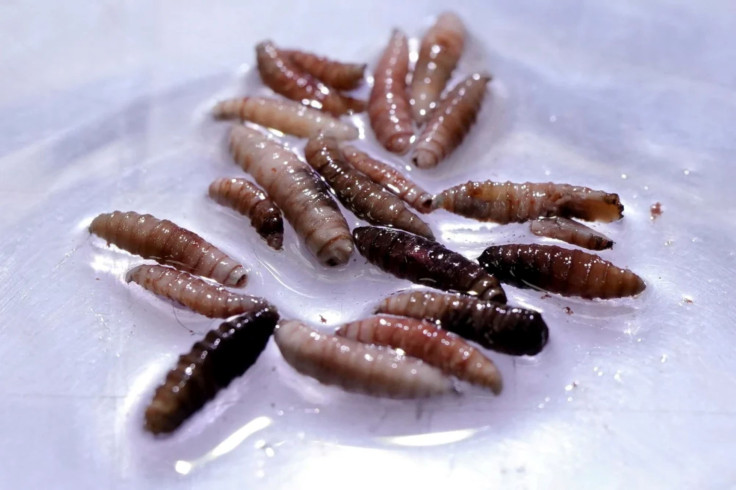
A flesh-eating parasite that once wiped out hundreds of thousands of cattle across the American South has returned to US soil, but the Trump administration is insisting it is under control.
On 3 June 2026, the US Department of Agriculture's Animal and Plant Health Inspection Service (APHIS) confirmed the detection of the New World screwworm (NWS) in a three-week-old calf in Zavala County, Texas. It is the first confirmed case in US livestock since 1966. Despite the gravity of that milestone, Agriculture Secretary Brooke Rollins and her deputy were swift to reassure the public: 'There is no threat of mass infestation,' Rollins declared during an evening press call.
A Parasite With A Catastrophic Past
The reassurances sit uneasily against the historical record. According to a USDA APHIS reference document on historical economic impacts, producers in the south-western United States lost between £38 million and £77 million (US$50–100 million) annually to screwworm infestations before eradication efforts began in the 1960s. In a single year, 1935, Texas alone lost approximately 180,000 head of cattle, according to figures cited by the National Cattlemen's Beef Association (NCBA).
The pest is not simply a nuisance. The female screwworm fly lays its eggs in open wounds or mucous membranes of living animals. The larvae then burrow into living flesh, feeding from the inside. Untreated infestations kill. An isolated 1976 outbreak in Texas produced economic losses estimated at between £217 million and £289 million (US$283–375 million) in today's values, according to USDA data, and that was a contained event.
The NCBA has been direct about what a full re-establishment would now cost. 'We need to spend £230 million (US$300 million) now to save us £6.1 billion (US$8 billion) down the line in eradication costs,' the association's Senior Vice-President of Government Affairs, Ethan Lane, told industry publication Drovers in June 2025. The USDA's own modelling, cited in its APHIS press release of 3 June 2026, acknowledged that 'all models showed New World Screwworm entering the country in 2025', meaning federal officials had privately anticipated a breach for at least a year.
Trump's Agriculture Secretary claims that the flesh-eating New World Screwworm "is not a threat to our food supply" despite it being known for decimating herds of cattle pic.twitter.com/wKNVwLPDgn
— Headquarters (@HQNewsNow) June 4, 2026
'No Threat Of Mass Infestation' As Officials Clash Over Risk
The official language has been carefully calibrated. Speaking on 4 June 2026, USDA Under Secretary for Marketing and Regulatory Programs Dudley Hoskins said in an official statement: 'The screwworm is not contagious. It does not spread directly from animals to people or from person to person. And the screwworm does not pose a food safety risk.' He added that the parasite 'is a serious concern because of the potential disruption it could cause to the US livestock industry if a detection is not quickly identified and treated.'
That qualifier, 'if not quickly identified', is where critics say the federal government has fallen short. Texas Agriculture Commissioner Sid Miller issued a strongly worded statement on 3 June 2026, published by the Texas Department of Agriculture, accusing the USDA of 'a slow, bureaucratic, and incomplete response' that allowed the pest to advance more than 1,100 miles northward through Mexico onto American soil unchecked. 'For months, the screwworm has advanced rapidly through Mexico in spite of the USDA's existing game plan,' Miller said. 'Instead of using every available tool, USDA moved too slowly and relied solely on a partial solution that takes years to fully implement.'
Miller also directly appealed to President Donald Trump to take personal control of the containment effort and to approve deployment of the Screwworm Adult Suppression System (SWASS), an insecticide-bait method tested by the US in the late 1970s. In an interview with The Texas Tribune published on 3 June 2026, Miller said the SWASS system 'could wipe out the screwworm in Mexico in 90 days.'
NEWS: Screwworm has been detected in Texas, USDA confirmed - marking a serious threat to US cattle and other animals
— Grace Yarrow (@YarrowGrace) June 4, 2026
Larvae of the parasite were found in the umbilical cord of a 3 week old calf
Screwworm was eradicated from the US in 1966
A Six-Decade Eradication And The Cost Of Holding The Line
The US eradicated the screwworm through one of the most ambitious pest-control programmes in agricultural history. Beginning in the 1950s, researchers at the USDA developed the Sterile Insect Technique (SIT), in which male screwworm flies were sterilised via radiation and released in vast quantities so that wild females would produce no viable offspring. The south-eastern US was declared free of screwworm by 1959, after an investment of approximately £7.7 million (US$10 million) in today's values. The south-western US followed in the 1960s. The eradication was then pushed further south until a permanent biological barrier was established in Panama, holding for more than four decades.
The USDA broke ground on a £469 million (US$610 million) sterile fly production facility in Edinburg, Texas in April 2026, capable of producing 300 million sterile flies per week once operational. It is not scheduled to begin production until autumn 2027. A separate £576 million (US$750 million) facility is also under construction. Both arrive later than industry leaders and state officials had called for, after they began demanding domestic fly production capacity in 2024.
The Economic Reckoning Facing Ranchers And Consumers
The USDA has estimated that an unchecked outbreak could cause £1.4 billion (US$1.8 billion) in damage to Texas's economy alone. Beef prices in the US are already at record highs, and any meaningful reduction in herd numbers would compound pressure on consumers. The NCBA issued a statement on 15 August 2025 praising the Trump administration's preparedness efforts while backing construction of the sterile fly facilities, but industry confidence has since been tested by the parasite's border crossing.
The USDA and the Texas Animal Health Commission established a 20-kilometre quarantine zone around the Zavala County detection site and immediately deployed an additional four million sterile flies in ground-release chambers in the area, on top of the four million already being dropped aerially each week. Movement restrictions for livestock have been imposed, though officials said commerce would not be completely halted. In a statement on 4 June 2026, Hoskins said the agency would 'continue to try to flood the zone with as many sterile flies as we can get there until we have confidence that we've knocked it down in that area.'
Whether that confidence is justified, and whether it arrives before the parasite does, remains the question ranchers across Texas are now asking.
© Copyright IBTimes 2026. All rights reserved.