

'He Is Amoral': Pundits Slam Donald Trump for Giving Evangelicals 'The Middle Finger' After Defeat
Greg Sargent and Holly Berkley Fletcher offered explanations while questioning Trump's relationship with white evangelical Christians
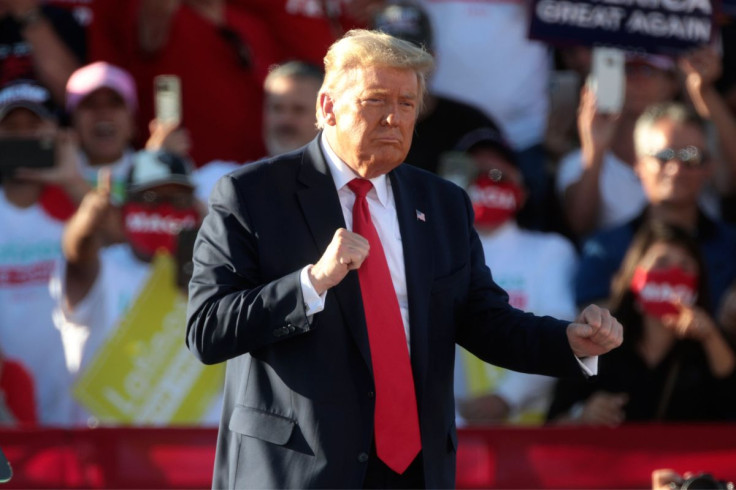
President Donald Trump's remarks about his eternal soul drew criticism from pundits Greg Sargent and Holly Berkley Fletcher during Thursday's Daily Blast podcast, with Sargent suggesting he was giving evangelical supporters 'the middle finger' after what he described as an electoral repudiation.
The discussion followed Trump's conversation with 60 Minutes about his soul. Sargent, of The New Republic, questioned the political timing of those remarks, while Berkley Fletcher, who writes about right-wing Christianity on Substack, examined their implications for white evangelical supporters.
Why Trump's Remarks Concerned the Pundits
Sargent described it as 'a little remarkable for him to talk this way after such a dramatic national repudiation of him.'
Berkley Fletcher argued that a politically astute leader would be trying to reinforce his remaining support. She characterised Trump's base as largely white evangelical Christian and argued that his comments would do little to strengthen that relationship.
'And this is certainly not the way to do it,' Fletcher stated. Her criticism focused on the tension she perceived between Trump's statements and evangelical beliefs about loving enemies, repentance and forgiveness. She argued that such moments leave supporters struggling to reconcile their religious commitments with his behaviour.
'Whenever he puts them on the spot by countering explicitly a really foundational evangelical Christian belief like loving your enemies or repenting or forgiving, these types of things, it really puts them in a very tough spot and sort of sends them scrambling,' Fletcher stated.
Election Frustration Shapes Sargent's Trump Theory
Sargent linked his interpretation to what he described as the 2026 election failures. He argued that Trump knew evangelical supporters had not turned out in the numbers he needed, despite his appeals for them to vote.
'I think Trump is essentially giving his evangelical supporters the middle finger in some sense,' Sargent stated.
In Sargent's reading, Trump's comments might express frustration with those supporters and indifference towards their beliefs about Heaven. That was his interpretation of Trump's motives, rather than an established explanation for the remarks.
Berkley Fletcher questioned whether Trump was calculating enough to act with that intention. Although she believed he would be upset with evangelical supporters, she offered a different explanation for his comments about his soul.
How Berkley Fletcher Interpreted Trump's Beliefs
'He usually tells us what he's thinking,' she explained.
Berkley Fletcher suggested Trump had long worried about the eternal destination of his soul and sometimes revealed that concern. She also argued that he lashes out when upset, while remaining uncertain about Sargent's theory of a deliberate political rebuke.
The disagreement concerned his possible motives. On his relationship with religion, the commentators expressed similar opinions. Sargent stated that he did not believe Trump had a religious bone in his body, and Berkley Fletcher described him as 'without belief of any kind.'
'I think he's amoral. I think he believes in his own narcissism and I think he's been using religion this entire time. They're a very easy mark for a conman,' she stated.
Berkley Fletcher argued that evangelical Christians' deeply held beliefs could be exploited by using familiar language and by supporting particular issues. She concluded, 'He's been using them the whole time. They've been a very cheap date, and he's taken advantage.'
© Copyright IBTimes 2026. All rights reserved.