

The Complete Retaject Guide (2026): How It Works, Safety, Benefits & FAQs
Exploring Retatrutide's Triple-Action Mechanism and Its Impact on Metabolic Research
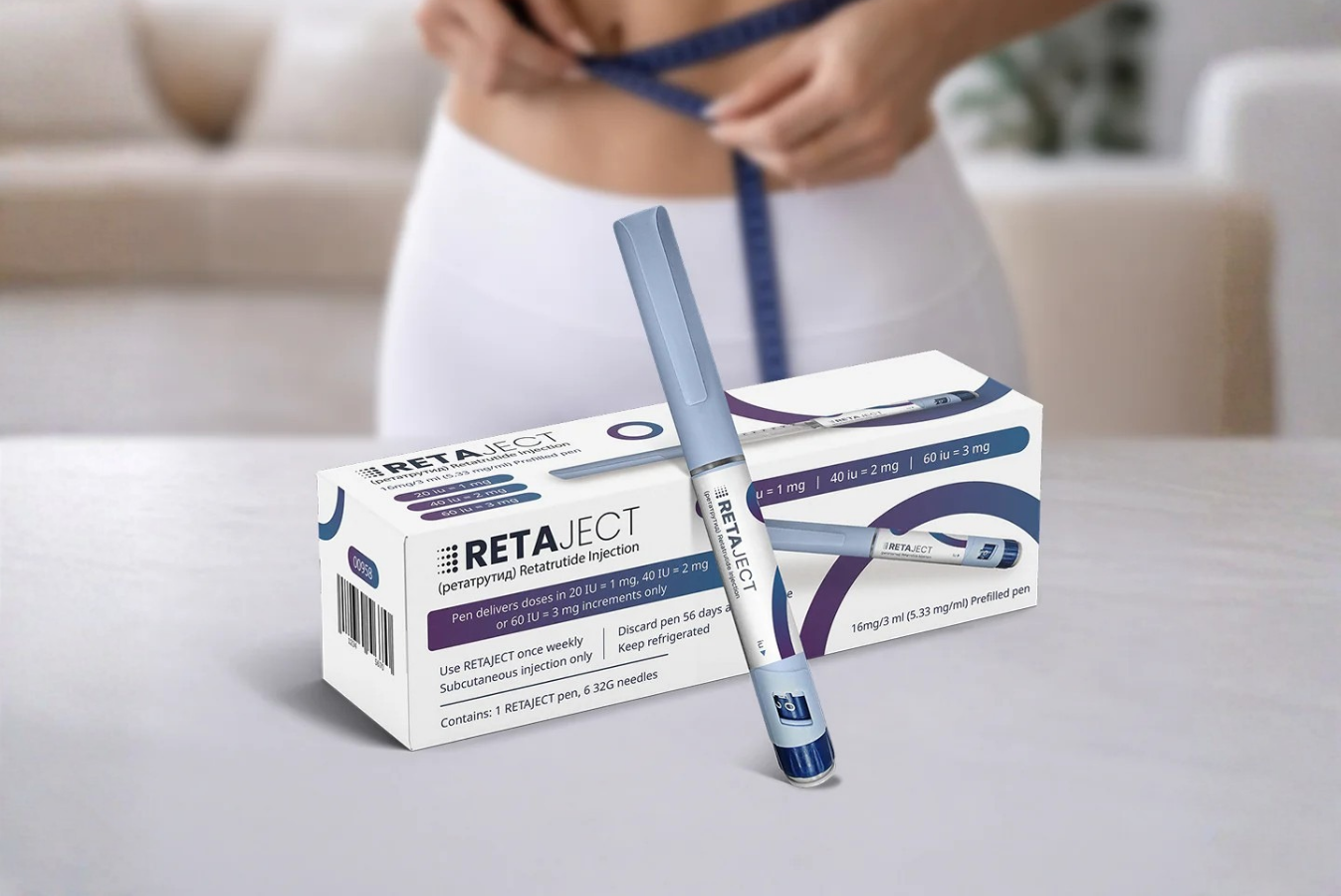
Retatrutide has quickly become one of the most talked-about developments in metabolic research. While semaglutide primarily targets GLP-1, retatrutide works across three hormone pathways: GLP-1, GIP and glucagon.
This triple-action approach, combined with promising clinical trial results, has fueled growing interest in how retatrutide differs from earlier GLP-1 compounds.
For Canadians following this research, the different names and options can be confusing. Retaject is GLP North's selectable multi-dose retatrutide pen, while Semaject is GLP North's multi-dose semaglutide pen. Terms like "triple agonist" and the informal nickname "GLP-3" add another layer of confusion.
This guide explains what Retaject is, how retatrutide works, how it compares with semaglutide and Semaject, what clinical research has found, and Retaject's testing, storage, shipping, and availability in Canada.
What Is Retaject?
Retaject is GLP North's selectable, multi-dose retatrutide pen, offered strictly for research purposes in Canada. Retatrutide activates three receptors involved in appetite, glucose regulation and energy balance: GLP-1, GIP, and glucagon, making it a next-generation triple agonist.
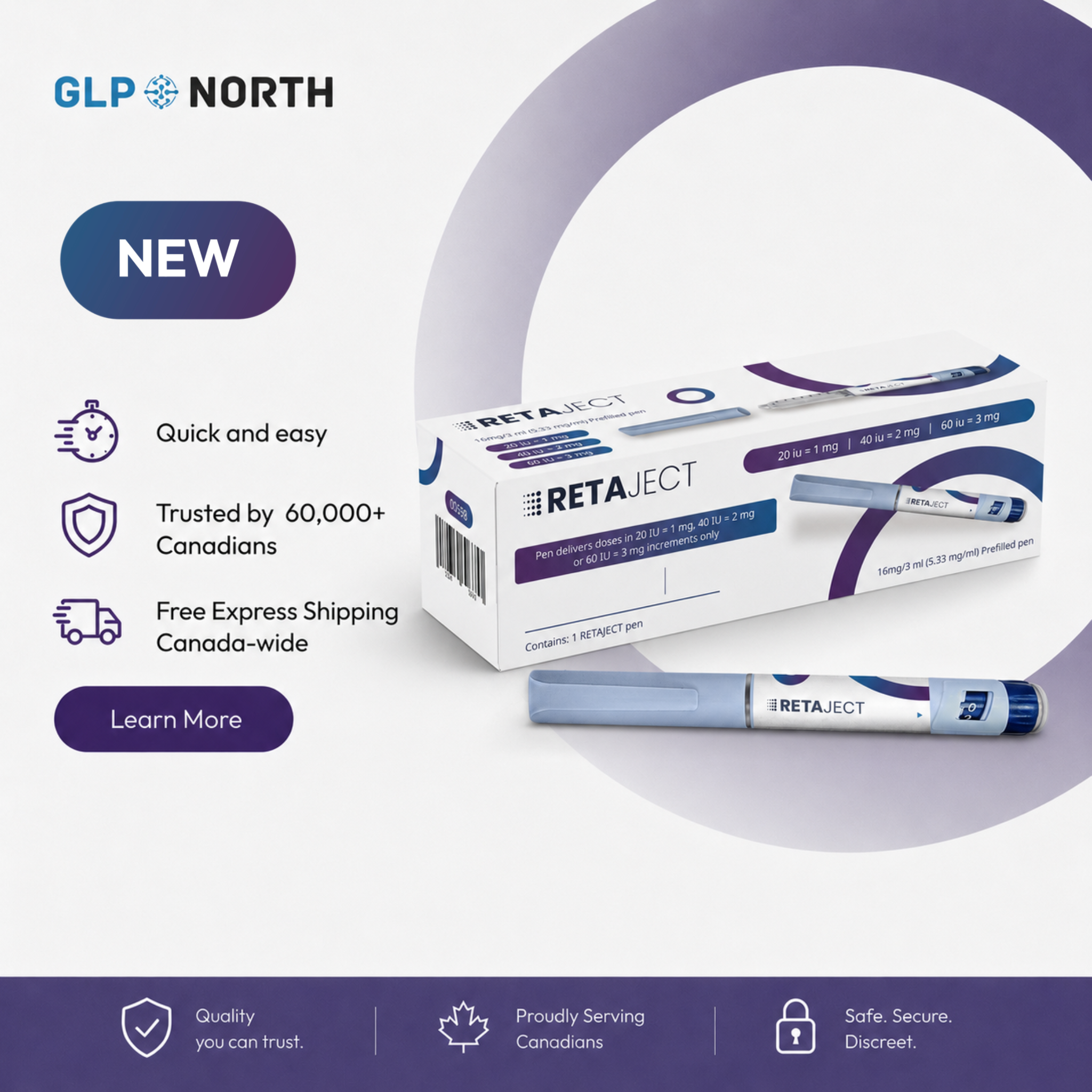
According to GLP North, each pen contains 16 mg of retatrutide in 3 mL and can be adjusted to deliver 0.5 mg, 1 mg, 2 mg, or 3 mg, making precise allocation straightforward.
Combined with independent laboratory testing, discreet delivery, Canadian fulfillment, and responsive customer support, Retaject brings together the qualities Canadian researchers increasingly look for in this category.
How Does Retatrutide Work?
Retatrutide is a single engineered peptide that activates three metabolic hormone receptors simultaneously.
GLP-1 – Appetite and Fullness: GLP-1 receptor activation sends fullness signals to the brain, reduces hunger and cravings, and slows gastric emptying. It also supports glucose-dependent insulin release.
GIP – Insulin Response: GIP works alongside GLP-1 to improve the body's response to nutrients. In early Phase 2 research, combined GIP/GLP-1 activity was associated with reduced calorie intake and improved glucose regulation.
Glucagon – Energy Expenditure: This is the feature that most clearly separates retatrutide from semaglutide and tirzepatide. Glucagon receptor activation helps mobilize stored energy and is associated with increased energy expenditure and fat oxidation. The insulin-supporting effects of GLP-1 and GIP may help balance glucagon's tendency to raise glucose production.
Most earlier GLP-1 compounds mainly reduce food intake. Retatrutide is designed to address both sides of the energy-balance equation, reducing intake while potentially increasing expenditure, delivered through one long-acting molecule engineered for once-weekly administration in trials.
How Is Retatrutide Different From Semaglutide?
Both compounds activate the GLP-1 pathway, but retatrutide also activates GIP and glucagon receptors. Semaglutide primarily works through GLP-1, influencing appetite, fullness, and glucose regulation. Retatrutide builds on that by combining all three pathways, potentially influencing both calorie intake and energy expenditure–the main reason it has attracted such strong research interest.
What Have the Trials Found?
In the STEP 1 trial, participants receiving semaglutide 2.4 mg lost an average of 14.9% of starting body weight over 68 weeks, versus 2.4% for placebo.
In the Phase 3 TRIUMPH-1 trial, average weight reductions with retatrutide over 80 weeks were:
- 19.0% (47.2 lbs) with 4 mg
- 25.9% (64.4 lbs) with 9 mg
- 28.3% (70.3 lbs) with 12 mg
At the highest dose, 45.3% of participants lost at least 30% of starting body weight, approaching the range associated with bariatric surgery. Research from the American Society for Metabolic and Bariatric Surgery found average weight loss of roughly 27.7% following metabolic surgery, with long-term gastric bypass data showing peak average losses near 31.8%.
These figures come from separate trials rather than head-to-head comparisons, and are intended only to illustrate scale. Even so, the magnitude of retatrutide's results helps explain the rapidly growing interest in the compound.
Limitations and Side Effects
The most common side effects in TRIUMPH-1 were gastrointestinal nausea, diarrhea, constipation, and vomiting, generally comparable to other GLP-1 and incretin-based treatments. Discontinuation due to adverse events occurred in 4.1% (4 mg), 6.9% (9 mg), and 11.3% (12 mg) of participants, versus 4.9% on placebo.
A modest, dose-dependent increase in heart rate was observed, peaking around week 24 before declining, similar to increases previously reported with other GLP-1 receptor agonists. Some participants reported altered or heightened skin sensations (dysesthesia), generally mild to moderate and mostly resolving during treatment.
Retatrutide remains investigational. Its long-term safety profile is still being established, and it has not completed the regulatory approval process.
Why Is Retatrutide Sometimes Called "GLP-3"?
Because it works across three hormone pathways: GLP-1, GIP and glucagon. It's informal shorthand, not an official name; retatrutide is more accurately described as a triple-hormone receptor agonist.
Storage & Shipping
GLP North products are stored in a secure, temperature-controlled facility and shipped within Canada via express delivery, avoiding customs delays or cross-border processing. Orders are packaged with ice packs, and GLP North says testing confirms brief transit temperature fluctuations do not meaningfully affect potency.
Products should be refrigerated upon receipt for long-term storage.
Quality, Testing and Researcher Feedback
GLP North uses independent third-party laboratory testing to verify Retaject's purity and concentration. Researchers across Canada have reportedly shared strong feedback on their experience with the product, contributing to its growing reputation, though these reports reflect individual experiences rather than controlled clinical evidence.
FAQ
Is retatrutide approved in Canada?
No. It remains an investigational compound in late-stage clinical development. All GLP North products are for research purposes only, not therapeutic use.
What comes with Retaject?
A ready-to-use, selectable multi-dose pen with 16 mg of retatrutide in 3 mL, plus six 4 mm, 32-gauge needle tips, shipped with ice packs.
How long does one pen last?
This depends on the research protocol and how the 16 mg total is allocated. GLP North does not provide dosing or therapeutic-use recommendations.
Where is Retaject available?
From GLP North, for research purposes, within Canada only.
Notice:
GLP North has moved from GLPNorth.com to GLPNorth.is.
About the Contributor: Rakibul Hasan Razu is an international author, Digital PR strategist, and SEO expert with more than a decade of experience in online authority building, brand visibility, and search-driven growth. He helps startups, established companies, and global agencies strengthen their digital presence through ethical SEO, digital PR, strategic content marketing, and media placements. His expertise spans SEO, branding, online reputation management, and thought leadership, with his work and insights featured in publications across North America, Europe, Asia, and the Middle East.
Disclaimer:
This article is for informational and research purposes only. Retatrutide is an investigational compound and is not approved for therapeutic use in Canada. Nothing here constitutes medical advice, dosing guidance, or an endorsement of Retaject or Semaject. Always consult a qualified healthcare professional and follow applicable research regulations.
© Copyright IBTimes 2026. All rights reserved.