

Trump's 'UFO Files' Spark Action as 1,000 Scientists Issue Strict Warning: 'No Reply Should Be Sent' to Aliens
IAA's new guidelines focus on verification, transparency and misinformation in an age of deepfakes and instant panic.
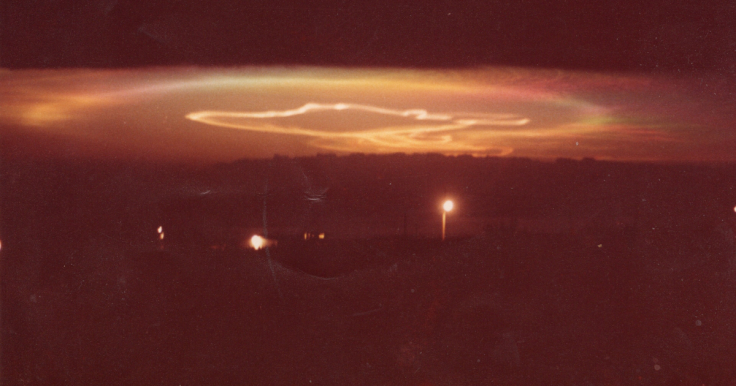
The International Academy of Astronautics has updated its post detection rules in 2026, telling scientists to verify any possible alien signal first and, crucially, to send no reply to extraterrestrial intelligence until there has been international consultation.
The guidance lands amid renewed attention on UFO material released under Donald Trump's administration and was published on 1 June 2026, with the IAA saying it is meant to steer scientists, institutions and the public through any future contact scenario.
'No Reply Should Be Sent' Until The World Has Had Its Say
At the heart of the refreshed rules is a blunt instruction. If astronomers receive a signal or other credible sign of alien intelligence, 'no reply should be sent' until there has been an international discussion on what, if anything, humanity should say back.
The document urges scientists to 'cooperate' on 'whether a potential response to a confirmed detection of extraterrestrial intelligence should be made, and if so, what its contents should be', adding that any talks 'should be conducted through the United Nations and other broadly representative international bodies.'
'Pending the outcome of such consultations, no reply should be sent,' the declaration states.
The guidance also hints that a separate agreement will spell out the mechanics of those talks 'to ensure a coordinated and responsible approach.'
A new Post‑Detection Sub‑Committee of the IAA SETI is due to pull in lawyers, ethicists and social scientists to advise on how to brief the public if contact is ever confirmed.
Updated 'Alien Protocols' For An Age Of Deepfakes And Panic
The news came after the IAA acknowledged that the information landscape has changed radically since 2010. Social media, deepfake technology and what one committee member politely called 'automated misinformation' mean any hint of an alien signal could go viral long before it is properly checked.
'The information environment we operate in today is vastly more complex than it was in 2010,' Professor Michael Garrett, chair of the IAA SETI Committee and professor of astrophysics at the University of Manchester, said in a statement.
'In an era of deepfakes, automated misinformation, and instant global connectivity, unverified claims could trigger confusion or panic. These new protocols guide SETI scientists in maintaining the highest standards of evidence before making announcements to the world.'
The declaration leans heavily on Carl Sagan's old line that 'extraordinary claims require extraordinary evidence.'
The first step, as before, is to verify any candidate technosignature and seek independent checks by other organisations using other instruments.
'We do not shout "alien" the moment we see a strange blip,' Garrett added. 'The scientific method demands we check, check again, and then ask others to check. Only when we have reached a consensus that a signal is credible do we bring it to the world.'
The guidelines also call for safeguards for researchers who find themselves at the centre of an alleged detection, warning they may face harassment or doxxing. They urge teams to monitor 'viral' rumours and hoaxes and to distinguish clearly between firm analysis and speculation.
Carefully Tell The World – But Keep The Evidence Safe
While the new protocols stress caution, they also insist that the global public should not be cut out of the loop if something real is found.
'Institutions and organisations should be responsive to reasonable requests from news organisations, social media platforms, and other public communications media,' the report reads. 'Responses to inquiries should be prompt, accurate, and honest.'
The guidance adds that communication about ongoing work 'may be necessary to dispel rumours and provide accurate and reliable information.'
If a suspected alien signal is later shown not to be extraterrestrial in origin, that conclusion 'should be promptly disclosed and clearly communicated.'
Once a detection is properly verified, scientists are obliged to report it 'in a full, complete and open manner to the public, the scientific community, and the Secretary General of the United Nations.'
They are also advised to protect the evidence itself, potentially by shielding particular radio frequencies if the signal arrives as an electromagnetic transmission.
At the same time, the update quietly concedes that scientists are under no duty to disclose every step of their verification efforts in real time, including to the media or on social platforms. They are, however, encouraged to use those channels responsibly, and to label unconfirmed conclusions as such.
Trump's UFO Files And The FBI's Old Warnings
The IAA's more sober, process‑driven playbook lands just as Trump‑era UFO disclosures drag some frankly wild Cold War claims back into the spotlight.
A tranche of declassified FBI material, released in what supporters have billed as a Trump‑ordered 'UFO data dump', includes memos, testimony and film of reported sightings. One memo dated 12 January 1955 recounts an interview with members of the Detroit Flying Saucer Club.
According to the file, club member Randall Cox told agents that aliens were sending messages to Earth claiming every other planet in the galaxy had already 'conquered outer space', and that humans were the 'lowest form of universal existence.'
Cox is quoted as saying the purpose of contact was to prepare people to 'receive landings from outer space.'
The Bureau took the reports seriously enough to investigate whether they posed any security risk, though the saucers were ultimately described as 'friendly to the US.'
Another note describes Cox repeating a claim that John Fry, a technician at Sandia Air Force Base, had allegedly piloted a flying saucer from New Mexico to New York in 30 minutes, a feat that would shred known physics.
Agents, it must be said, were sceptical. They warned that Cox's associate John Hoffman had been 'carried beyond the realm of scientific fact into that of possible scientific fiction', and highlighted similarities with Dorothy Martin, a 1950s cult leader who wrongly predicted a world‑ending flood in December 1954, later insisting the Earth had been spared because of her followers' 'light and faith.'
The latest declassification push was driven by Secretary of War Pete Hegseth under Trump's direction, according to US reports.
Congressman Tim Burchett hailed the first release on X, taking aim at the 'Deep State' and promising that what is still to come will make people say 'Holy Crap.'
The new guidance comes from the International Academy of Astronautics (IAA), a research body whose SETI committee brings together more than 1,000 experts from 97 countries.
First drafted in 1989 and last updated in 2010, its 'post‑detection protocols' set out how scientists should behave if instruments ever pick up a credible signal or other sign of extraterrestrial intelligence, and how those findings should be communicated beyond the lab.
© Copyright IBTimes 2026. All rights reserved.