

'Beneficiaries Will Pay the Price': Social Security Presses Ahead With Electronic Payment Transition
Social Security is ending paper checks in 2026, requiring all beneficiaries to switch to direct deposit or Direct Express cards.

Millions of retired and disabled Americans face a looming deadline as the Social Security Administration enters the final phase of its transition to a digital-only payment system. By the end of 2026, the era of the paper cheque will officially end, with a government mandate requiring all beneficiaries to receive their monthly entitlements via direct deposit or a prepaid debit card.
Federal authorities have confirmed that the direct deposit transition is no longer optional. Under existing federal law and Department of the Treasury regulations, the agency is systematically phasing out the issuance of paper cheques. For the 63 million Americans who rely on these funds as a primary lifeline, the shift is not merely a policy update; it is an administrative hurdle that has sparked significant concern among advocates for the vulnerable.
Electronic Payment Shift Gains Pace
Social Security said on 2 June that federal law and Executive Order 14247 require benefit payments to be made electronically, and that the Department of the Treasury is phasing out paper checks. The agency also said it plans to complete the 'full transition' for all beneficiaries in 2026, while urging people still receiving paper checks to switch as soon as possible.
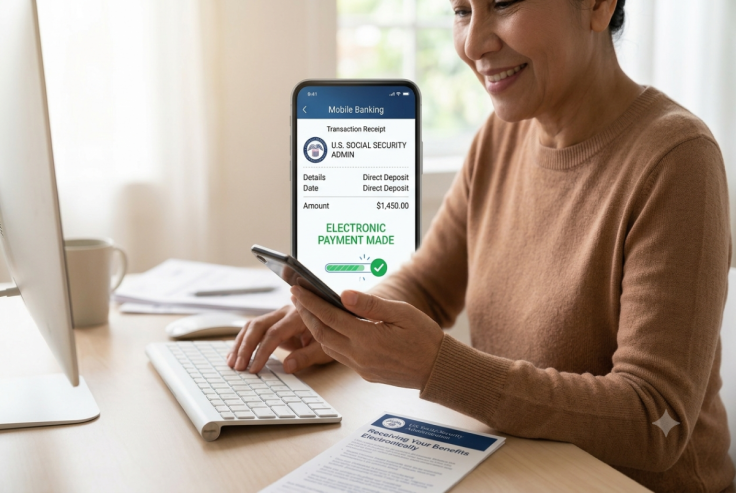
The announcement was not especially subtle about the government's view of the matter. Social Security said paper checks are 16 times more likely to be lost, stolen, altered, or returned as undeliverable than electronic payments, and cited Treasury figures showing that it costs about $3.07 to print a check, roughly 20 times the cost of processing an automated payment.
Efficiency, cost and security are the official justifications.
Why Beneficiaries Are Worried
Advocates have warned that some beneficiaries may struggle to make the switch, particularly people without bank accounts, people who are unhoused, and those who have mental health issues or other barriers that make dealing with financial institutions difficult. According to reports, critics fear some recipients could miss payments simply because they do not know about the change, do not check their mail or cannot complete the digital process in time.
Social Security says it is not leaving people entirely without options. The agency says beneficiaries can create or sign in to a my Social Security account, add bank details for direct deposit, or ask their financial institution to send the information electronically.
Those without a bank account can enrol in the Direct Express programme, a prepaid debit card option run through the Treasury. The agency also says some people may qualify for a waiver through the Treasury if they face challenges such as mental health concerns or live in a remote area without access to financial institutions.
What Happens Next For Beneficiaries
The message to beneficiaries is simple enough, even if the process is not. If you are still waiting on a paper check, Social Security wants you to move to electronic payments now rather than later.
The broader worry, though, is about the people most likely to get caught out by a system like this. The AP noted that some new beneficiaries may once have used a paper check to open a bank account, only to find that route narrowing as the phase-out advances.
How To Secure Your Payments
The agency insists that it is not abandoning those without access to traditional banks. Beneficiaries have several routes to ensure their payments continue without disruption:
- Direct Deposit: Recipients can log in to their my Social Security account to add or update bank details.
- Direct Express: Those without a bank account can enrol in the Direct Express debit card programme, a Treasury-managed prepaid option.
- Financial Institutions: Many local banks are authorised to assist beneficiaries in updating their information for Social Security payments.
For individuals facing severe barriers, such as residents in remote areas or those with specific health conditions, the Treasury may grant a waiver of electronic payment. This bypasses the mandatory digital requirement, though officials encourage this only as a last resort.
The Clock Is Ticking For Recipients
As the 2026 deadline approaches, the message to Social Security benefits 2026 recipients is clear: do not wait for the system to force your hand. The government's move toward payment security is advancing, and the window to manage this switch on your own terms is closing.
Whether the current safety nets are sufficient to protect the most vulnerable during this overhaul of the SSA bank account requirement remains the central question. Until then, beneficiaries who are still relying on the post are urged to visit GoDirect.gov or contact their local office immediately to avoid a disruption to their essential income.
© Copyright IBTimes 2026. All rights reserved.