

Wiping Out Parasites Entirely Could Harm Human Immunity, Warns Scientist Fighting Our 'Clean Living' Obsession
Kenyan entomologist Dino Martins explores the complex role of parasites in human health and ecosystems.
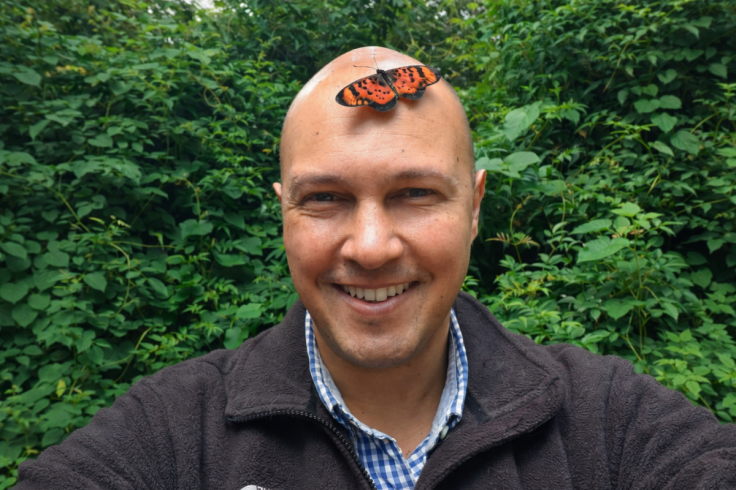
Kenyan entomologist Dino Martins believes humanity's long war on parasites may be doing more harm than good. In his new book, he argues that stripping the body of these organisms entirely could weaken, rather than protect, human immunity, challenging decades of public health messaging built around eliminating parasites at all costs.
Martins has built his career studying the creatures most people overlook or actively avoid. He grew up in biodiversity-rich western Kenya, where he spent his childhood watching dung beetles, safari ants and butterflies rather than television, a fascination that eventually led him into evolutionary biology and, more recently, into the far less glamorous world of parasites.
'One in Three People' Carry a Parasite
Martins, who chairs the insect committee of Nature Kenya and is a research professor at Stony Brook University in New York, has spent decades documenting insects and their overlooked ecological roles. His latest book, 'Hidden Creatures: Luscious Leeches, Bashful Botflies and the Wondrous, History-Shaping World of Parasites', published this month, turns that same attention to parasites.
In it, he writes that one in three people serve 'as unwitting hosts to some kind of parasitic nematode at any given time', including hookworms living inside the human gut. Martins suggests that exposure to parasites 'can actually strengthen immunity' despite society's modern obsession with sterilisation and 'clean living'. He adds that removing them entirely could have consequences 'we are only just beginning to understand'.
A World Without Parasites Has Its Own Risks
Martins is careful not to dismiss the damage parasites can cause. 'Parasites do cause a lot of harm and suffering and there is no question that our attempts to control them through the ages have saved many lives and livelihoods,' he says. But he argues the picture is more complicated than pure villainy.
'Some scientists are starting to think of parasites as just one part of our microbiome which has many roles to play in all aspects of our health,' he says.
According to the Royal Entomological Society, insects make up to 90 per cent of all animal species on the planet and more than half of all living things, with roughly 1.4 billion insects for every person on Earth. Martins says no ecosystem exists without parasites, calling their presence 'an indicator of a healthy, complex biodiversity, even if we might be alarmed by their presence'.
Vaccine Efforts Face an 'Arms Race'
Public health campaigns have tried to eliminate hookworm through mass deworming for decades, largely without success. According to the World Health Organization, soil-transmitted helminth infections, including hookworm, affect an estimated 1.5 billion people worldwide, or 24 per cent of the global population, with women of reproductive age and children among those most at risk of complications such as anaemia.
Martins explains that drugs such as albendazole fail to prevent reinfection once someone returns to contaminated soil, which is why treatment alone has never eradicated the parasite. He predicts that even a future vaccine 'will still be subject to evolutionary processes', with some hookworms likely to 'evolve ways to escape the vaccine', sustaining what he calls 'a long-term arms race between humans and hookworms'.
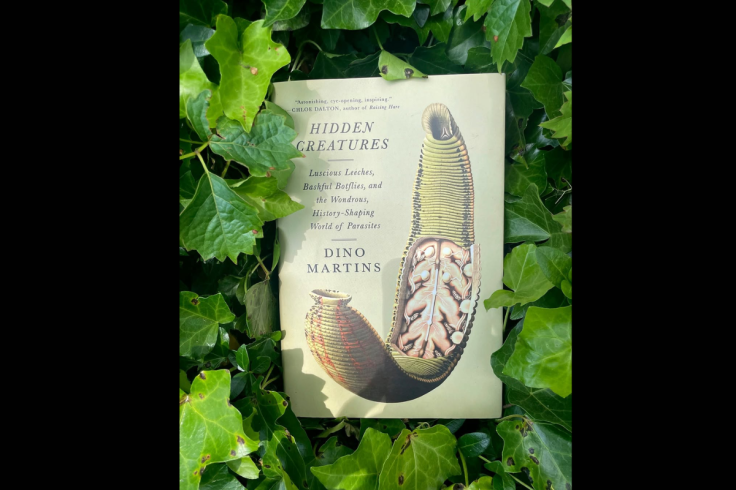
'Hidden Creatures': A Different Kind of Nature Book
Unlike his earlier work on butterflies and pollinators, Hidden Creatures turns to animals most readers find repulsive. Martins says he first became captivated by parasites as a child, after wasp larvae that had infested a caterpillar he was raising eventually broke out of its body to spin their own cocoons. 'This made such an impression on me as a young child,' he says.
He hopes the book appeals to conservationists, students and anyone curious about the link between ecosystems and health. 'I try to present the natural history of the parasites as it is,' he says. 'Even the most disgusting have some of the most incredible adaptations and abilities.'
The debate over parasites and immunity connects to the wider hygiene hypothesis, which links reduced early-life exposure to microbes and parasites with rising rates of allergies and autoimmune conditions in industrialised countries.
Martins' book also adds a conservation dimension to that discussion, raising the question of what is lost, medically and ecologically, when a species and the parasites that evolved alongside it disappear for good.
© Copyright IBTimes 2026. All rights reserved.