

Flesh-Eating Bacteria With 20% Mortality Rate Spreads In US Waterways After Trump Admin Slashed CDC Safeguards
Vibrio vulnificus infections rise along US coastlines as federal disease tracking programmes are scaled back.

A flesh-eating bacterium that kills about one in five of the people it infects is turning up in more US waters just as the federal government quietly scales back the programmes built to track it.
Vibrio vulnificus has been detected this year in coastal waters from Florida to New York's Long Island, and several states have urged beachgoers to take precautions. Health researchers tie the organism's northward march to warming seas.
The Trump administration, over the same period, has pared back disease surveillance and cut thousands of jobs across federal health agencies.
Rising Infections Along Warming US Coastlines
Vibrio vulnificus lives naturally in warm salt water and brackish water, the mix of fresh and sea water found where rivers meet the coast, and its numbers climb from May through October. People are infected in two main ways, by eating raw or undercooked shellfish such as oysters, or by exposing an open wound to contaminated water.
The CDC notes that 'flesh-eating bacteria' is a media label, since group A Streptococcus is the more common cause of necrotising fasciitis, yet the agency confirms that about one in five people with a Vibrio vulnificus infection die, sometimes within a day or two.
The 2026 season has already produced warnings across several states. On 23 April 2026, the Southampton Town Trustees advised residents that the bacterium may be present in local waters after researchers found it in several spots on Long Island. At least eight people in Florida had been infected by mid-June, and Mississippi health officials issued their own advisory the same month.
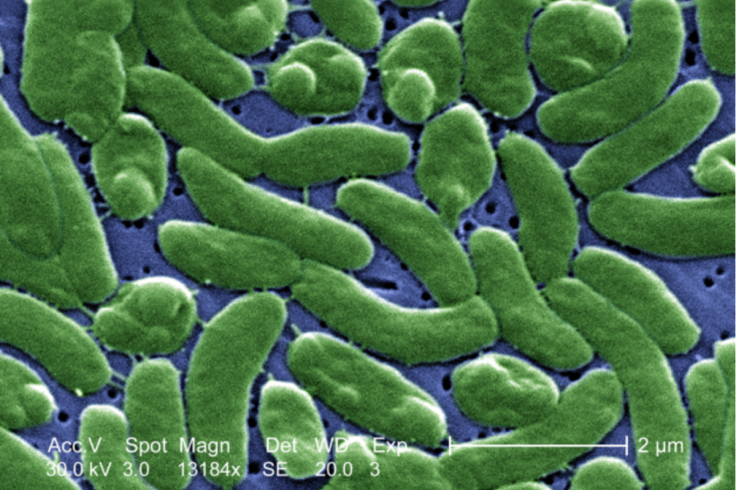
The longer trend points upward. Florida recorded a then-record 82 cases and 19 deaths in 2024 after Hurricane Helene drove contaminated water inland, and the state logged 33 cases and five deaths in 2025. The CDC estimates roughly 80,000 vibriosis cases occur across the country each year, about 52,000 of them from contaminated food.
Louisiana, where deaths from the bacterium had averaged close to one a year over the previous decade, reported four deaths and 20 hospitalisations in 2025, according to the state health department. Warming coastal temperatures are widely cited by researchers as the reason the pathogen is pushing into waters that were once too cool for it.
A Federal Tracking Programme Pared Back to Two Pathogens
Since 1995, the CDC has run the Foodborne Diseases Active Surveillance Network, known as FoodNet, alongside the Food and Drug Administration, the US Department of Agriculture, and ten state health departments. The programme tracked eight foodborne pathogens, Vibrio among them, to catch outbreaks early. That reach has now been narrowed sharply.
As of 1 July 2025, the CDC reduced required surveillance to just two pathogens, Salmonella and Shiga toxin-producing E. coli, making the reporting of Vibrio, Campylobacter, Cyclospora, Listeria, Shigella and Yersinia optional, according to the Department of Health and Human Services.
NBC News first reported the change, citing CDC talking points that pointed to reduced federal funding for the programme. HHS said FoodNet would concentrate on the biggest contributors to illness and that other systems still track the remaining pathogens.
Public health specialists warn that optional reporting weakens the early-warning value of the network. Craig Hedberg, a University of Minnesota professor who helped shape the programme, said cutting FoodNet 'normalises the idea that foodborne disease surveillance is expensive and unimportant, calling it 'the foundation of our food safety system.' The concern carries directly to Vibrio, whose severe foodborne cases can kill within 24 hours of a tainted meal.
Deep Staffing Cuts Ripple Through the CDC
The surveillance change sits within a far broader contraction at the agency. In February 2025, the administration cut about 1,300 CDC employees, roughly 10% of the workforce, including first-year officers in the Epidemic Intelligence Service, the corps of 'disease detectives' dispatched to investigate outbreaks. A second wave in early April removed around 2,400 more before hundreds were later reinstated.
The turbulence continued through the year. In August 2025, Health Secretary Robert F. Kennedy Jr sacked CDC Director Susan Monarez, prompting several senior officials to resign. A further round of firings during the autumn government shutdown hit outbreak forecasters, and the staff of the Morbidity and Mortality Weekly Report, the agency's century-old surveillance bulletin, with some notices later reversed as a 'glitch.' Survey work published in 2026 found the CDC had shed about a quarter of its federal staff since January 2025.
Some tools that feed Vibrio forecasting were caught up in the cost-cutting as well. The administration began stripping out hundreds of deep-ocean instruments, part of a £285 million ($368 million) monitoring network that yields data used to predict when waters turn favourable for the bacterium, before reversing that plan in June 2026 amid bipartisan opposition in Congress.
Officials Defend the Overhaul as Critics Warn of Blind Spots
Federal officials reject the idea that the changes place the public at greater risk, saying the CDC still monitors these pathogens through other national systems. HHS spokesperson Emily Hilliard said the department was advancing 'the most significant public health reforms in a generation,' focused on prevention and accountability, and that critical public health functions remained intact.
Former health leaders see the picture differently. Tom Frieden, a former CDC director who now runs the non-profit Resolve to Save Lives, told KFF Health News that the country is 'letting down defenses that were necessary to protect against microbial threats.'
Seattle food safety lawyer Bill Marler put the surveillance stakes plainly, saying that 'the more surveillance you get, you can connect the dots,' and that quieter reporting can make a food supply merely look safer than it is. Ashish Jha, the former White House Covid response coordinator, argued that Kennedy has prioritised chronic disease at the expense of infectious disease defences. The dispute now plays out against a bacterium indifferent to it.
The organism will keep multiplying in warm summer water regardless of any budget line, and the open question is how quickly anyone will notice the next time it does.
© Copyright IBTimes 2026. All rights reserved.