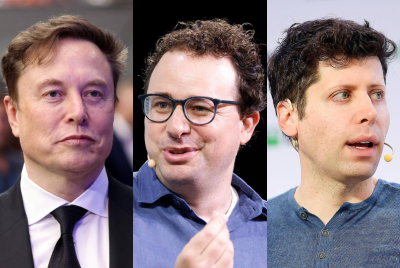
'Secretly We're Going to Be Happy': Sam Altman Claims Overworked Humans Secretly Enjoy the Daily Grind
OpenAI CEO argues human ambition will keep work hours long despite AI advancements
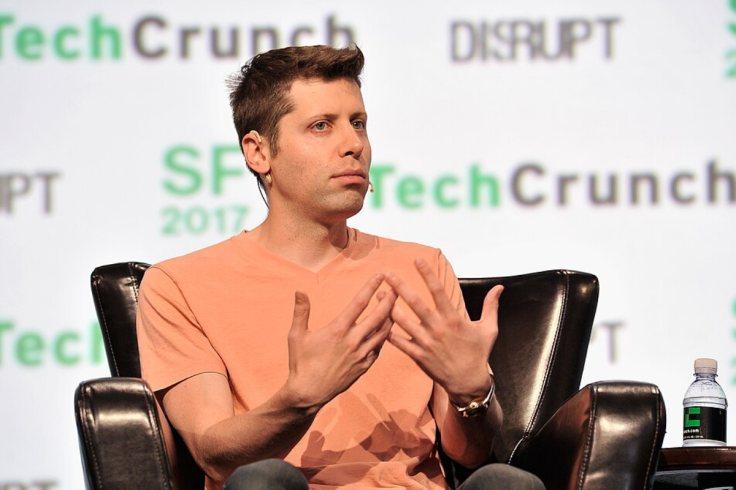
OpenAI chief executive Sam Altman has said artificial intelligence is unlikely to deliver the dramatically shorter work weeks many have hoped for, arguing that people may be 'secretly happy' remaining busy even as technology makes them more productive.
Speaking in late July on the entrepreneurial podcast Relentless, the San Francisco-based tech leader laid out a vision in which AI boosts productivity but does not necessarily shrink the typical working week because human ambition and competition keep filling the time saved.
Sam Altman's 'Secretly We're Going to Be Happy' Work Prediction
Promises of dramatically shorter working hours have accompanied technological advances for decades. Altman told host Ti Morse that despite efficiency gains, society has never achieved the 'four-hour workweek at mass scale,' and he does not expect AI to change that.
'We're all going to be much busier than we thought we were supposed to be in a post-superintelligence world,' he said. 'We're still going to complain about it, but secretly we're going to be happy.'
His reasoning rests largely on his view of human behaviour rather than technical limitations. Altman argued that as technology makes existing tasks easier, people raise their expectations, compete with others and find new things to create or pursue.
In his view, that competitive drive helps fuel economic activity and reflects people's desire to remain useful to others, meaning productivity gains do not necessarily translate into proportionately shorter working hours.

Altman framed that tendency positively, saying he 'really admires' the fact that people continue thinking of new things to create and wanting more for themselves. He also predicted there would be 'lots of great jobs in the future' and 'lots of intellectual fulfillment,' although he said most jobs would adapt more than people currently expect.
When Morse raised the possibility that work involving less direct human input could feel less meaningful, Altman argued that people would continue valuing certain human activities even when machines could perform them, using home cooking as an example.
Whether employers and consumers will continue assigning economic value to those human contributions as AI capabilities improve remains uncertain.
Critics Push Back on the 'Secretly Happy' Argument
Altman's remarks quickly generated critical coverage, particularly around his suggestion that people would remain 'secretly' happy despite being busier than expected.
Some commentators interpreted the argument as placing too much emphasis on individual ambition and competition while overlooking workplace structures, employer expectations and other factors that influence how productivity gains translate into working hours.
That distinction matters. Greater productivity does not automatically determine whether workers receive shorter hours, higher wages or simply more responsibilities. Those outcomes also depend on decisions made by employers, workers and policymakers.
The comments also come several months after OpenAI outlined policy proposals for managing the economic effects of increasingly capable AI systems.
In April, OpenAI proposed measures aimed at helping workers adapt to technological disruption, including incentives to retain, retrain and invest in employees. Its proposals also included piloting four-day or 32-hour working weeks without reductions in pay, alongside ideas such as a public wealth fund intended to distribute some of the economic gains associated with AI.
That does not necessarily contradict Altman's latest comments. OpenAI's proposal presented shorter working weeks as a policy option that governments and employers could actively encourage, while Altman's Relentless remarks concerned his prediction that technological progress alone is unlikely to produce dramatically shorter working hours.
Altman has also argued in 2026 that some companies attributing layoffs to AI may not necessarily be among the technology's most intensive adopters. At the same time, he has repeatedly predicted significant changes to employment as AI becomes more capable.
Those arguments reflect the uncertainty surrounding AI's effects on work. Current evidence does not establish that artificial intelligence will inevitably produce either mass unemployment or dramatically shorter working weeks, while its effects are likely to vary considerably across occupations and industries.
For now, Altman's central prediction is that increased AI productivity will not automatically translate into less time spent working. Instead, he expects people to continue creating new goals and raising their ambitions as technology expands what they can accomplish.
Whether that ultimately leaves workers more fulfilled, better compensated or simply expected to produce more will depend not only on AI itself, but also on how employers, workers and policymakers choose to distribute its productivity gains.
© Copyright IBTimes 2026. All rights reserved.
- Recommended For You