EU Demands Stronger Border Controls After Ceuta Crisis: How 'Smart' Technology Failed Border Security
European Commission president advocates for enhanced border security measures
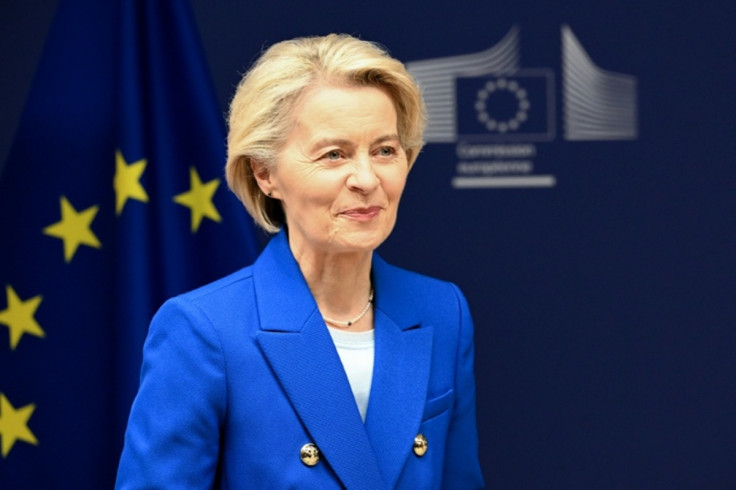
The European Union (EU), through European Commission President Ursula von der Leyen, is calling for strong border controls and physical barriers along EU borders, in a letter addressed to Spanish Prime Minister Pedro Sánchez. This, after the Ceuta chaos last week, where thousands of Moroccans swam through the Spanish exclave to reach European shores. Some 72 swimmers died in the attempt to cross borders.
'From this incident, it is clear that we must do more to strengthen our borders at critical points, both with vigilant monitoring and the use of physical barriers where needed,' von der Leyen's letter read. Sánchez has been widely criticised among his EU and European colleagues for how the migration crisis was handled.
Emergency Meeting
A meeting among the interior ministers of the 27-member countries has been scheduled on Tuesday, 4 August, to discuss the matter extensively. One of the more important issues is the reintroduction of border controls within the Schengen Area, the supposed border-free travel zone covering 29 European countries.
Von der Leyen has also reached out to Morocco for a possible partnership with the EU. 'In cooperation with Spain, especially on anything related to Ceuta and Melilla, we could enhance border management early-warning systems and improve our technical and financial support to Morocco,' the EU leader said.
Ceuta and Melilla are autonomous Spanish port cities located on the northern coast of Africa. They are also the only land boundaries the EU shares with Africa. For years, the EU has invested in technologies that track migration flows and create digital traces.
What Happened to the EU's Smart Technologies?
These technologies are supposed to be at the Spanish southern border. However, it was found that the implementation of these technologies is 'costly and slow.' They also need supporting infrastructure.
🚨BREAKING: An emergency has now been declared in the Spanish city of Ceuta after tens of thousands of illegal migrants break in from Morocco
— Inevitable West (@Inevitablewest) July 30, 2026
Pedro Sánchez is REFUSING to deploy the military to defend the borders. 🇪🇸 pic.twitter.com/OvtzvEZxBs
In a report, the non-profit organisation EuroMed Rights states: 'Official narratives rely on the idea that digital technology is needed to improve the control of borders. However, there is an overall impression that there are not enough means to support this infrastructure, let alone providing training for these systems. Introducing automated systems for detection tasks is seen as useless if there are not enough ships available to conduct the rescue operations.'
EuroMed Rights wrote these observations in a report titled 'Digital Technologies for Migration Control at the Spanish Border' in 2024. Aside from smart technology, security in Ceuta and Melilla is augmented by high-wire fences, surveillance cameras and Spain's Civil Guard. Police and military forces are also around.
Strained Relations
The security measures at the border could not control close to 70,000 Moroccans trying to reach Spanish shores. Of the 72 recorded deaths, 11 didn't even reach Spanish territory. Some European leaders balked at the extraordinary migration situation, criticising Spanish leadership for indirectly inspiring the act of tens of thousands of Moroccans.
Italy was quick to suspend the Schengen Agreement with Spain, a move that the European Commission didn't agree. Denmark and Finland publicly supported Italy's bold move, with the Czech Republic going further as Prime Minister Andrej Babiš called for Spain's suspension from Schengen membership.
Von der Leyen, however, asks for more unified measures to strengthen border control instead of ganging up against one nation. The commission president sought 'a common European response, united action and solidarity.'
© Copyright IBTimes 2026. All rights reserved.
- Recommended For You