

SpaceX Share Price Surge Creates Paper Millionaires, But Lock-Up Rules Keep Wealth Out of Reach
SpaceX's IPO transforms employees into millionaires, but with a catch

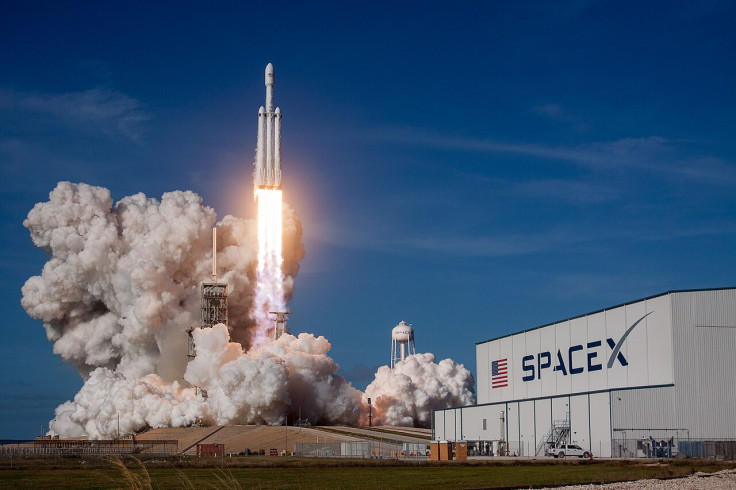
SpaceX shares exploded higher on their first day of trading on Friday, closing near $161 (£127) and instantly creating more than 4,400 new paper millionaires inside the company. For welders, technicians and cafeteria workers who spent years on modest salaries, the SpaceX IPO delivered life-changing numbers in their brokerage accounts. But there is a catch: most of them cannot sell a single share for months.
The listing pushed SpaceX's valuation above $2 trillion (£1.58 trillion) and triggered widespread interest in whether Elon Musk had become a trillionaire, a threshold Forbes confirmed he crossed on listing day. Geiger Capital, a market commentator on X, wrote: 'Elon Musk just created ~5,000 new millionaires, current and former $SPCX employees. Of those ~5,000 people, roughly 400 of them will see stakes worth $100+ million.' Bull Theory, which tracks market and macro trends on X, highlighted the unusual breadth of the wealth distribution, noting that many beneficiaries were 'not executives or founders' but 'welders, technicians, machinists, and launch crew.'
SpaceX created over 4,400 millionaires today, and many of them are regular working people.
— Bull Theory (@BullTheoryio) June 12, 2026
They are not executives or founders, they are welders, technicians, machinists, and launch crew, the people who showed up every day and built the rockets with their hands.
Around 400 of… https://t.co/FLHnF5lvok pic.twitter.com/Ys82x3JiMp
Juan Hernandez and the Factory Floor Millionaires
One clear example is Juan Hernandez. In 2015 he took a $28-an-hour (£22) contractor job at SpaceX and later received a modest equity grant worth about $10,000 (£7,900) at the time. At the IPO price his stake reached roughly $880,000 (£695,000). And after the first-day pop in the SpaceX share price, it crossed $1 million (£790,000). Hernandez is 42, an immigrant from Mexico with a wife and three children, and has said he plans to keep working.
The New York Times reported that more than 4,400 current and former SpaceX employees are now paper millionaires, with Fortune citing similar analysis showing roughly 400 of them could hold stakes worth $100 million (£79 million) or more.
bro immigrated from Mexico and took a $28/hr contract welding job in 2015.
— shirish (@shiri_shh) June 12, 2026
didn't even know what SpaceX was.
they gave him $10,000 in stock and let him buy more through payroll deductions.
that stake is now worth $880,000.
and he's one of 4,400 employees who became… pic.twitter.com/e775eElet1
SpaceX paid many employees across all levels with equity rather than higher salaries. That approach reached welders, machinists, technicians, cooks and cafeteria staff. MrBanks, a finance commentator on X, framed it as a lesson in ownership economics: 'Welders, cooks, cafeteria staff... SpaceX paid them in stock options, not just salaries. That's the real lesson of this IPO: ownership beats income.'
The Lock-Up Schedule
Most of these new millionaires cannot sell their shares immediately. SpaceX chose a tiered lock-up schedule rather than the standard 180-day block — allowing employees to sell up to 20% of eligible shares after second-quarter earnings, expected in August, with additional tranches of roughly 7% unlocking in waves through December. Musk himself faces a separate 366-day lock-up.
Shanaka Anslem Perera, a finance writer on X, noted: 'None of the winners can touch the money yet. The first selling window opens after the August earnings report and the rest unlocks in waves through December.'
The structure was designed to reduce sudden selling pressure that could weigh on the share price, leaving most employees in an unusual position: millionaire status confirmed on paper but with limited liquidity until the autumn.
The SpaceX IPO has created one of the broadest employee windfalls in modern tech history, yet much of that wealth remains locked behind market mechanics.
© Copyright IBTimes 2026. All rights reserved.