$1.3 Trillion and Counting: Where Does Trillionaire Elon Musk Hide His Money?
Elon Musk's new trillionaire status is less a mountain of money than a bet that markets will keep believing in his vision.

Elon Musk became the world's first trillionaire this week after the record-breaking stock market debut of SpaceX in New York, with Forbes calculating his net worth at around $1.3 trillion the vast majority of it tied up not in bank accounts, but in shares of his own companies.
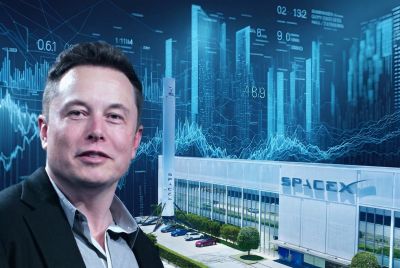
SpaceX, listed under the name Space Exploration Technologies, completed an initial public offering that catapulted the rocket maker to a market value of about $2.6 trillion. Musk's personal holding in SpaceX, including stock options, is put at a little over 38%, giving him roughly $1 trillion of paper wealth from that stake alone. Add in his roughly 10% holding in Tesla, now valued at around $1.5 trillion, and it becomes clearer how one man has ended up sitting on a fortune that exceeds the annual output of many countries.
What he does not have, at least by his own account, is a giant pile of cash.
In a recent discussion, Musk said that 'only about 0.1%' of his wealth is held in cash or cash-like assets such as money market funds, certificates of deposit or short-term US Treasuries. On Forbes' numbers, that still works out to at least $1 billion in liquid assets, which is plenty of walking-around money by any normal standard, but a rounding error next to the headline figure.
In the future, a trillion times a trillion dollars will be spent on making antimatter to travel to other star systems
— Elon Musk (@elonmusk) June 19, 2026
How Elon Musk's Trillion Is Really Held
Most billionaires are heavily invested in their own ventures, but Musk is an extreme case. His fortune lives almost entirely inside a cluster of companies he founded or controls, which means his personal net worth rises and falls minute by minute with their market prices.
The core is SpaceX, now not only one of the most valuable aerospace businesses ever created but, on paper, one of the most valuable companies in the world, full stop. With a $2.6 trillion market capitalisation and Musk's 38% stake, his holding is in the region of $1 trillion, 'give or take a few tens of billions', as one estimate drily puts it.
Then there is Tesla. Once a volatile upstart on the stock market, the electric carmaker is currently valued at around $1.5 trillion. Musk owns about 10% of the company, giving him roughly $150 billion in Tesla equity.
These two holdings dwarf everything else. The Boring Company, his tunnel-digging outfit, and Neuralink, which is developing brain implants, remain private and far smaller by comparison. The Wall Street Journal has estimated each of those at about $5 billion. Even if those valuations prove correct, they barely move the dial for a man whose wealth can shift by more than that in a single trading session.
Strip away the astronomical numbers, and the pattern looks surprisingly familiar. Rather than hiding cash in offshore accounts, Elon Musk is largely 'asset rich, cash relatively poor' in the way many founders are, albeit on a scale never before seen.
JUST IN: Elon Musk's SpaceX projected to trade above $2 trillion valuation tomorrow. pic.twitter.com/06MDEJFvTp
— Watcher.Guru (@WatcherGuru) June 11, 2026
A Fortune That Moves With The Market
Because most of Musk's fortune is anchored in publicly traded shares, it is better understood as a volatile claim on future profits than as a static pile of money. If Tesla's share price or SpaceX's valuation were to fall sharply, the Forbes net worth tally would come down with them.
That dependence on market capitalisation is not a minor detail. It means that the world's first trillionaire could, in theory, stop being a trillionaire in an afternoon if investor sentiment turned. The structure of his wealth also limits how easily he can convert it to cash without unsettling the very markets that made him so rich.
There is an obvious tension here. His status as a trillionaire rests on the idea that these companies will keep justifying, or expanding, their sky-high valuations. Supporters point to rockets launched and cars sold. Critics see a great deal of expectation priced into both firms and warn that those expectations can change.
Investors watching from the sidelines are already trying to decide what Musk's new status means for them. The SpaceX offering has drawn intense interest, but not everyone is convinced that following the richest man alive into his flagship company is the smartest move.
One prominent advisory service, The Motley Fool's Stock Advisor, made a point of telling its readers that Space Exploration Technologies did not make the cut for its current list of '10 best stocks to buy now,' despite all the noise around the IPO. Instead, it highlighted how past picks such as Netflix in 2004 or Nvidia in 2005 went on to deliver returns that turned $1,000 stakes into hundreds of thousands or even more than $1 million, arguing that disciplined stock selection beats chasing the latest market sensation.
Their logic, essentially, is that just because Elon Musk has become the world's first trillionaire through SpaceX and Tesla, it does not automatically follow that those shares are the best place for new money today. His personal wealth may be a snapshot of past success and present optimism, rather than a straightforward guide to future performance.

What can be stated with confidence is relatively simple. Musk's net worth, as tracked by Forbes, stands near $1.3 trillion. About $1 trillion of that is tied to his 38% stake in SpaceX. Roughly $150 billion is in Tesla stock. Around $10 billion, give or take, is spread across smaller ventures such as The Boring Company and Neuralink.
Cash and near-cash instruments account for about 0.1% of the total. All of these figures are estimates based on current valuations and could move sharply as markets rerate his companies, so they should be treated as indicative rather than fixed sums.
© Copyright IBTimes 2026. All rights reserved.
- Recommended For You