Trump Solicitor General D John Sauer Reshapes Supreme Court With Aggressive Push for Executive Power
Sauer's assertive approach in the Supreme Court reflects a shift in executive power dynamics under Trump.
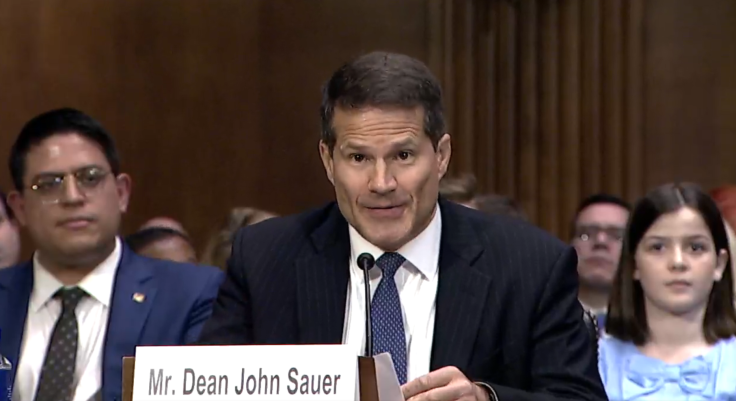
D John Sauer's rise as US solicitor general has become one of the clearest signs of how Donald Trump's legal team is seeking to reshape the Supreme Court, with the Trump administration now pressing a far more assertive view of executive power in Washington and beyond. Sauer is the lawyer carrying some of the administration's most consequential arguments before the justices, from tariffs to voting rights and immigration, and he is doing so in a way that has drawn both admiration from conservatives and unease from his critics.
The news came after Sauer, once best known as Trump's personal lawyer, moved into the solicitor general's office and took up disputes that go to the heart of how much power a president can claim over federal agencies, border policy and the electoral map. Traditionally, the solicitor general has been treated as a restrained, almost priestly figure in American appellate law, the so-called 'Tenth Justice' whose authority rests as much on credibility as on force. Sauer has not so much broken that mould as bent it until it squeaks.
Trump, Sauer and the Court
Sauer's style is markedly more combative than the office's old ideal of measured detachment. Former solicitor general's office attorney Roy Englert said Sauer has been 'more aggressive than in the first Trump term or prior Republican or Democratic administrations,' a judgement that captures the shift in tone as much as the shift in substance.
⚖️ Supreme Court Debate Over Executive Power Intensifies
— Knowledge Ocean News (@marlin_wizard) May 18, 2026
🔥 US Solicitor General Dean John Sauer faced sharp questions at the Supreme Court as arguments around executive authority and presidential power moved into the national spotlight. CNN analysts suggested some conservative… pic.twitter.com/hhgkp7ZnWK
The Supreme Court's conservative majority has appeared increasingly receptive to the administration's arguments, especially when they are framed around the Constitution's allocation of authority between Congress, the presidency and the courts. CNN analyst Joan Biskupic has described moments in oral argument where conservative justices stepped in to support Sauer when liberal justices pressed him hard, a sign that his case for presidential power is finding a sympathetic audience.
Brett Kavanaugh intervened during a tense exchange with Sonia Sotomayor, helping to steer the discussion back towards Sauer's broader constitutional theory. In the Supreme Court, a receptive bench can turn a lawyer's theory into doctrine with surprising speed.
Executive Power on Trial
Sauer has leaned heavily into the legal logic behind the court's Trump immunity ruling, using it to argue for a stronger presidency and a weaker web of independent federal agencies. In one of the more revealing moments, he described some independent agencies as 'a decaying husk with bold and particularly dangerous pretensions,' a line that sounded less like dry constitutional law than a declaration of war on the administrative state.

Supporters see that as overdue discipline. Critics hear something far more dangerous, a blueprint for presidential domination dressed up as constitutional fidelity.
The argument has run straight through the administration's tariff fight as well. During oral arguments, Sauer told the court that trade deficits had brought the country to the brink of 'an economic and national security catastrophe,' and warned that stripping away tariff powers would leave the US exposed to 'ruthless trade retaliation.'
Voting Rights
Voting rights cases have given Sauer another stage on which to test that philosophy. In the Louisiana v. Callais dispute, the Justice Department shifted position and withdrew support for two Black-majority congressional districts, a move that sharpened the sense that this solicitor general's office is less interested in preserving old alignments than in remaking them.
AWFUL. Solicitor General is supposed to represent “the people” before SCOTUS. Instead he’s been “pushing boundaries of the law” & “locked arms with 6-3 conservative supermajority in drive to enhance executive power & overhaul voting rights & election law.” https://t.co/MyK1ob2FvG
— Leslie Proll (@LeslieProll) May 18, 2026
Justice Elena Kagan criticised the court majority for relying on legal theories advanced by Sauer's office, while Justice Samuel Alito brushed off the concern and said the court only needed to 'update the framework.' That is the polite version of a much rougher argument over whose reading of the law gets to define the next era of elections.
Sauer's allies argue that he is simply advocating for a presidency that can actually govern. His critics think the opposite is happening, that the office once meant to steady the court is now helping drive it deeper into partisan terrain. Either way, the stakes are no longer theoretical.
A Lawyer Shaping Doctrine
Before his elevation to solicitor general, Sauer represented Trump personally and was part of the legal effort behind the landmark immunity ruling that expanded protections for presidential actions. He also worked on challenges linked to the 2020 election results, which places him squarely inside Trump's political and legal circle. That background does not automatically disqualify him from public office, but it does explain why his every appearance before the court now feels freighted with more than ordinary legal argument.
The current Supreme Court term is due to conclude by July 1, with several major rulings still pending. Many of them touch the same fault lines Sauer has been pressing since taking office, from agency independence to election law and presidential authority. If the court keeps moving in the direction he is urging, Sauer may end up looking less like a solicitor general than a quiet architect of the Trump era's constitutional settlement.
© Copyright IBTimes 2025. All rights reserved.
- Recommended For You