Is the Presidential Records Act Unconstitutional? DOJ Office Memo Overturned
The federal judge's ruling forces Trump's aides to preserve records while the administration presses ahead with its claim that the president need not follow the law.
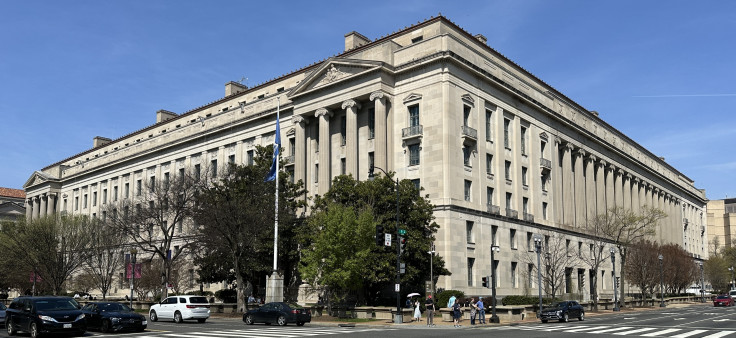
A federal judge in Washington ruled on Wednesday that senior White House officials must follow the Presidential Records Act, directly challenging a Justice Department opinion that suggested President Donald Trump could ignore the law and raising fresh questions over whether the Presidential Records Act is unconstitutional, as claimed by the administration's own lawyers.
The news came after months of mounting tension over record‑keeping inside the Trump White House. Earlier this spring, the Justice Department's Office of Legal Counsel (OLC) issued a memo arguing that the Presidential Records Act, or PRA, overstepped Congress's authority and infringed on what it described as the 'independence and autonomy' of the presidency.
Within days, White House lawyers rolled out looser internal policies that watchdogs said weakened safeguards around preserving official communications, especially text messages and other electronic records.
Judge Pushes Back On DOJ View Of Presidential Records Act
In his 54‑page decision, US District Judge John D. Bates granted a preliminary injunction ordering most offices within the Executive Office of the President to comply fully with the PRA.
The order covers the White House Office, the National Security Council, the Council of Economic Advisers, the US Secret Service within the Executive Office, and senior aides including chief of staff Susie Wiles and deputy chief of staff Stephen Miller.
Those officials must preserve presidential and vice‑presidential records, avoid using non‑official messaging accounts unless copies are promptly forwarded to government systems, and re‑establish record‑retention policies in line with the statute.
The injunction, which has no set end date, takes effect on 26 May and requires the defendants to report back to the court on the steps they have taken to comply.
Notably, Bates excluded several key players from the order, including President Trump, Vice President JD Vance, the National Archives and Records Administration, the National Archivist, the Justice Department and the Attorney General.
The judge pointed to longstanding limits on the courts' ability to restrain a sitting president's official conduct, stating that a court 'generally may not enjoin the President in the performance of his official duties.' Even so, he stressed that records created by the president and then transmitted to staff still trigger those aides' obligations under the PRA.
Presidential Records Act: Judge Challenges Trump Team's Claim It Is Unconstitutional
At the heart of the clash is the question that the Trump administration has pushed into the open: is the Presidential Records Act unconstitutional.
The OLC, in an opinion written by T. Elliot Gaiser, contended that the 1978 law exceeds Congress's power and improperly curbs the presidency. That opinion concluded that the president 'need not further comply with its dictates', effectively inviting the White House to treat the statute as optional.
Judge Bates took the opposite view. In granting emergency relief to the plaintiffs, he wrote that the PRA is 'likely constitutional' and warned that adopting the government's position would 'disable Congress and future Presidents from reflecting on experience.'
He cited the inscription on the National Archives Building, 'What is past is prologue', as a reminder that democratic accountability depends on access to historical records.
He also observed that the absence of another Watergate‑level scandal since Richard Nixon's downfall 'suggests that the sunshine disinfectant of the Records Act is working as intended.'
In his view, it is not for the OLC, the White House or the courts to second‑guess Congress's lawful determination that citizens should eventually have access to records of presidential activity carried out in their name.
Watchdogs See A Test Of Presidential Accountability
The lawsuit was brought by Citizens for Responsibility and Ethics in Washington, American Oversight, the American Historical Association and the Freedom of the Press Foundation, all of whom argued that the OLC opinion and subsequent White House guidance opened the door to the secret destruction or retention of records.
Chioma Chukwu, executive director of American Oversight, said the ruling was 'an important victory for presidential accountability' and for affirming what decades of practice already suggested about the PRA's validity. She warned that the administration's attempt to swap a statutory regime for one based largely on presidential discretion posed a 'serious danger.'
Donald Sherman, president of Citizens for Responsibility and Ethics in Washington, said the court had found that Trump and his administration 'acted illegally as though presidential records are theirs to destroy or hoard at will.'
Sarah Weicksel, head of the American Historical Association, said the decision reaffirmed that presidential records 'belong to the American people, not to any one individual.'
The groups pointed in their filings to Trump's first term, when he took 15 boxes of material, including documents marked classified, to his Mar‑a‑Lago estate instead of turning them over to the National Archives.
The Archives spent months trying to retrieve the records, and the dispute fed into the FBI search of the property. Trump was later indicted on more than three dozen counts over alleged mishandling of classified documents, but the case was dismissed in 2024 after his re‑election.
White House Signals Appeal As Records Fight Deepens
The White House has already indicated that the Trump administration plans to appeal Bates's order. Abigail Jackson, a spokesperson, insisted in a statement that Trump is 'committed to preserving records from his historic time in office' and said the ruling 'fundamentally misunderstands the Administration's position.' She added that officials are confident they will 'ultimately prevail.'
The Justice Department did not respond to requests for comment on the decision or on its own OLC memo.
Since returning to office, Trump has moved aggressively against the bureaucratic machinery that enforces the PRA. The FBI removed agents associated with the Mar‑a‑Lago probe, the Justice Department sidelined staff involved in the case, and Trump fired Colleen Shogan, then the National Archivist. Her acting successor, a career official, and several senior colleagues were also pushed out.
The Justice Department's Office of Legal Counsel issued an April opinion saying the PRA is unconstitutional — a legal view the White House quickly embraced by issuing looser preservation guidance that critics said would weaken safeguards.
The decision prompted lawsuits from Citizens for Responsibility and Ethics in Washington, American Oversight, the American Historical Association and the Freedom of the Press Foundation, which argued the memo threatened long‑standing rules designed after Watergate.
For now, legal experts and advocacy groups are treating the injunction as a sharp rebuke to the OLC memo.
© Copyright IBTimes 2026. All rights reserved.
- Recommended For You