

Trump Reportedly Had a 'Full-Blown Meltdown' as the Supreme Court Decided Against His 'Disgrace' Tariffs
A major Supreme Court ruling dismantles Trump's tariff strategy, igniting political tensions.

A confrontation between presidential power and the judiciary erupted in Washington after the United States Supreme Court struck down Donald Trump's sweeping global tariffs, triggering an angry reaction inside the White House that witnesses described as explosive. The ruling, delivered on Feb. 20, 2026, dismantled a central pillar of Trump's economic agenda and sharply curtailed his attempt to reshape global trade through emergency executive authority.
Reports emerging from the White House indicated that the president learned of the decision while attending a breakfast meeting with US governors, where his response quickly escalated into a heated outburst. The episode underscored the political and constitutional stakes surrounding one of the most consequential trade cases in decades.
Supreme Court Delivers Major Blow to Presidential Tariff Powers
In a 6–3 decision, the Supreme Court ruled that Trump lacked legal authority to impose worldwide tariffs using the International Emergency Economic Powers Act (IEEPA), a statute historically used to regulate financial transactions during national emergencies rather than levy taxes. Chief Justice John Roberts, writing for the majority, concluded that tariff-setting authority rests primarily with Congress under the US Constitution.
The opinion stressed that the executive branch must demonstrate 'clear congressional authorisation' when claiming sweeping economic powers. The Court relied in part on the 'major questions doctrine,' which requires explicit legislative approval for actions carrying vast economic and political consequences.
🚨Breaking: The US Supreme Court has ruled against President Trump’s tariff authority, 6-3!
— Red Line News (@RedLineNewsUSA) February 20, 2026
He still has options, but they just put the fast paced winning we’re used to in quicksand!
This is a MAJOR BLOW, but President Trump can handle anything!pic.twitter.com/2PGg3KzOb3
Justices Sonia Sotomayor, Elena Kagan, Ketanji Brown Jackson, Neil Gorsuch and Amy Coney Barrett joined Roberts in the majority. Conservative justices Clarence Thomas, Samuel Alito and Brett Kavanaugh dissented, arguing that tariffs historically fall within broader presidential authority to regulate imports.
The decision effectively invalidated tariffs that generated more than $175 billion in revenue and raised immediate questions about whether importers could seek refunds from the federal government.
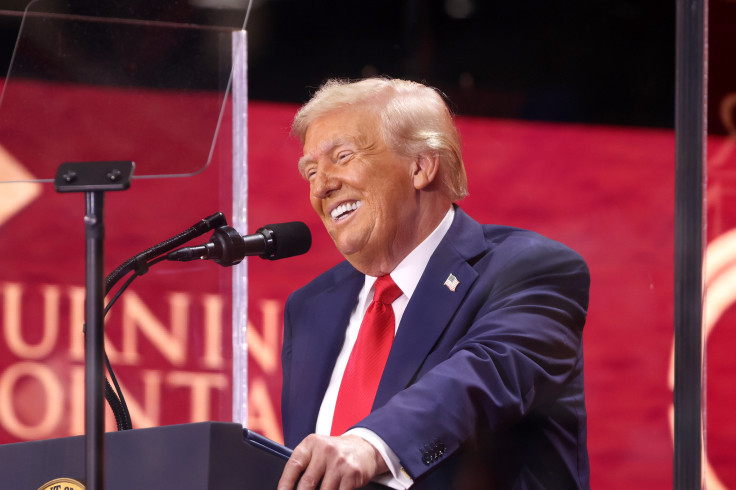
According to reporting circulating from multiple observers and amplified in televised political coverage, Trump learned of the ruling during a White House breakfast with state governors. He reportedly called the decision 'a disgrace' shortly after receiving the news.
A CNN report cited that the president became 'enraged' and started ranting about the decision before swearing 'these e*ing courts.' Social media comments described his reaction a 'full-blown meltdown.' While CNN's characterisation reflected witness descriptions rather than an official transcript, contemporaneous reporting confirms that Trump erupted in frustration immediately after the decision became public.
BREAKING: CNN is reporting that Trump found out about the Supreme Court decision during a breakfast with governors. Once he learned about the decision, he started having a full-blown meltdown. This is incredible. pic.twitter.com/xWra16pzaV
— Trump Lie Tracker (Commentary Account) (@MAGALieTracker) February 20, 2026
Public remarks later the same day reinforced the tone. Trump sharply criticised the justices who ruled against him and insisted he retained alternative legal pathways to impose tariffs, signalling that the confrontation between the executive branch and the courts was far from over.
Economic and Political Stakes Behind the Tariff Battle
The tariffs formed the backbone of Trump's second-term trade strategy, aimed at reducing trade deficits and pressuring foreign governments into renegotiating economic agreements. The measures applied broadly across trading partners and disrupted decades of US trade policy norms.
Businesses, economists and several states challenged the tariffs in court, arguing that the administration improperly used emergency powers to bypass Congress. Lower courts had already expressed scepticism, concluding that IEEPA did not grant 'unbounded' authority to impose import taxes.
Economists warned that the tariffs increased costs for American companies and consumers during a period of persistent inflation pressures. Critics also argued that unilateral tariff policy introduced uncertainty into global markets and complicated diplomatic relationships with allies.
Supporters inside the administration countered that tariffs strengthened domestic industry and generated federal revenue. Trump repeatedly framed the case as critical to national security, warning prior to the ruling that striking down the tariffs would endanger the country's economic position.
What Comes Next After the Court's Decision
Despite the setback, Trump announced plans to pursue a new tariff framework under different statutory authority, including provisions within the Trade Act of 1974 that allow temporary import restrictions.
Legal analysts note that the Supreme Court did not prohibit tariffs entirely; instead, it limited the president's ability to impose them under emergency economic law. That distinction leaves room for renewed trade actions, though future measures will likely face intense judicial scrutiny.
The broader constitutional implications may prove even more significant. By reaffirming congressional control over taxation, the Court signalled renewed willingness to police expansive executive claims across economic policy.
Markets, foreign governments and domestic industries now face renewed uncertainty as the administration searches for alternative mechanisms to revive its trade agenda. The political fallout also threatens to intensify tensions between Trump and institutions he has frequently accused of obstructing his policies.
The ruling did more than halt a tariff regime — it triggered a constitutional clash whose shockwaves are likely to reshape the limits of presidential power long after the breakfast meeting where the decision first landed.
© Copyright IBTimes 2026. All rights reserved.
- MOST POPULAR IN World


