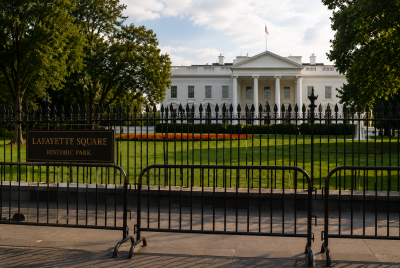
Foreign Steel in Trump's White House Ballroom Sparks Questions Over 'America First' Tariffs
Critics question Trump's decision to use foreign steel in White House ballroom

President Donald Trump is facing renewed criticism after reports revealed that his White House ballroom will include $37 million (£27 million) worth of foreign steel. The contribution, reportedly supplied by Luxembourg-based steelmaker ArcelorMittal, has reignited debate over the apparent contradiction between Trump's trade policies and his high-profile construction project, according to NYC Today.
Trump's White House Ballroom Expansion Includes $37M of Imported Foreign Steel
The East Wing expansion, a $400 million (£292 million) project, is intended to add grandeur to the presidential residence, including a new ballroom described by officials as 'state-of-the-art'. White House spokesperson Davis Ingle defended the use of foreign materials, saying Trump was 'making the White House beautiful and giving it the glory it deserves at no cost to the taxpayer something everyone should celebrate'.
Critics Point Out Contradiction Between Foreign Steel Use and America First Tariffs
The revelation has drawn swift criticism online. Many commentators highlighted the irony of relying on imported steel while Trump continues to champion his 'America First' tariffs policy, designed to protect domestic steel producers. Social media users expressed disbelief, with one post reading: 'Why is Donald Trump using foreign steel for his vanity ballroom? What happened to America First?' Another added: 'Donated or not, they should be using American steel. Trump is selling out and looting America', as reported by Hindustan Times.
Industry experts noted that while the steel donation may reduce costs for the project, it also sends mixed signals to American manufacturers who have benefited from tariffs. Some argue that using foreign steel undercuts domestic production, even if the donation itself is framed as a charitable contribution.
Timing of Foreign Steel Donation Raises Questions About Potential Tariff Benefits
Observers have noted that the steel donation arrived shortly before adjustments were made to the United States' tariff system that could potentially benefit ArcelorMittal, including reductions in duties on Canadian steel exports. Critics argue that the timing of the donation may suggest preferential treatment, though the White House insists the decision was based on the quality of the steel rather than its origin.
Trump defended the materials, stating: 'Steel is like everything else, including human beings. Steel could be high quality, and it can be low quality. This is great steel as opposed to garbage steel, because they dump a lot of garbage around.' Analysts note that such statements focus on quality, but the optics of foreign steel in a project tied to 'America First' policy have heightened public scrutiny.
ArcelorMittal Contribution Sparks Debate Over Policy and Domestic Steel Industry
ArcelorMittal, the world's second-largest steel producer, has significant operations across Europe and North America. The company's donation represents one of the largest foreign steel contributions to a White House project in recent memory.
Trump's tariffs, intended to boost domestic manufacturing, have been controversial and drawn mixed responses from industry leaders and international partners. The ballroom controversy has now become a focal point for critics, who argue that the administration's actions appear inconsistent with its messaging on supporting American steel. Questions persist over transparency, donor influence on policy, and the impact on domestic steelworkers. The debate underscores the tension between symbolic presidential initiatives and global supply chain realities.
© Copyright IBTimes 2026. All rights reserved.
- Recommended For You