Supreme Court Birthright Citizenship Case May Decide Who Gets US Citizenship at Birth
The court aims to avoid constitutional rulings and may find Trump's order invalid on statutory grounds, with a decision expected in June


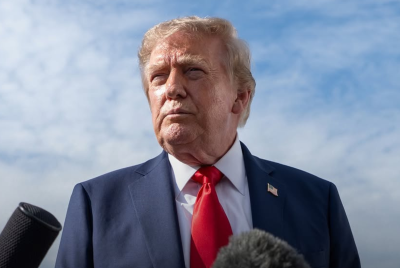
Donald Trump made an unprecedented appearance at the US Supreme Court this week as justices began hearing arguments that could reshape American identity.
The historic legal battle explores whether the government can strip automatic rights from children born on US soil to undocumented parents. With millions of families waiting on a verdict, the final ruling threatens to dismantle a century of established legal tradition.
A Stalled Mandate Faces Judicial Scrutiny
President Donald Trump issued a directive on 20 January 2025 to halt the automatic right to American citizenship for almost anyone born on US soil. This mandate has yet to be implemented, as various lower courts tasked with reviewing the policy have consistently ruled it unlawful.
During more than two hours of arguments this Wednesday, most of the justices looked ready to stick with those earlier decisions and strike the order down. A large part of the bench didn't seem to buy the idea that the US should quit handing out citizenship to babies born to people here on short-term visas or living in the country undocumented.
The administration insists that ending automatic citizenship at birth is the only way to truly curb illegal immigration numbers. However, critics argue that such a shift would overturn more than a century of settled law and dismantle a pillar of the US immigration system for generations.
High Stakes and Historical Precedents
Trump made the unusual decision to watch the proceedings in person this Wednesday, a sign of the immense significance surrounding the dispute. Losing this battle would mean another blow from the high court for the Republican leader, coming right after his global tariffs were tossed out last month. However, a victory would give him the green light to finally follow through on his promise to overhaul the nation's immigration rules.
Over the course of more than two hours, US Solicitor General John Sauer tried to persuade the bench that the 14th Amendment—originally meant for formerly enslaved people—along with various legal rulings or acts of Congress, have all wrongly broadened who gets citizenship at birth.
Chief Justice Roberts probes Solicitor General Sauer on salience of "birth tourism" in birthright citizenship case: "You do agree that has no impact on the legal analysis before us?"
— CSPAN (@cspan) April 1, 2026
Sauer: "We're in a new world now."
Roberts: "It's a new world, it's the same Constitution." pic.twitter.com/aRSSEjpkrh
Chief Justice John Roberts, whose vote is seen as a crucial deciding factor, raised doubts about whether Trump has the power to deny citizenship to children born to undocumented parents. 'I'm not quite sure how you can get to that big group,' Roberts said.
Debating the Meaning of Allegiance
Legal arguments revolved around a vital phrase in the 14th Amendment that grants citizenship to those born or naturalised in the US who are 'subject to the jurisdiction thereof.' According to Sauer, that rule should be limited strictly to the children of foreign officials and a few other very specific categories.
He claimed that parents living in the country illegally still owe 'allegiance' to their own nations and are not truly under the power of US law. Pointing to a past court ruling, he went on to argue that 'permanent residence and domicile decides [citizenship]. That's what the court should be bound by.'
Supreme Court Justice Brown Jackson: Your view of birthright citizenship turns on what the status of the parents is, not the child. Help us understand why we wouldn't see a mention of parents in the text of this Amendment.
— Catch Up (@CatchUpFeed) April 1, 2026
US Solicitor Sauer: I think it's well understood that… pic.twitter.com/mL5EVPVz5Q
However, several justices pointed out that such a reading would completely change the way Americans and the rest of the world view the way citizenship is granted in the US. Justice Elena Kagan suggested the government was trying to scrap a birthright citizenship tradition that goes all the way back to English common law.
'What the 14th Amendment did was accept that tradition and not attempt to put any limitations on it. That was the clear rationale,' the liberal justice said.
The Path to a Final Ruling
Other members of the court drew attention back to the landmark 1898 decision in United States v Wong Kim Ark, which confirmed that children born to Chinese immigrants on US soil are indeed citizens.
Representing the plaintiffs in court this Wednesday, ACLU attorney Cecillia Wang leaned on that specific case to argue for overturning the executive order. 'If we agree with you how to read Wong Kim Ark, then you win,' Justice Brett Kavanaugh remarked. 'That could be just a short opinion.'
KAVANAUGH: If we agree with you on how to read Wong Kim Ark, then you win. That could be just a short opinion, right?
— Aaron Rupar (@atrupar) April 1, 2026
WANG: Yes
SCOTUS CROWD: *laughs* pic.twitter.com/xFWiifihIL
It is still unclear if the court will hand down a far-reaching decision or a more limited one. Legal experts pointed out that there is a significant difference between a broad ruling grounded in the Constitution and a narrower one focused solely on written laws.
The justices might decide to look at a 1952 law passed by Congress that officially established birthright citizenship, rather than getting stuck in a huge constitutional argument, according to immigration expert Stephen Yale-Loehr.
'The court does not like to rule on constitutional issues if it doesn't have to. The court could argue that the Trump executive order is invalid on statutory grounds,' Yale-Loehr said. A final decision from the bench is likely to arrive in June.
© Copyright IBTimes 2026. All rights reserved.
- Recommended For You