'What a Stupid Question': Donald Trump Explodes at Journalist Querying Senate Filibuster Demand
US President dismisses reporter's question as 'stupid' during a tense exchange over his push to cancel the upcoming congressional August break.

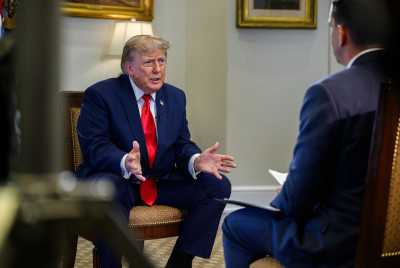
President Donald Trump sharply rebuffed a reporter on Monday dismissing a question about congressional scheduling as a 'stupid question' while demanding that the US Senate cancel its upcoming August recess to pass the Safeguard American Voter Eligibility (SAVE) Act.
Speaking during a public appearance in Michigan, the president insisted that lawmakers remain in Washington rather than depart for their traditional summer break.
The heated exchange highlights a high-stakes legislative showdown between executive priorities and congressional leadership.
As debate intensifies over voter identification rules and the future of the legislative filibuster, the confrontation underscores deepening political tensions in the nation's capital.
President Trump Demands Senate Cancel August Recess
The controversy began when reporters on 27 July questioned the administration's rationale for urging senators to abandon campaign travel and stay in session.
When asked why lawmakers should not be out across the country campaigning, President Trump rejected the inquiry outright.
'On the Senate, on the SAVE Act, why do you want the US Senate to stay in town?' the reporter asked. 'Shouldn't they be out across the country campaigning?'
Trump immediately rejected the question. 'What a stupid question,' he responded, initially refusing to explain. After the reporter repeated part of the question, Trump doubled down.
'For Jennifer to ask such a stupid question, and she's a smart person. I knew her all the way back in the Iowa days when she said Trump was going to win, and boy was she right.'
Visibly frustrated, the president eventually explained why he believes senators should postpone their break. 'The SAVE Act has to be done. They shouldn't leave town. I'm not going to stop them from doing it, but they should get the SAVE Act done,' said Trump.
SAVE Act Ensures Valid Proof Must for Voting
The legislation Trump spoke about is the Safeguard American Voter Eligibility (SAVE) Act. This Republican-backed proposal would require people registering to vote in federal elections to provide in-person documentary proof of US citizenship. Supporters of this act argue that the measure would strengthen election integrity by preventing non-citizens from voting.
American law has already denied non-citizens the right to vote in federal elections since 1996. However, bill supporters explained that needing proof of citizenship during voter registration would add another layer of protection to the system.
Critics argue that the proposal could make voter registration much more difficult for eligible Americans. Opponents have expressed concerns that needing in-person registration with documentation would eliminate many online and mail-in voter registration methods, possibly causing issues for millions of voters who might not have immediate access to the documentation required.
Pressure Mounts on Senate Majority Leader John Thune
The fiery remarks followed a social media post where President Trump urged Senate Majority Leader John Thune to block the chamber from leaving town. He suggested that lawmakers stay until the SAVE Act is passed or, alternatively, terminate the Senate legislative filibuster entirely.
The filibuster currently requires a 60-vote threshold to advance most legislation. While traditional Republicans have defended the rule, the president argued that removing it would allow the party to rapidly advance key fiscal and electoral priorities.
Senate leaders face difficult math, as the chamber remains closely divided and lacks the explicit votes required to alter long-standing operational rules or pass the voting bill directly.
Political Fallout and Midterm Implications
The escalating dispute threatens to complicate the final legislative window before the scheduled August break. Several conservative senators have publicly backed calls to withhold unanimous consent for the recess until election security measures reach the floor.
As the partisan battle lines harden, the administration's aggressive lobbying campaign demonstrates that executive oversight and legislative pacing will remain major flashpoints as both parties look ahead to upcoming midterm elections.
© Copyright IBTimes 2025. All rights reserved.
- Recommended For You