Trump Freezes Out John Thune While Maintaining Contact With Mike Johnson as GOP Fears Midterm Fallout
Trump keeps close contact with Mike Johnson as sparse talks with John Thune unsettle Senate Republicans.

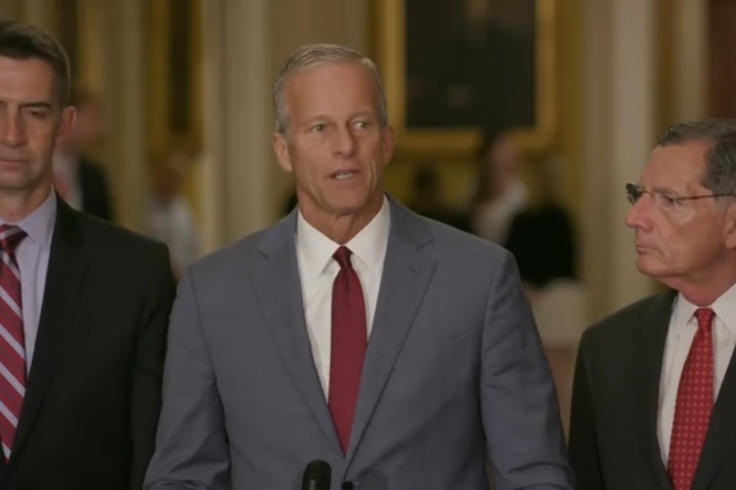
President Donald Trump has been speaking to House Speaker Mike Johnson far more often than to Senate Majority Leader John Thune, creating a marked split in how the White House deals with the two Republicans leading Congress as the party races to pass its agenda before the November midterm elections.
The imbalance has sharpened concern among Senate Republicans, who fear limited communication between Trump and Thune could complicate negotiations over government funding, election legislation and foreign policy at a critical point in the congressional calendar.
With fewer than 100 days until voters go to the polls, lawmakers say the party cannot afford extended public disputes between the White House and Senate leadership.
Trump and Thune Speak Only When Necessary
John Thune, the South Dakota Republican serving as Senate majority leader, acknowledged that his conversations with Trump now occur only 'more on an as-needed basis'.
People familiar with the discussions said direct contact between the two has become increasingly infrequent in recent weeks, even as Trump has intensified public pressure on Senate Republicans to move his legislative priorities.
Trump publicly questioned Thune's leadership after expressing frustration over the Senate's inability to advance the SAVE America Act, legislation that would require proof of citizenship to register to vote in federal elections. 'Well, we're going to find out and I'll let you know,' Trump said when asked whether Thune remained the right person to lead Senate Republicans.
White House press secretary Karoline Leavitt later said the president's patience with Senate leadership was 'running out'.
Johnson Builds Constant Line to the President
Mike Johnson, the Louisiana Republican who leads the House of Representatives, has maintained regular conversations with Trump, according to Republican lawmakers and aides familiar with the relationship.
Those discussions frequently continue after White House meetings and often extend beyond scheduled conversations as the speaker updates the president on House strategy and legislative progress.
Several Republicans described Johnson as investing heavily in maintaining a direct relationship with Trump while managing one of the narrowest House majorities in modern history.
The differing communication styles have become increasingly noticeable as the administration presses Congress to complete several high-profile priorities before lawmakers return to their districts for the campaign season.
Senate Reality Differs From the House
While Johnson can move legislation through the House with a simple majority, Thune faces a far more restrictive Senate landscape, where most legislation requires 60 votes to overcome the filibuster.
Trump has urged Senate Republicans to pass the SAVE America Act quickly and has pressed Thune to consider cancelling the August recess or changing Senate procedures to accelerate consideration of the bill.
Thune has rejected those options, arguing the Senate's procedural rules and vote count leave little room for unilateral action. 'He doesn't vote in our elections,' Thune said. He also told Politico, 'Math is math. He thinks I can wave the magic wand.'
The Senate majority leader has instead focused on keeping the government funded beyond the Sept. 30 deadline, confirming executive nominees and advancing sanctions legislation, while avoiding politically difficult votes that could affect vulnerable Republican incumbents before November.
Republicans Worry Public Disputes Could Hurt the Party
The increasingly public disagreements have unsettled Republican senators, some of whom privately argue the party risks distracting voters from legislative achievements. One Republican senator described the situation bluntly. 'We need to be talking up the wins... and instead we are knifing each other.'
Lawmakers are also trying to resolve several major policy questions before Congress leaves Washington for the final stretch of the campaign, including government appropriations and legislation connected to US policy toward Iran.
Republicans familiar with internal discussions said prolonged friction between Trump and Senate leadership risks slowing those negotiations at a time when party leaders are attempting to present a unified message heading into the midterms.
Thune Retains Support Inside the Senate
Despite Trump's criticism, Thune continues to enjoy broad support among Senate Republicans, according to lawmakers and aides familiar with the conference. Republican senators have publicly defended his leadership, pointing to the procedural constraints of the Senate and the narrow Republican majority.
People close to Senate leadership also expect Thune to seek another term as Republican leader after the midterm elections. For now, however, Republicans face a practical challenge rather than a political one: bridging the communication gap between the White House and the Senate as Congress works through an increasingly compressed legislative schedule before November.
© Copyright IBTimes 2026. All rights reserved.
- Recommended For You