

Supreme Court Immunity Won't Shield Trump From Civil Suits, Ex State Department Official Warns
Nearly a million investors who lost billions on $TRUMP memecoin could still haul Donald Trump before the courts.
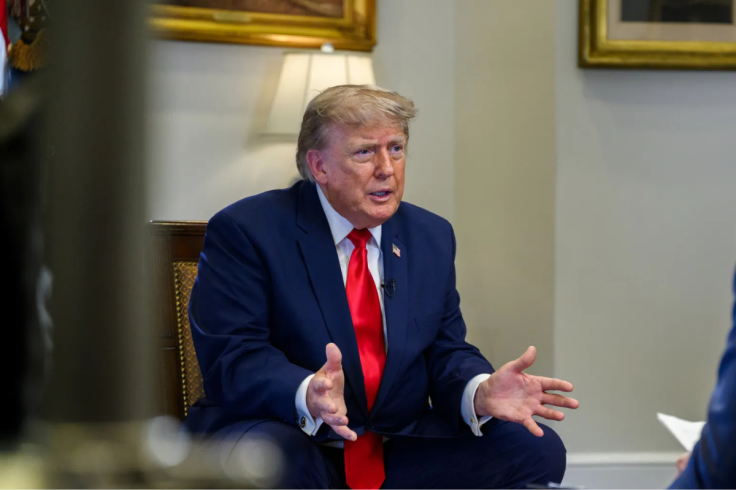
The US Supreme Court's immunity ruling that insulated President Donald Trump from many criminal charges will not protect him from being sued by ordinary investors, a former senior official has warned.
Richard Stengel, who served in the State Department, said the Supreme Court's 2024 decision on presidential immunity leaves Trump exposed to civil action over his role in the $TRUMP memecoin collapse.
Speaking about the Supreme Court immunity framework in early July, Stengel argued that nearly one million people who lost money on Trump's official cryptocurrency could still take him to court. His comments followed new figures suggesting those investors lost more than $3.8 billion as the token's value crashed.
For Stengel, the core point is blunt, Supreme Court immunity stops prosecutors in some areas, but it does not slam the door on civil lawsuits.
Supreme Court Immunity and The Trump Memecoin Fallout
The news came after a detailed report on Trump's official $TRUMP memecoin, which was launched just days before his January 2025 inauguration. According to cryptocurrency analytics firm Nansen, 988,905 buyers of the token had, by the end of June, lost a combined $3.8 billion as its value plunged.
The coin peaked at $75.35 before crashing to around $1.76, a fall of about 97%.
The reporting also stated that Trump was positioned to profit from trading activity around the token whether the price climbed or collapsed, because of how the product was structured.
Stengel seized on those figures to argue that the Supreme Court immunity ruling may end up being far less protective than Trump's allies assume. In his view, promoting and profiting from a memecoin does not look like an official act of the presidency.
Speaking on MS NOW, Stengel suggested that once Trump is out of office, investors who lost money on the token will have a clear shot at filing lawsuits that frame the whole thing as a private venture, not a function of state.
'He is still available for prosecution for acts that he does as a private citizen, and I would suspect, after his presidency, a lot of these will be investigated,' Stengel said. He went further, predicting 'shareholder lawsuits by the million people that lost [nearly] 4 billion on buying his memecoin'.
'Beyond Imagination': Corruption, Conflicts and a $400 Million Boost
Stengel has been sharply critical of Trump's financial conduct from the start of his second term.
In the same interview, he argued that the president's money‑making has blown past even the most jaded expectations of Oval Office behaviour. 'There's been corruption of some types in the Oval Office before, but the scale of what he's doing is just beyond imagination,' he said.
He accused Trump of violating 'so many conflicts of interests, the Emoluments Clause both domestic and foreign.' Stengel highlighted one allegation in particular, that the United Arab Emirates spent $400 million buying his memecoin, which he described as 'a large part of the amount of money that he made.' 'It's mind‑boggling,' he added.
Trump's most recent financial disclosure forms stated that his personal wealth increased by roughly $2.2 billion during his first year back in the White House.
Asked last week about that jump, he brushed off any suggestion that the growth was driven by his private ventures. 'You know why I'm profiting?' he said. 'Because the stock market's going up, everybody's profiting.'
Stengel was not convinced. 'I think his supporters would be surprised because they haven't been benefitting from the stock market like he has,' he argued, saying Trump's tactic is to do everything 'in public' and at a scale that feels too mad to challenge.
Nearly a Million Investors, Billions Lost and Talk of 'Scam'
The people who piled into Trump‑linked crypto products are not some tiny niche. The analysis Stengel cited put the number of $TRUMP memecoin buyers at just under one million, with collective losses running into billions. Behind those numbers are individuals whose experiences are now feeding both legal chatter and political anger.
One such investor, crypto trader Nicholas Pinto, said he lost around $500,000 after buying the $TRUMP coin despite having supported Trump in the 2024 election.
'He is leveraging the power of being president to launch currencies, when he seems trustworthy in the public's eye,' Pinto said. 'It is kind of incredible. It is almost a legal scam.'
Another investor, a 45‑year‑old Indiana machinist identified only as Matt, told reporters he had put $40,000, about 30% of his combined crypto and stock portfolio, into a Trump‑linked company called ALT5 Sigma in September. The stock has since dropped 79%, leaving him with a paper loss of about $32,700, although he still holds the shares in the hope they might recover.
Matt, however, does not blame Trump or his family, despite the company being associated with the president's sons. He instead accused Democrats and anti‑Trump investors of taking short positions against Trump‑connected ventures to drive down their value.
He claimed that 'globalists' motivated by what Trump supporters label 'Trump Derangement Syndrome' had sabotaged the project. He also asked that his surname be withheld to avoid an online backlash.
The Supreme Court held in 2024 that a president is absolutely immune from criminal prosecution for certain official acts that fall within what it called his 'conclusive and preclusive constitutional authority.'
The justices added a presumption of immunity for all other official acts, placing the burden on prosecutors to prove that charging a president would not interfere with the Executive Branch.
Crucially, the court drew a line around unofficial conduct, ruling there is no criminal immunity at all for acts that are not part of the president's duties.
The decision did not extend any blanket protection from civil suits over private behaviour. That carve out is exactly where Stengel and other critics now see a potential path of legal risk for Trump once he leaves office.
As the judiciary continues to refine its interpretation of the Supreme Court's 2024 decision, the legal shield surrounding Trump is proving to be far more brittle than initially suggested, keeping the prospect of civil accountability firmly on the table.
© Copyright IBTimes 2026. All rights reserved.