

World Cup Half Time Show Blasted as a 'Bad Trip,' Fans Petitioned Shakira to Write All Songs Going Forward
FIFA's attempt to introduce a Super Bowl-style spectacle at the 2026 final has triggered a backlash, with supporters calling for the return of football's true musical icon.
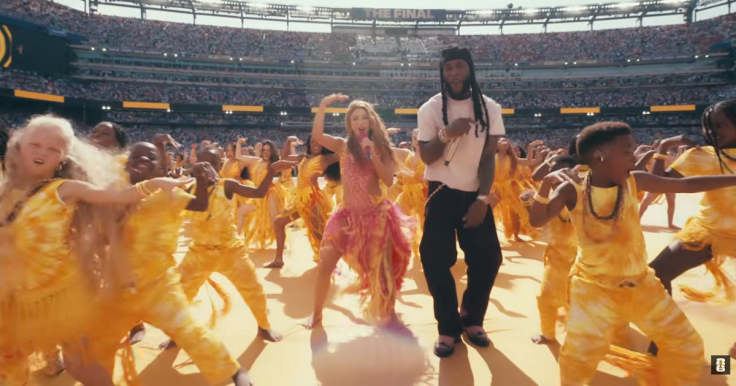
FIFA's ambition to transform the 2026 FIFA World Cup final into a commercial entertainment behemoth has resulted in a spectacular own goal. Supporters across the globe have reacted with fury to the tournament's inaugural half-time show, labelling the surreal production a 'bad trip' that disrupted the rhythm of football's most prestigious match.
The 27-minute break, which significantly exceeded the International Football Association Board (IFAB) guidelines for a 15-minute interval, prompted intense scrutiny of FIFA's growing obsession with American-style sporting spectacles.
As critics dismantle the choreographed extravaganza featuring a star-studded lineup, a singular demand has emerged from the chorus of disapproval: fans are calling for FIFA to stop the experimentation and hand the musical reins back to Shakira, the undisputed 'Queen of the World Cup.'
Fans Question FIFA's New Entertainment Direction
The strongest criticism centred on the overall concept rather than any single artist.
Many football supporters argued that the World Cup has long distinguished itself by allowing the match to remain the main event, with opening and closing ceremonies carrying the weight of musical celebration. Introducing a major half-time spectacle, they said, risks borrowing too heavily from American sporting traditions without recognising the culture that has defined international football for decades.
Across platforms, including X and Instagram, viewers described the performance as disjointed, with some likening the production to a 'bad trip'. Others suggested the combination of musical styles and visual presentation lacked the clear identity that previous World Cup anthems achieved.
Although online reactions varied, one recurring sentiment stood out. Fans repeatedly pointed to Shakira as the artist who best captured the spirit of the tournament, reviving discussion around her previous FIFA hits.
Shakira's World Cup Legacy Continues To Shape Expectations
Few artists have become as closely associated with the FIFA World Cup as Shakira.
Her 2010 anthem 'Waka Waka (This Time for Africa)' remains one of the most commercially successful football songs ever released, surpassing billions of streams and views across digital platforms. The song became synonymous with the South Africa tournament and continues to feature prominently in football celebrations around the world.
She followed that success by contributing 'La La La (Brazil 2014)', reinforcing a connection with the competition that many supporters believe has never been matched.
That history explains why her name resurfaced so quickly following criticism of FIFA's latest entertainment plans. Numerous posts called for Shakira to play a greater role in future tournaments, with some joking that she should 'write every World Cup song from now on'.
'The moment Shakira starts singing, it feels like the World Cup officially began,' one user added. 'This girl was born to make music for the World Cup,' quipped another.
'You can't have the FIFA World Cup without Shakira.'
'The World Cup feels incomplete without Shakira's songs.'
'So basically, Mariah Carey owns Christmas and Shakira owns every World Cup.'
Music reflects how difficult it has become for FIFA to create an anthem that resonates across cultures in the same way earlier World Cup songs managed. Musical tastes have become increasingly fragmented, while global sporting events face far greater scrutiny online than they did a decade ago.
Football and Entertainment Continue To Move Closer Together
The controversy also highlights FIFA's wider commercial strategy.
The governing body has steadily expanded the entertainment surrounding its flagship competitions, mirroring elements that have proved successful in other global sporting events. The 2026 FIFA World Cup, to be hosted by the United States, Canada and Mexico, will feature the tournament's first official half-time show during the final, produced in collaboration with Global Citizen and supported by Coldplay's Chris Martin and Phil Harvey in selecting performers.
For FIFA, the objective is clear. The organisation wants the World Cup final to become not only football's biggest match but also one of the world's largest entertainment broadcasts.
Supporters, however, remain divided over whether that ambition fits comfortably within football's traditions. While many welcome fresh ideas capable of attracting younger audiences, others argue that the sport already commands a global audience without adopting features more commonly associated with American events.
The criticism surrounding the latest performance suggests FIFA faces a delicate balancing act. Expanding entertainment may broaden the tournament's appeal, yet it also raises expectations that every musical moment should carry the same cultural impact as the football itself.
A Familiar Name Still Defines the Conversation
Perhaps the most revealing outcome is that discussion ultimately returned to an artist whose biggest World Cup hit was released more than 15 years ago.
Shakira's continued popularity demonstrates the lasting influence of a song that successfully connected football, culture and international audiences. Whether FIFA intends to revisit that formula remains uncertain, but fan reaction indicates the benchmark has changed very little.
As preparations continue for the 2030 tournament, organisers are likely to keep refining plans for the World Cup's entertainment programme. The online response shows that supporters are willing to embrace innovation, but only when it feels authentic to football's identity rather than an imitation of another sporting spectacle.
The message from the terraces, and from the keyboards of millions of frustrated viewers, is clear: keep the spectacle, but make it authentic to the sport, or risk losing the very audience that makes the tournament a global phenomenon.
© Copyright IBTimes 2026. All rights reserved.