

Trump's Voided $1.8bn Fund Would Have Used Taxpayer Money to Pay Political Allies
Settlement would have granted Trump immunity from IRS audits and allocated taxpayer funds to political allies.
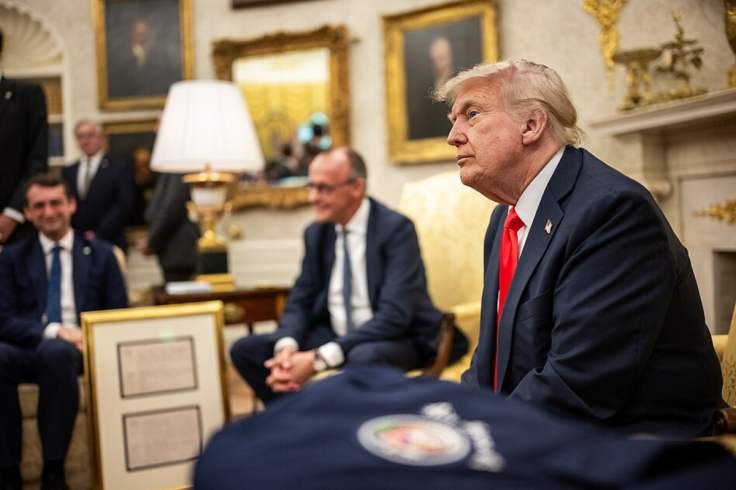
A US federal judge has voided a settlement between Donald Trump and the Internal Revenue Service that would have let his administration hand out $1.8bn (£1.34bn) in taxpayer funds to political allies. The agreement, unveiled in May, also granted Trump personal immunity from IRS tax audits in exchange for dropping his $10bn (£7.47bn) lawsuit against the agency.
District Judge Kathleen Williams ruled on Monday that the case was never a genuine legal dispute to begin with. In a 56-page order, she found Trump and the government he leads were effectively the same party, meaning there was no real opposing side for a court to weigh.
'No Real Opposing Side', Judge Finds
Williams wrote that 'there was never adverseness between the Parties; there was never a case or controversy; and there was never a question as to who would prevail', according to the court order.
She said Trump had used the lawsuit to 'provide some legitimacy to an agreement to confer immunity to people and entities affiliated with the President and to earmark billions of dollars from American taxpayers to redress grievances not defined in the law'.
How the Fund Could Have Paid January 6 Defendants
The so-called anti-weaponisation fund was meant to compensate people who claimed they had been unfairly targeted by the government. The two Virginia plaintiffs who successfully sought an injunction against the fund argued in court filings that it was discriminatory in design, as it would have excluded people like them from claiming compensation while potentially benefiting individuals prosecuted over the 6 January 2021 Capitol riot, including those convicted of assaulting police officers.
The plan was abandoned in early June, a week after that separate Virginia judge temporarily blocked justice department officials from setting it up.
Lawyer Referred for Discipline
Williams referred Trump's lawyer, Alejandro Brito, to the Florida Bar for possible disciplinary action. A second lawyer, Daniel Epstein, was barred from taking on new cases in the Southern District of Florida for at least a year.
She also ordered copies of her order sent to the New York State Bar and the District of Columbia Bar, which count acting Attorney General Todd Blanche and Associate Attorney General Stanley Woodward among their members, as both had signed documents tied to the settlement.
I see @DAGToddBlanche has met Judge Williams.
— Attorney General James Uthmeier (@AGJamesUthmeier) July 13, 2026
Judge Williams and I go way back to when she held me in contempt for telling the truth. https://t.co/T7EuyC9iap
Trump's Lawyer Blames 'Rogue' IRS Leaker
A spokesman for Trump's legal team said the IRS 'wrongly allowed a rogue, politically-motivated employee to leak private and confidential information' about Trump, his family and the Trump Organization. He added that 'President Trump continues to hold those who wrong America and Americans accountable'.
The lawsuit stemmed from a leak by former IRS contractor Charles Littlejohn, whose disclosures formed the basis of a New York Times investigation showing Trump paid just $750 (£560) in federal income tax the year he first won the presidency.
This ruling strips away a deal that would have shielded a sitting president from routine tax scrutiny while directing billions in public money toward unspecified beneficiaries, without the settlement ever facing independent judicial review. Because Williams barred both sides from citing the agreement in future proceedings, the IRS may now be free to pursue the audits the deal was designed to block, a development likely to be tested further if Trump's legal team appeals.
© Copyright IBTimes 2026. All rights reserved.