

Appeals Court Rules USPS Will Suffer 'Irreparable Harm' if Prevented From Blocking Ballots
As courts pull in opposite directions, the USPS finds itself at the centre of America's latest fight over who controls the mechanics of democracy.
A federal appeals court in Washington on Friday cleared the USPS to press ahead with controversial changes to how it handles mail‑in and absentee ballots ahead of November's midterm elections, ruling that the Postal Service would suffer 'irreparable harm' if blocked from implementing the policy while lawsuits continue.
The dispute centres on a Trump administration push to tighten control over which voters receive mail‑in and absentee ballots. In March,Trump signed an executive order directing the USPS to draft a rule that would allow it to refuse delivery of ballot materials in states that do not share detailed, eligible voter lists with the federal government. The directive immediately alarmed voting rights groups, who argue the Postal Service's role is to deliver election mail, not to police voter eligibility.
Appeals Court Backs USPS Over Ballot Delivery Rule
On Friday, a three‑judge panel of the D.C. Circuit Court of Appeals unanimously paused a lower‑court injunction that had temporarily blocked the USPS from finalising and enforcing the new ballot‑delivery rule.
The rule would permit the Postal Service to withhold delivery of mail‑in and absentee ballots where state officials decline to send certain voter data to federal authorities. In practice, that sets up a confrontation between states determined to guard sensitive voter information and a federal agency now claiming it cannot guarantee accurate ballot delivery without it.
In their opinion, the appellate judges said the USPS had made a 'strong showing that they will likely succeed' on key legal arguments, including that the challenge to the rule was 'neither constitutionally nor prudentially ripe for review.' Put more plainly, the panel signalled that opponents of the policy might be suing too early, before the rule has actually gone into effect and produced concrete harms that courts traditionally require.
The judges also rejected claims that the proposal breached a 2021 settlement with the NAACP, which had required the USPS to prioritise monitoring and timely delivery of election mail through 2028. The panel concluded that the new rule fell outside the scope of that agreement, siding, at least for now, with Postal Service lawyers who insisted they retained discretion to change internal procedures.
Crucially, the court accepted the USPS's warning that delaying the policy would inflict lasting damage. Once the November vote has come and gone, the judges wrote, 'there can be no do over', adopting the agency's argument that it would be locked into an election cycle under rules it believes are inadequate.
USPS Policy Tied Directly To Trump's Order
Postmaster General David Steiner had already drawn fire on Capitol Hill this month when he confirmed to lawmakers that the USPS would not deliver mail‑in ballots in states that refuse to hand over the requested voter data. Steiner framed the move as an exercise in accuracy, saying the goal was to ensure 'the right ballots are going to the right people.'
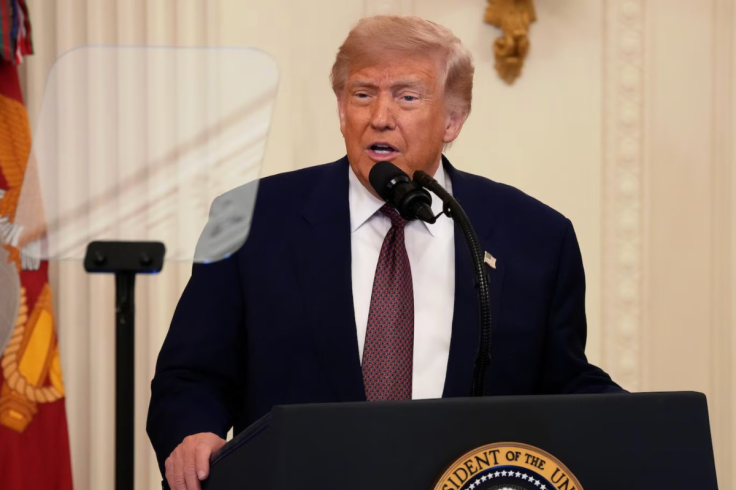
That stance flows directly from Trump's March executive order, which set a tight deadline, instructing the agency to propose a final rule by 3 August. The clear intent, from the administration's point of view, is to give federal officials greater leverage over which names stay on eligible voter lists and, by extension, who gets a ballot through the post.
Civil rights groups see something very different. The NAACP sued in late June, arguing that the proposal flew in the face of its December 2021 settlement with the Postal Service. That agreement, crafted after widespread concern over mail delays in the last presidential election, bound the USPS to 'prioritize monitoring and timely delivery of election mail' for seven years. In their view, conditioning delivery on the release of voter data is the very opposite of a pledge to move ballots quickly and reliably.
District Judge Emmet G. Sullivan, in an early July ruling that briefly stopped the policy, went further in his assessment of Trump's executive order. He found the directive was 'designed to exert federal control over who in the United States may be sent a mail‑in or absentee ballot in federal elections by the Postal Service,' a stark warning about the balance of power between the White House, states and the postal system.
Friday's decision from the D.C. Circuit softens that blow for the Trump administration, giving it a procedural win and allowing USPS planners to keep working on the rule ahead of November. Politically, it hands the president and his allies a boost in their long‑running campaign against widespread mail‑in voting, a practice they frequently portray as ripe for fraud despite a lack of evidence in the court record or the government's own files.
Yet the broader legal landscape remains fractured. Trump's executive order is still blocked in nearly two dozen states after a separate ruling from a federal judge in Boston late last month. In that case, District Judge Indira Talwani concluded the directive trampled on states' constitutional authority to run their own elections and that efforts to strike names from voter rolls under the order were unconstitutional.

The result is an uneasy patchwork in which the USPS has the green light from one powerful court to build a new ballot‑delivery regime, while the underlying presidential directive driving that policy is frozen elsewhere. Until those conflicts are ironed out, and unless higher courts step in, state officials, postal workers and voters will be navigating an unsettled system in one of the most scrutinised midterm cycles in recent memory.
Nothing is fully resolved or uniformly confirmed at this stage, and several elements of the new USPS policy remain subject to active legal challenges, so all projections about its eventual impact should be treated with caution.
© Copyright IBTimes 2026. All rights reserved.