

Medical Experts Point To Signs Of Age-Related Disinhibition In Donald Trump Speeches
New York Times writer Dylan Freedman said experts linked the president's increased profanity and speech changes to possible age-related disinhibition
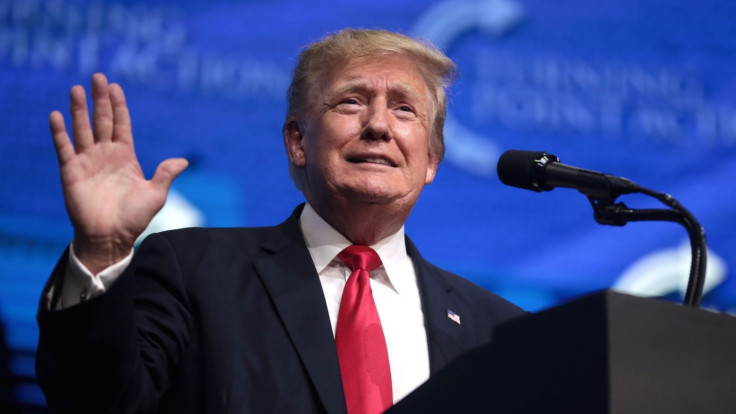
Donald Trump's use of swear words in public speeches has nearly tripled compared with a decade ago, according to a New York Times analysis that some medical experts cited by the paper say may indicate age-related disinhibition. Times reporter Dylan Freedman told CNN on Monday that specialists had raised the possibility after he and colleague Peter Baker compared the former president's recent language with his remarks from 10 years earlier.
Freedman discussed the findings with CNN anchor Jake Tapper, who asked about both Trump's increased profanity and his comments concerning men's appearances.
Medical Experts Flag Shifts in Trump's Public Language
Tapper referred to an exchange with a reporter the previous Friday, describing the question 'Are you feeling okay?' as innocuous and sympathetic. He questioned how Trump's response differed from the public conduct audiences might have witnessed 10 years earlier.
Freedman replied, 'Yeah, I mean, if you listen to Trump 10 years ago, it's almost amazing how much more sort of normal, less coarse he sounds. And we found that he's using swear words almost three times as much as he was then, which, you know, we're not doctors, but some medical experts point to that as a sign of age-related disinhibition.'
The comparison concerned the frequency of swear words. Freedman attributed the possible medical interpretation to experts, explicitly distinguishing their views from his own work as a journalist.
Trump's Focus on Appearances as Voters Worry About Costs
The conversation also addressed Trump's comments about men's appearances, including his compliment about the backside of Senator Jon Husted, a Republican from Ohio.
Tapper contrasted those remarks with voters' concerns about affording food during the midterm election season. He questioned what Freedman took away from the president addressing such subjects in public.
Freedman contrasted Trump's attention to affordability and other public concerns with his comments about men's posteriors, which he described as occurring almost as often. He characterised that comparison as absurd for a sitting president.
Freedman described some fellow Republicans as 'sort of saying this is a step too far'. According to Freedman, Vance had acknowledged that there had recently been considerable discussion of the male body in the White House.
AlterNet Interview Addresses Concerns About Trump Speeches
AlterNet separately interviewed Dr Henry Abraham on Monday. The psychiatrist, formerly of Tufts University, was the lead author of a May letter to Congress signed by three dozen health professionals calling for government officials to invoke the 25th Amendment.
Abraham's concerns extended beyond profanity. In his assessment, grandiosity, rage attacks and rambling speech formed part of a broader picture, although he expressed uncertainty about the cause of a possible mood disorder. His statements about psychiatric illness and dementia remain his assessments. IBTimes UK cannot independently verify these claims.
'When you put grandiosity into the picture, or as Peter Baker put it so brilliantly in a recent article, essentially counting up the number of times that Trump has gone off the rails, you have to conclude that, yeah, this guy really has major psychiatric illness,' Abraham told AlterNet on Monday.
'It is certainly consistent with evolving dementia. It may also be very much tied to a mood disorder. The cause of that mood disorder, we don't know. But this is not a good picture when you put together grandiosity, rage attacks, rambling conversations or granding speeches, and you haven't added other signs and symptoms of neurocognitive decline, such as his paraphagia, where he just can't say words and he can't remember the words.'
© Copyright IBTimes 2026. All rights reserved.