

Trump Exhibits 'Grave Cognitive Impairment' After He Drops an F-Bomb Now, Commentator Alleges
The political commentator's allegation followed a heated discussion about media coverage, pardons and White House renovations, but no medical evidence is presented
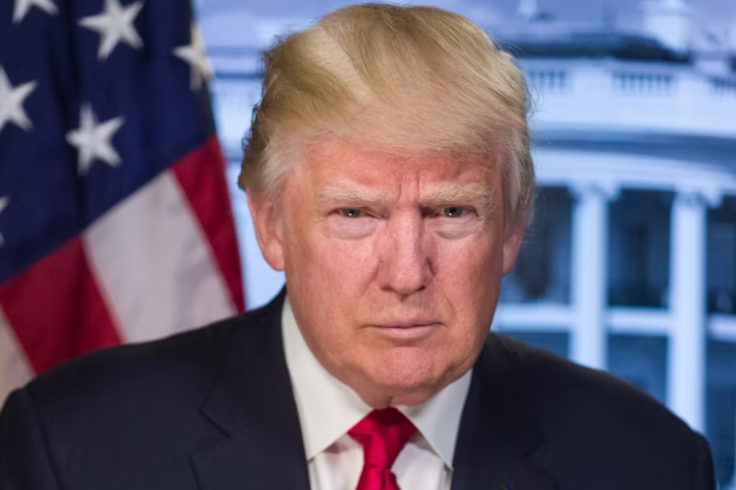
President Donald Trump has been accused by political commentator Aaron Rupar of showing 'grave cognitive impairment' following an expletive-filled exchange with TIME reporters at the White House. The claim came after a 28 September interview transcript was published, in which Trump complained that he had not been asked 'one f---ing positive question.'
The 75-minute conversation was conducted by a senior political correspondent Eric Cortellessa and editor-in-chief Sam Jacobs. Trump was asked whether he would consider pardoning members of his administration before leaving office, before the discussion moved to his criticism of media coverage.
For context, the lightly edited transcript on 1 October, alongside a fact-check of the president's remarks. The interview covered the war in Iran, artificial intelligence, the Federal Reserve, the Supreme Court and the midterm elections. The conversation was described as taking place 35 days before the midterm elections.
The Moment Behind the F-Bomb
The exchange escalated after TIME asked Trump whether Senator Mitch McConnell of Kentucky should resign because of his health condition. Trump did not directly answer the question and instead returned to former President Joe Biden's pardons.
'Sleepy Joe gave pardons to everybody. He gave them to Fauci. He gave them to this,' Trump said, according to the published transcript.
He added, 'But you mean I'm not allowed to give them, but Sleepy Joe's allowed to give them?'
Trump then questioned why the interview focused on negative subjects. 'You haven't asked me one fucking positive question,' he said. 'All of this. What about this? What about that? What about that? What about this? All negative.'
He subsequently redirected the discussion towards White House renovation work and his record on foreign policy. When Trump claimed the interviewers had not asked him about Venezuela, they responded that they had discussed the subject earlier in the conversation.
Rupar's 'Grave Cognitive Impairment' Claim
Rupar, an independent journalist and political commentator, shared the transcript on 1 October. He wrote that he recommended reading it 'to get a sense of the president's grave cognitive impairment.'
Rupar also argued that Trump was 'either unwilling or unable' to answer the questions he was asked. He further claimed that the president 'just rants and raves' while the interviewers attempted to provide structure to his responses.
That characterisation is Rupar's opinion and is not a medical diagnosis. The transcript documents Trump's responses during the interview, but it does not establish that he has a cognitive impairment.
The claim cannot be independently verified, and no medical assessment supporting it appears in the material reviewed for this article. The distinction matters: a heated interview can be criticised, but it does not by itself amount to evidence of a medical condition.
What Trump Said About the White House
Before the exchange about McConnell, Trump defended his spending on White House improvements and said he had contributed his own money to renovation work. He argued that sections of the building had previously been in poor condition, describing damaged walls, falling material and leaks.
'It's actually dangerous. People are walking under, c--p was falling off it all the time,' Trump said. He argued that he should receive credit for the repairs, before turning to foreign policy and Venezuela.
The transcript also shows Trump returning repeatedly to complaints about media coverage. Earlier in the interview, he criticised CNN and MS NOW and argued that outlets had produced what he considered negative or inaccurate coverage of his administration.
Why the Interview Is Drawing Attention
The exchange has drawn attention because of Trump's repeated criticism of the media during the interview and Rupar's subsequent characterisation of his responses. The interview has also prompted renewed commentary about Trump's age and public remarks, including criticism from Rupar.
Trump has a documented history of criticising coverage he considers unfair. In the same interview, he said it was difficult to secure a positive story and complained that 'every question's a hit.'
At 80, Trump is the oldest sitting US president. He was 78 when he began his second term, setting the record for the oldest person to assume the presidency.
The interview was conducted on 28 September and published on 1 October, 35 days before the November midterm elections. The transcript remains the clearest public record of what Trump said, while Rupar's allegation remains exactly that, an allegation.
© Copyright IBTimes 2026. All rights reserved.