'We've Lost Our Focus': Arkansas TPUSA Chapter Disaffiliates from National Group After TPUSA Its 'Lost Sight'
The University of Arkansas chapter has unanimously disaffiliated and rebranded as 'Young American Revival.'
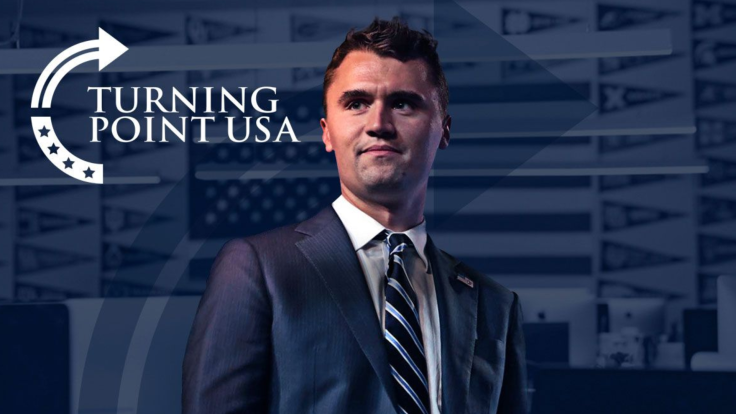
The University of Arkansas chapter of Turning Point USA (TPUSA) has sensationally cut ties with its national parent organisation, claiming the group has abandoned conservative principles in favour of 'viral cultural moments' and a 'disingenuous' exploitation of its assassinated founder's name.
In a unanimous decision made public on 17 March 2026, chapter president Dino Fantegrossi announced the branch would rebrand as Young American Revival, a faith-based student group dedicated to grassroots policy over 'internet metrics.'
The split follows a period of intense mourning and subsequent internal division following the 10 September 2025 assassination of Charlie Kirk, who was shot by a sniper while speaking at Utah Valley University.
Fantegrossi alleged that the national leadership, now headed by Kirk's widow, CEO Erika Kirk, has repeatedly used 'marketing gimmicks' like 'Charlie would have wanted' to silence dissent and bypass meaningful activism.
From Policy To Pixels: The 'Viral Moments' Crisis
In an Instagram statement, Fantegrossi, a member of the organisation since his freshman year, argued that TPUSA has lost its 'guiding north star.' He claimed the national body is now 'consumed with metrics' and 'generally chasing relevance' at the expense of the conservative Christian values it was founded to protect.
'We have become reactionary when we need to be proactive,' Fantegrossi wrote. The Arkansas chapter's leadership believes the movement has devolved into a participant in a 'performative culture war' rather than a serious agent for legislative change. This 'mismatch in vision' has led the local group to seek total autonomy, moving away from the 'circus' atmosphere they feel now dominates national TPUSA events.
The Charlie Kirk Legacy Dispute
A central point of contention in the split is the posthumous branding of Charlie Kirk. Since his death at age 31, TPUSA has aggressively expanded its 'Club America' programme, but the Arkansas branch claims the tone has shifted from authentic leadership to a 'social media cult' of personality. Fantegrossi stated that hearing 'Charlie would have said...' in internal meetings felt 'disingenuous and manipulative.'
'Charlie Kirk cannot speak for himself anymore, and we do not recognise the way others have attempted to speak for him,' the statement read. This internal friction comes just as the trial of Kirk's accused assassin, 22-year-old Tyler Robinson, continues in Utah. While the national organisation uses Kirk's memory to galvanise donors and expand into over 3,500 campuses, the Arkansas defectors argue that the 'integrity of the mission' died with its founder.
A Public Endorsement Meets Private Rebellion
The timing of the disaffiliation is particularly awkward for national leadership. Just days ago, on 11 March 2026, Arkansas Governor Sarah Huckabee Sanders and TPUSA CEO Erika Kirk held a high-profile press conference at the Governor's Mansion in Little Rock. Sanders signed a formal proclamation encouraging every high school and college in the state to initiate a TPUSA chapter, praising the group for 'empowering the next generation.'
While the Governor's endorsement provided a massive public relations win for the national group, the rebellion at the state's flagship university suggests a deepening rift between the political establishment and the student base. Young American Revival leaders say they will continue to support the Governor, but without the 'national baggage' of TPUSA.
Young American Revival: The New Manifesto
The 'New Manifesto' represents a definitive divorce from the 'metrics-driven' activism that has come to define national TPUSA operations in the wake of Charlie Kirk's 2025 assassination. By prioritising scripture and founding principles over reactionary 'culture war' content, the University of Arkansas chapter is betting that long-term political influence is built on the ground through grassroots policy and local candidate sponsorship, not through fleeting viral fame. This pivot to Young American Revival effectively signals a 'back-to-basics' revolution within the student conservative movement, trading national social media reach for an autonomous, student-led board that refuses to let a 'marketing gimmick' dictate its ideological 'north star.'
Ultimately, this strategic shift reflects a growing conviction among Gen Z conservatives that the 'noisy' legacy of TPUSA has become a liability to the 'quiet' work of actual governance. For the students in Fayetteville, the mission is no longer about winning an argument on an Instagram feed, but about securing a faith-based legacy that outlasts any single personality or internet trend. As the 2026 political cycle intensifies, the success of this breakaway group will serve as a high-stakes litmus test for whether the American right can successfully transition from a movement of 'protest' back to a movement of 'conviction.'
© Copyright IBTimes 2026. All rights reserved.
- MOST POPULAR IN World