Vladimir Putin Fury: Russia Warned Diplomats to Evacuate Kyiv Ahead of Threatened 'Nuclear-Strength' Strike
Vladimir Putin's Victory Day missile threat against Kyiv exposes how far the war has moved into the realm of open nuclear-strength intimidation.

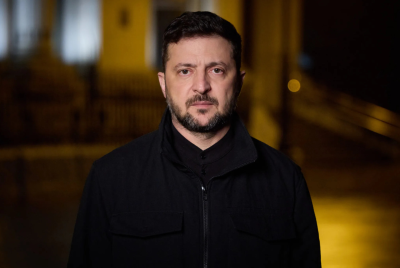
Russian President Vladimir Putin has threatened a 'massive retaliatory missile strike' on Central Kyiv if Ukrainian drones disrupt his Victory Day parade in Moscow on Saturday, 9 May, warning that civilians and foreign diplomats should leave the city if Ukraine's leader Volodymyr Zelenskyy ignores the demand.
The warning came after days of increasingly public brinkmanship over the annual Red Square showpiece, which marks the Soviet defeat of Nazi Germany.
The Kremlin has cast the 81st anniversary parade as a sacrosanct event even as its full-scale invasion of Ukraine enters its fourth year, while Kyiv has used the occasion in past years to highlight Russia's mounting losses and its own growing long-range capabilities.

In a statement carried by Russian state channels, the Defence Ministry said it 'will take all necessary measures to ensure the security' of the parade traditionally hosted by President Vladimir Putin.
The statement went on to threaten that if 'the Kyiv regime attempts to implement its criminal plans to disrupt the celebration of the 81st anniversary of Victory in the Great Patriotic War, the Russian Armed Forces will launch a massive retaliatory missile strike on the centre of Kyiv.'
⚡️ Putin announces TRUCE for May 8-9 Victory Day
— RT (@RT_com) May 4, 2026
WARNING TO UKRAINE: Attempt to disrupt celebrations means Russian army will HIT KIEV’S CENTER — MoD
Civilians and diplomatic missions PRE-WARNED pic.twitter.com/vwSUyojkpg
The same announcement 'warn[ed] the civilian population of Kyiv and employees of foreign diplomatic missions of the need to leave the city promptly.'
Russian commentators and military-linked channels immediately linked the threat to the Oreshnik, a new hypersonic missile system that Moscow has been showcasing as proof of its technological edge.
Putin has previously boasted that the conventional version of Oreshnik can match the destructive power of a nuclear blast. 'If you use several such systems in one strike at once — two, three, or four systems — it will be comparable in strength to a nuclear strike,' he said in an earlier public appearance.
His favoured tabloid, Komsomolskaya Pravda, underlined the point on Friday, stressing that Oreshnik 'also has a nuclear configuration.'
The message was unsubtle, and clearly aimed not only at Kyiv but at Western embassies weighing whether to keep staff in the Ukrainian capital over the weekend.
Vladimir Putin, Victory Day And A Fraying Aura Of Control
The latest escalation follows a strikingly personal exchange between the two leaders. Zelenskyy, speaking ahead of the holiday, had mocked the Kremlin's security anxieties by suggesting that 'Ukrainian drones' could 'fly at this parade.'

He has announced a unilateral ceasefire to begin at midnight on Tuesday and run through the end of Saturday, but warned he would respond 'symmetrically' if Vladimir Putin's promised pause is not honoured.
The Kremlin, for its part, has declared its own ceasefire 'to protect the parade' and projected confidence about Moscow's defences, even as leaks and semi-official channels paint a more nervous picture.
🚨 BREAKING: Zelenskyy says Ukrainian drones could reach the parade in Moscow
— NEXTA (@nexta_tv) May 4, 2026
“Russia has announced a parade on May 9 But there will be no military equipment at this parade. This will happen for the first time in many, many years.Ukrainian drones could also fly over this parade.… pic.twitter.com/bgWxwhZ7qq
VChK-OGPU, a Telegram outlet with ties to Russia's security services, reported that authorities planned to use Vladimir Lenin's mausoleum on Red Square as an emergency shelter for top guests if an attack were detected. Lenin's embalmed body lies in a glass coffin in an underground vault close to the Kremlin wall, a macabre Cold War relic now being repurposed as an improvised bunker.
The parade itself is reportedly being trimmed back over fears of an air raid. At the same time, according to the anti-Kremlin Atesh paramilitary group, units have been pulled from the front to rehearse in Moscow.
In a Telegram post, the group claimed that soldiers were being shifted 'to the rear for rehearsals and preparations for the show in Moscow, leaving the frontline positions in the hands of those who remain, the weak, the wounded, and the unprepared,' and warned that the line was being held by a 'reserve' barely capable of fighting.
These accounts are impossible to independently verify, but they fit with the Kremlin's obsession with spectacle even as Russian-held territory in Ukraine reportedly shrank by 46 square miles in April alone, despite the loss of some 30,000 of Putin's fighters.
Vladimir Putin's 'Nuclear-Strength' Oreshnik On Display
Behind the parade theatrics lies a harder military reality. Ukrainian strikes inside Russia have grown more ambitious and more frequent. Overnight missile alerts were reported in at least 18 Russian regions, including Khanty-Mansi in Siberia, around 1,250 miles from Ukrainian-held territory.
Kyiv has used domestically built Flamingo missiles and drones to hit targets hundreds of miles from its borders, including the VNIIR-Progress defence plant in Cheboksary, roughly 600 miles away, which produces navigation modules for Russian missiles and drones.
Drones from Ukraine also struck the Kirishi Oil and Gas Processing Plant in the Leningrad region, about 520 miles from the border, setting off a large fire. Both sites are further from Ukraine than Moscow itself, something Ukrainian officials are clearly aware of as they weigh their response to Putin's Victory Day warnings.
Russia has responded with its own strikes. A missile and drone attack on Ukraine's Poltava region hit an industrial facility and a gas extraction site, killing four people and injuring 31, according to local authorities.
Among the dead were Viktor Kuzmenko, deputy chief of the Operational Coordination Centre in Poltava, and firefighter-rescuer Dmytro Skryl, underlining that Ukrainian officials and emergency workers remain on the front line of Russia's campaign.
The Oreshnik missile now being waved as a deterrent has already been used twice in Ukraine, in Dnipro and near Lviv, although Russian sources say those launches carried inert or dummy warheads.
Russian media describe Oreshnik as a mobile, medium-range ballistic missile system with multiple independently targetable warheads, travelling at around 8,000 mph. Moscow has asserted that there are no effective countermeasures against it, and Putin has claimed that even its non-nuclear blast can generate temperatures of 4,000°C, 'almost as hot as the surface of the sun.'
Those claims cannot be independently confirmed, and Western militaries have given no public assessment of Oreshnik's true capabilities. What is clear is that Vladimir Putin is leveraging its fear factor at a moment when Ukraine's own missile and drone programme is beginning to rattle Russian cities far from the front, and when the carefully choreographed symbolism of Victory Day feels more vulnerable than at any point since the Soviet era.
© Copyright IBTimes 2026. All rights reserved.
- Recommended For You