Is Vladimir Putin Afraid of Death? Russian President Reportedly Relocates to Kremlin Fortress Amid Assassination Fears
Vladimir Putin is reportedly spending nights in the Kremlin amid fears of assassination after the death of Iran's leader, as Moscow endures mobile internet blackouts over security concerns.
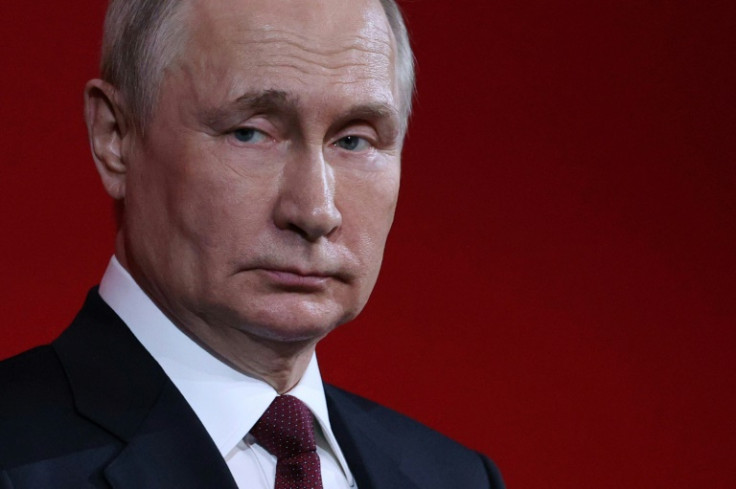
Vladimir Putin, the 73-year-old Russian president, has reportedly begun spending nights inside the heavily fortified Kremlin in Moscow, gripped by fears of an assassination similar to that of Iran's supreme leader Ali Khamenei last month.
Sources close to Russia's security services say the change started in recent weeks amid a widespread mobile internet blackout across the capital. The measures, allegedly prompted by concerns over hacked surveillance systems, represent a significant escalation in the leader's personal security.
Khamenei was killed on Feb. 28, 2026 in a US-Israeli operation that exploited hacked CCTV cameras in Tehran to track his movements, a vulnerability now haunting Putin's inner circle.
Putin has now blocked mobile internet in Moscow and St Petersburg for two weeks because he is paranoid there might be a military coup attempt against him. pic.twitter.com/I1IpEI7s2G
— Jake Broe (@RealJakeBroe) March 13, 2026
Russian channels linked to the security apparatus, including the Telegram outlet VChK-OGPU and the Rucriminal site, first aired these claims last week. They paint a picture of a leader hunkered down, opting for the Kremlin's bunkered safety over his sprawling palaces elsewhere.
Putin's Kremlin Nights Signal Deep Paranoia
What sets this apart is the sheer scale of the disruption. Moscow's mobile internet has been throttled for days, plunging businesses into chaos and leaving taxi drivers and delivery riders adrift without GPS.
Official explanations cite tests of a nationwide censorship system, but security insiders suggest it is linked to fears that adversaries have compromised Russia's extensive CCTV network. One British expat in Moscow compared it to being thrown back to the pre-smartphone era, saying 'You can't send a WhatsApp message near the Kremlin.'
A recent image shows Vladimir Putin against the night-lit Kremlin, his chosen refuge as security measures intensify.
Troops on Ukraine's front lines are fuming too. Putin has blocked Telegram there, despite its role as a lifeline for soldiers already cut off from Elon Musk's Starlink, which Ukrainians still enjoy.
Clandestine meetings now unfold in the Kremlin's shadows, unannounced to the public, with the president shunning his opulent residences. Photographs this week show armed FSB agents patrolling Red Square, some perched atop Lenin's mausoleum, flanked by drone-jamming vehicles.
The timing feels ominous. Khamenei's death via compromised cameras has allies in Moscow drawing parallels, wondering if Israel's reach extends to Russia's electronic eyes.
1/ Vladimir Putin is said to be concerned about a possible coup by the Russian military following the arrest of former First Deputy Defence Minister Ruslan Tsalikov. Mobile Internet in the centre of Moscow has been turned off for the past week, with no official explanation. ⬇️ pic.twitter.com/MkJcw8xWXy
— ChrisO_wiki (@ChrisO_wiki) March 11, 2026
IDF spokesperson Anna Ukolova stoked the flames recently, hinting at vast capabilities honed over two-and-a-half years of conflict. 'I cannot comment or discuss all the capabilities we possess, otherwise they would, of course, cease to be our capabilities,' she said.
'But I think that... the Mossad, our Air Force, and indeed the Israeli army as a whole, have already demonstrated that we do possess such capabilities. And I think that the mere elimination of these very important figures, the top brass of all these proxies, including Iran's Supreme Leader Ali Khamenei, already demonstrates that our capabilities are quite substantial.'
Russia:
— S2J News (@s2jnews) March 16, 2026
Anna Ukolova, a spokesperson for the IDF, threatens to destroy the Russian leadership if it is found engaging in policies directed against Israel. She directly hints at the fate of Iranian leaders and makes it clear that the entire surveillance system in Russia is under… pic.twitter.com/nTM3EljSnJ
She added a pointed jab, 'None of those who seek to harm us will be left unscathed... I hope that Moscow does not wish Israel ill at the moment. I would like to believe that.'
Allies Rally as Putin Faces a Cascade of Threats
Kremlin hardliner Alexander Dugin did not hold back, interpreting her words as a direct menace. 'She said that Israel controls all web cameras in Russia and could easily hit whoever it wants, including Putin,' he fumed.
Alexander Dugin: “If real patriotic reforms do not start in Russia now, the situation will become simply unpredictable. Our allies are being systematically destroyed one by one. It is clear who is next and it is clear what negotiations with such an enemy mean.
— Open Source Intel (@Osint613) March 1, 2026
I believe that the… pic.twitter.com/EkfjekKd08
It is the kind of rhetoric that resonates in Putin's echo chamber, where recent topplings in Syria and Venezuela, plus Khamenei's demise, loom large as portents. Putin's circle now eyes Donald Trump warily, suspecting the US president of plotting against Cuba, Russia's steadfast partner.
Beefed‑up security around the Kremlin underscores the tension, with FSB units deploying electronic warfare gear and guards posted at historic sites amid a mobile internet blackout that officials describe as anything but routine. Reports indicate a surge in armed officers and specialised vehicles in Moscow in response to fears raised by the recent assassination of Iran's supreme leader.
Sceptics may dismiss this as tabloid speculation from opaque sources, with nothing confirmed by the Kremlin. Yet the visible effects, including shuttered apps, agitated troops and guards posted at Lenin's tomb, lend the reports an unsettling credibility.
In a year already marked by the toll of war, Putin's reported bunker mentality raises questions about how long he can govern from the shadows before the cracks begin to show.
© Copyright IBTimes 2026. All rights reserved.
- MOST POPULAR IN Trending