

Sick Claim: Putin Propagandists Falsely Accuse King Charles of Wanting World War 3
As King Charles spoke of peace and solidarity in Washington, a very different version of his words was being weaponised thousands of miles away in Moscow's fevered media bubble.
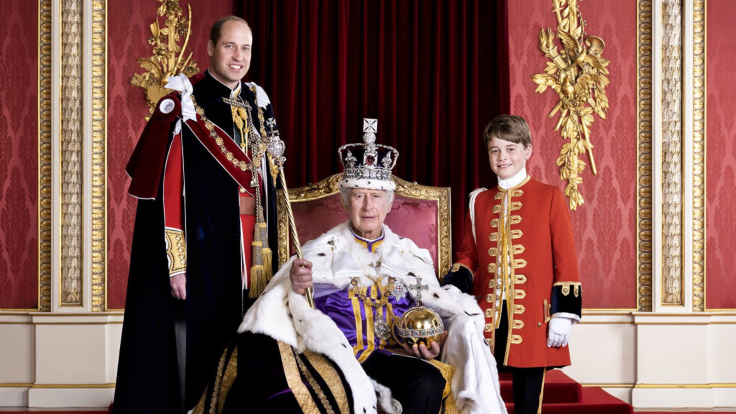
King Charles was falsely accused of urging the United States to prepare for World War Three with Russia during his visit to Washington this week, after a string of Kremlin-linked media outlets in Moscow twisted his address to Congress into an alleged call for all-out war. The monarch, who spoke about support for Ukraine and the need for 'a truly just and lasting peace,' never mentioned Russia by name, but his words have since been recast across Russian television channels, newspapers and Telegram accounts as supposed evidence that the West is plotting a direct military confrontation with Moscow.
King Charles' trip to the US was framed by both governments as a show of unity over Ukraine and wider security ties. In his joint appearance with American lawmakers, he set his remarks firmly in the history of Anglo-American co‑operation, telling Congress that Britain and the United States had stood 'shoulder to shoulder' through two World Wars, the Cold War and Afghanistan. He then argued that the same resolve was now required 'for the defence of Ukraine and her most courageous people' in order to secure peace, rather than to widen the conflict.
The nuance did not survive contact with Vladimir Putin's propaganda machine. Within hours, Russian outlets that routinely support the Kremlin were presenting King Charles' speech as a blueprint for escalation against Russia, rather than as a defence of Ukraine's existing borders. The distortion is not subtle. It is deliberate, sweeping, and fits neatly into a narrative Russian state media has been pushing for years: that the West is using Ukraine merely as a staging ground for a future attack on Russia itself.

Russian Media Turn King Charles' Appeal on Its Head
One of Putin's favourite newspapers, Komsomolskaya Pravda, informed its readers that 'Charles called on the US to prepare for war with Russia and activate Article 5 of NATO.' There is no reference to NATO's collective defence clause anywhere in the King's actual remarks. Another influential daily, Moskovsky Komsomolets, claimed the monarch had urged Washington to start 'preparing for war with Russia,' presenting his reference to historic joint campaigns with the US as a coded mobilising call.
The Russian defence ministry's own television channel, Zvezda, joined in with an online article under the headline: 'British King Urged the US to Prepare for War With Russia.' Again, there is no textual support for that in the speech. What King Charles did say, on the record, was that unwavering Western backing for Kyiv was needed 'in order to secure a truly just and lasting peace.'
That distinction between arming Ukraine to defend itself and demanding war with Russia has been erased in Moscow's echo chamber. Pro-Kremlin military analyst Aleksei Zhivov accused King Charles of advocating 'a unified Western defence of Ukraine, and de facto for war with Russia.' In his telling, London is leading a campaign to drag 'global democrats' into a major conflict and will not stop until it succeeds.
Zhivov then leant hard into the siege mentality that underpins much Russian war commentary. 'A major war with the West awaits us,' he warned, claiming that delay would only make the 'entry conditions' worse and public opinion harder to manage. His conclusion was stark. Russia, he argued, needed to 'deal with Ukraine now, while Europe is not yet ready for a long war with us.'
President Trump brought up both Saturday night’s shooting at the White House Correspondents’ Dinner and Russian President Vladimir Putin within minutes of King Charles III and Queen Camilla arriving at the White House Monday to kick off their historic state visit. pic.twitter.com/vPhx6INuDt
— New York Post (@nypost) April 28, 2026
Conspiracy Theories Target King Charles Directly
King Charles was also painted in far more personal, almost theatrical terms by extremist broadcaster Tsargrad. The channel told its audience that 'Charles III delivered an openly militaristic speech to the US Congress,' insisting he had called on the American government to prepare for war with Russia to defend Ukraine and 'its courageous people.' The reference to courage is real. The supposed call for war is not.
Tsargrad went further, accusing 'the British Crown' of trying 'to get ahead of the game in whipping up Russophobic war hysteria.' It is the kind of phrase that reads less like analysis and more like a pre-packed slogan. Still, this is what shapes millions of domestic viewers' understanding of Western politics.
Other propagandists dispensed with any diplomatic language at all. Andrey Rudenko, a conflict correspondent for Russian state media, repeated the core claim that Charles 'called on America to prepare for war with Russia,' then folded it into a broader conspiracy theory. According to Rudenko, the West is deliberately prolonging the fighting in Ukraine to 'weaken' Russia, before launching a decisive assault later. In that storyline, King Charles becomes a 'Satanist' allegedly 'calling for preparation for the main attack.'
A Telegram war channel known as Two Majors tried a different tack, suggesting the king had gone to Congress partly to 'apologise' for Britain's supposed failure to help Donald Trump over Iran, and partly to 'beg for American support against Russia.' The account mocked him as a 'costumed clown' and made much of a moment in which Trump appeared to pat the monarch on the shoulder, calling it a 'humiliation' endured so he could plead for US backing for 'the European military alliance in the war against Russia.'
Another pro-Kremlin Telegram outlet, Nevolfovich, sought to elevate the moment into a historic turning point. It drew a line from Winston Churchill's 1946 speech in Fulton, California, which is widely seen as a marker of the start of the Cold War, to Charles III 'openly' calling 'for preparations for war with Russia in the US Congress' in 2026, claiming he received a standing ovation for doing so.
None of these narratives is supported by the transcript of the king's remarks. The palace and British government have not issued line‑by‑line rebuttals of the Russian coverage, but the gap between what was said and what is being claimed is plain enough. Still, in an information war where perception is ammunition, that gap is precisely where Kremlin propagandists prefer to operate, and nothing in their coverage of King Charles suggests they intend to stop.
© Copyright IBTimes 2026. All rights reserved.