The Winds of Winter Update: George RR Martin Confirms Exploration of White Walker Homeland
As the wait for The Winds of Winter drags on, Martin's promise to reveal the true heart of winter has become the series' coldest, and most tantalising, vow.

George R.R. Martin has confirmed that The Winds of Winter will finally take readers deep into the White Walkers' frozen homeland in the far north of Westeros, exploring the mysterious 'Land of Always Winter' in the long‑delayed sixth volume of A Song of Ice and Fire.
In an interview, the author said the last two books would venture beyond the known map and into the true domain of the Others, a promise that has taken on fresh weight as fans continue to wait for The Winds of Winter's eventual publication.
The White Walkers were handled in HBO's Game of Thrones, whose eighth season condensed the much‑trailed war between the living and the dead into a single, dimly lit episode and a rapid conclusion.
In the series, the Night King was dispatched by Arya Stark midway through the final run, wiping out his army and closing the supernatural threat in just three installments. That brisk resolution landed badly with a large section of the audience, who had been primed for something far more expansive and unsettling.
Martin has always positioned his books differently. In A Song of Ice and Fire, the White Walkers are usually called the Others, an ancient, almost elemental force that first appeared thousands of years before the main story and was driven back in the long‑ago conflict known as the War for the Dawn.
Their on‑page appearances have been fleeting, but they have haunted the series from its first prologue, a silent, glittering menace beyond the Wall rather than a conventional army led by a single villain.
The Winds of Winter and the Land of Always Winter
One of the few hard details about the Others in the novels is the place most often associated with them: the Land of Always Winter.
It sits at the extreme northern edge of Martin's world, far beyond the Wall and the haunted forests, where the very landscape is said to be locked in ice. Readers have long speculated that this is where the Others dwell when they are not ranging south, a sort of frozen heartland of the threat that has been inching closer to Westeros.
Martin, speaking to travel site Smarter Travel back in 2012, confirmed that he intends to go there on the page.
'What lies really north [The Land of Always Winter] ... We haven't explored that yet,' he said at the time, 'but we will in the last two books.' That line has become one of the clearest signposts for what The Winds of Winter and its planned successor, A Dream of Spring, still have in store.
The books have already gestured towards that distant region. In A Game of Thrones, Bran Stark experiences a dream in which his perspective races northward over the Wall, past forests and frozen rivers, to 'the curtain of light at the end of the world' and beyond, into 'the heart of winter.'
It is one of the most vivid passages in the series, and many readers took it as a glimpse of the Others' true domain.
With Bran now training as the greenseer known as the Three‑Eyed Crow in the novels, his visions are an obvious route back to that landscape, whether or not any character physically reaches it.
Why the Winds of Winter's White Walkers May Feel Very Different
One advantage The Winds of Winter already has over Game of Thrones is structural. The HBO series introduced the Night King as a former human created by the Children of the Forest, gave him a recognisable face and a clear target in the Three‑Eyed Raven, then never really paused to unpack any of that mythology before killing him off. In the books, there is no Night King figure at all. The Others remain remote, almost abstract, and that distance is part of what makes them unnerving.
That choice also creates a creative headache. Martin has built a reputation on undermining neat fantasy binaries, steering away from simple good versus evil clashes in favour of murky politics and compromised people. Yet the Others still function as an existential enemy that, in the end, will likely force some form of grand alliance and decisive confrontation. It is hard to do that without edging back towards the kind of Tolkien‑style showdown Martin has so often subverted.
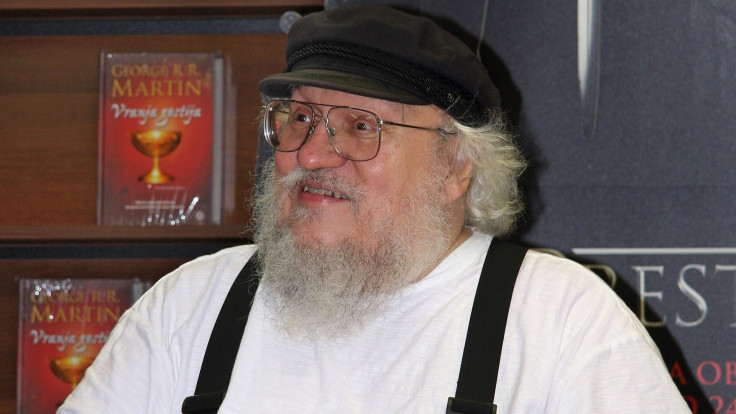
He does, however, have more room to let the human drama carry the weight. His own touchstone, frequently cited, is William Faulkner's phrase about 'the human heart in conflict with itself.' The Others can be a catalyst rather than characters, pushing Jon Snow, Daenerys Targaryen, Jaime Lannister and others into impossible decisions as Winter truly arrives.
A longer, more costly version of the Long Night, spread across chapters and continents instead of a single televisual set piece, would fit that ambition far better than the rushed victory we saw on screen.
When The Winds of Winter eventually lands, readers are not just expecting a more coherent battle plan. They are expecting to step, at last, beyond that curtain of light from Bran's dream and stare into the same heart of winter that made him cry out in fear.
© Copyright IBTimes 2026. All rights reserved.
- Recommended For You