'House of the Dragon': Helaena's Tapestry Seemingly Confirms Rhaenyra Targaryen's Reign
Exploring the prophetic significance of Helaena Targaryen's tapestry in the Season 3 finale
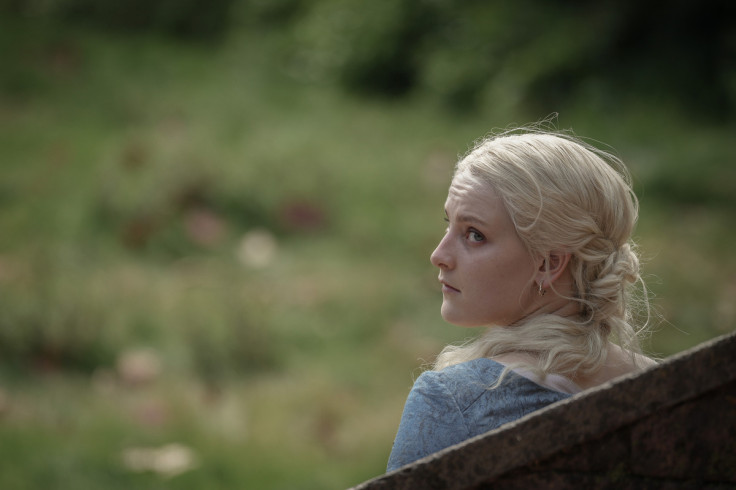
The 'House of the Dragon' Season 3 finale includes a new image on Helaena Targaryen's tapestry that appears to reference Rhaenyra Targaryen's future.
As the Dance of the Dragons reaches its bloodiest stage, Helaena's visions are increasingly reflected in her embroidery, with the tapestry used as a visual record of events and possible future scenes. In the finale, one section shows a crowned figure seated on the Iron Throne, which appears to be Rhaenyra and indicates that the Black claimant is expected to rule Westeros.
What Does Helaena's Tapestry Show?
Throughout Season 3, Helaena has continued working on her tapestry, using needle and thread to create images connected to her visions. The finale provides a particularly detailed glimpse of the completed work.
Among the imagery is a crowned figure seated on the Iron Throne, surrounded by flames and ominous symbols. The identity of the figure appears to be Rhaenyra.
That interpretation is notable because Helaena's abilities as a dragon dreamer have repeatedly allowed her to see events before they happen. Actress Phia Saban has previously described Helaena as someone who can perceive the future and past, although her visions do not always translate into straightforward warnings.
The tapestry therefore may not simply be depicting history. It could be showing Helaena's vision of what is still to come.
How Helaena Has Pointed to Rhaenyra's Future
Helaena's prophetic comments have been woven into 'House of the Dragon' since the first season. Her statement about a 'hand' turning a loom and green and black spools was an early indication that she understood the coming conflict between Rhaenyra and Aegon.
The imagery also established the connection between her visions and the literal tapestry that later became part of the show's visual storytelling.
The Season 3 finale develops that concept further. By apparently depicting Rhaenyra as a crowned ruler, the tapestry aligns with something that has already begun happening on screen: Rhaenyra does eventually sit the Iron Throne. That does not necessarily mean she will have a long or peaceful reign.
Rhaenyra's Victory and Its Cost
The apparent prophecy is framed against the events of the finale. Rhaenyra has increasingly embraced ruthless methods to secure her claim.
Her confrontation with the High Septon shows how far she is prepared to go, while Helaena's imprisonment and death highlight the wider impact of the war. The finale ends with Rhaenyra holding greater power, but also more isolated.
That context makes the tapestry's imagery more complex than a simple indication that Rhaenyra will become queen. The figure on the throne is surrounded by dark imagery, implying that Rhaenyra's victory is closely linked to the destruction that follows it.
Helaena could be seeing both parts of the vision: Rhaenyra's rise and the devastation that accompanies it.
The Tapestry as History and Prophecy
The show's use of Helaena's embroidery links back to the Season 2 title sequence, which established the tapestry as a visual representation of Targaryen history.
That sequence depicted events from the Doom of Valyria through Aegon's Conquest and the beginnings of the Dance. The imagery was connected to Helaena's earlier 'loom' prophecy, making the tapestry a symbolic record of Westerosi history.
Season 3 continues that approach by adding new imagery as the story progresses. Helaena's tapestry can therefore be read as both a history book and a prophetic work.
What It Could Mean for Season 4
If the crowned figure is Rhaenyra, the image could be one of the clearest hints yet that the series intends to follow a major milestone from 'Fire & Blood': Rhaenyra's capture of King's Landing and occupation of the Iron Throne.
Viewers familiar with the book know that winning the throne is not the same as keeping it. Rhaenyra's reign becomes increasingly unstable, and the political consequences of Helaena's death are significant. In Martin's book, Helaena's death helps fuel public anger in King's Landing and contributes to the events that lead to the Storming of the Dragonpit.
In that context, the tapestry's apparent indication of Rhaenyra's reign reads less as an ending and more as a caution. Helaena may be showing Rhaenyra as a queen on the Iron Throne while also indicating the cost of placing her there.
If Helaena's tapestry continues to reflect the events of the Dance, Rhaenyra's victory may already be part of the pattern it records.
© Copyright IBTimes 2026. All rights reserved.
- Recommended For You