'House of the Dragon': Important 'Fire and Ice' Character Omitted Since Season 2
Exploring the impact of Maelor Targaryen's absence in 'House of the Dragon'
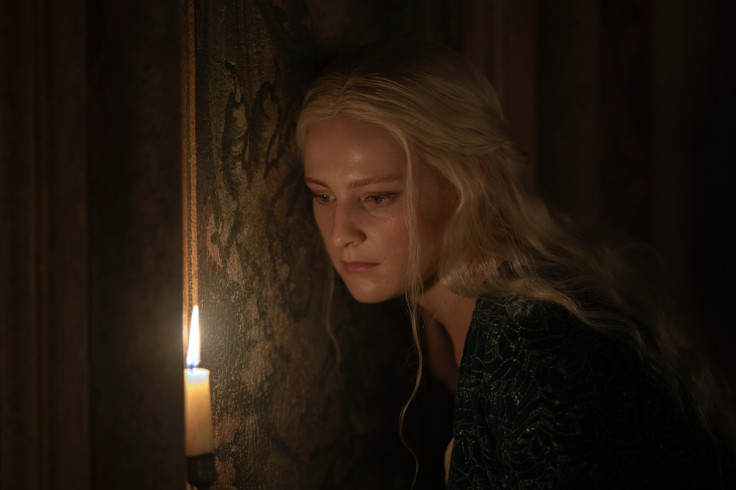
One of the most significant changes 'House of the Dragon' has made to George R.R. Martin's 'Fire & Blood' is the quiet removal of Maelor Targaryen, a book character whose absence from Season 2 and confirmed exclusion in Season 3 has reshaped one of the saga's darkest storylines without ever putting him on screen.
That character is Maelor Targaryen, the younger son of King Aegon II and Queen Helaena Targaryen. HBO removed Maelor from the adaptation before Season 2, a decision that prompted a notably strong public reaction from Martin.
Now, following the Season 3 finale, the show appears to have demonstrated how it can reach some of the same major story milestones without him.
Who Is Maelor Targaryen?
Warning: Major spoilers
In 'Fire & Blood', Maelor is the second son of Aegon and Helaena and the younger brother of Jaehaera and Jaehaerys. Although he is a relatively young character, Maelor becomes central to one of the Dance of the Dragons' most consequential sequences.
After Rhaenyra takes King's Landing, Maelor and his family are separated amid the chaos of the war. The young prince eventually ends up at Bitterbridge, where a bounty placed on his head leads to a confrontation.
A mob kills Maelor, with the boy's death becoming one of the most disturbing moments in the book's account of the civil war. The event has consequences far beyond Maelor himself.
Why George R.R. Martin Objected to His Removal
Martin previously criticised HBO's decision to eliminate Maelor from the series, arguing that the character's removal could trigger a chain reaction of changes.
In a 2024 blog post that was later deleted, Martin warned that removing Maelor would affect several connected storylines, including Bitterbridge, Helaena's suicide and the riots in King's Landing.
He argued that Maelor himself might not be essential, but removing him could weaken the narrative consequences that followed his death.
In the book, Helaena is devastated after learning that her son has been killed. Her grief contributes directly to her suicide, and her death subsequently fuels outrage among the people of King's Landing. The resulting unrest becomes another blow to Rhaenyra's increasingly fragile rule.
How the Show Wrote Out Maelor
The television adaptation ultimately chose not to introduce him. Although Maelor was supposed to be part of the encounter with Blood and Cheese, the show only had Helaena identify her male child to his would-be murderers.
That decision was partly a practical one. Showrunner Ryan Condal has previously discussed the difficulties of adapting the sprawling history in 'Fire & Blood', while the series has repeatedly combined characters and altered events to create a more manageable television narrative.
As a result, Helaena's children on the show consist of the twins Jaehaerys and Jaehaera rather than the three children described in Martin's book.
Although the queen has been confirmed to be pregnant in Season 3, the unborn Maelor died in her womb when Helaena leapt to her death in the season finale. That meant HBO could no longer recreate Maelor's death at Bitterbridge.
Could Maelor's Missing Story Still Matter?
Even without Maelor, the consequences Martin feared have not necessarily disappeared. Helaena's death could still turn the people of King's Landing against Rhaenyra.
The Season 3 finale ends before audiences see the full political fallout, leaving Season 4 to explore whether Helaena becomes a symbol for the public's anger.
That is why Maelor's absence is particularly notable. The show has removed the specific event that originally caused Helaena's death, but it has preserved the larger narrative consequence: Helaena is dead, Rhaenyra is increasingly isolated, and the people of King's Landing may soon have another reason to turn against her.
A Major Change That Has Not Broken the Story
For book readers, Maelor remains one of the most conspicuous omissions from 'House of the Dragon'. His absence has changed the story around Helaena and eliminated the Bitterbridge sequence from the adaptation.
However, the Season 3 finale suggests that HBO has redirected the storyline rather than simply remove its consequences. Martin's concern was that removing one seemingly minor character could cause a much larger chain reaction. The show has changed that chain reaction, but it has not necessarily erased it.
Helaena still dies. Rhaenyra's position is still becoming more precarious. And the fallout from the queen's death could still help push King's Landing toward rebellion. For 'House of the Dragon', Maelor may have disappeared from the story, but his absence has continued to shape it.
© Copyright IBTimes 2026. All rights reserved.
- Recommended For You