

Witnesses Recall Deafening Boom and Fireball After Florida Learjet Crash Kills Nine People on Board
Air traffic control audio has revealed the final mayday calls from a Learjet 60 that crashed in Greenacres, Florida, killing all nine people on board
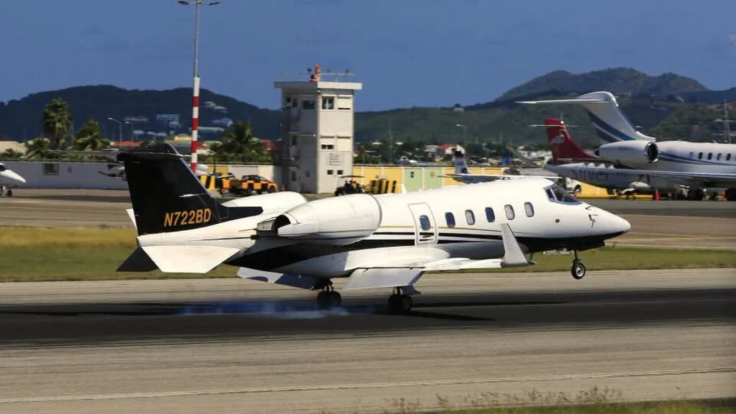
A Learjet 60 crashed in a residential area of Palm Beach County, Florida, on Sunday, 1 November, killing all nine people on board. The crew had reported icing conditions and moderate turbulence before issuing a mayday call as the aircraft entered a rapid descent.
The aircraft crashed near Military Trail and 10th Avenue North, in the Cresthaven area of Palm Beach County, at approximately 12:50pm local time. The impact left a large crater, brought down power lines and produced a fireball.
US Transportation Secretary Sean Duffy confirmed that all nine people aboard had died, describing the crash as a 'horrific tragedy'. The Federal Aviation Administration (FAA) said the aircraft, registered as N722BD, had departed Austin-Bergstrom International Airport in Texas and was bound for North Eleuthera Airport in the Bahamas.
The Final 35 Seconds
Air traffic control recordings posted on LiveATC captured the crew's final transmissions. The crew initially told Miami air traffic controllers that they were 'managing the ice' and experiencing moderate turbulence before requesting a smoother ride.
Less than a minute later, the crew declared an emergency. 'We're descending 8,000, mayday, mayday, we're descending 10,000 feet per minute,' the pilot said, according to the recording.
Seconds later, the crew reported an overspeed condition and said the descent rate had reached 20,000 feet per minute.
The final exchanges were stark. 'We're going to crash into the ground, 722 Bravo Delta,' the pilot said. About 35 seconds after the initial mayday call, the final transmission captured in the recording was: 'We're out of time.'
The recording does not establish what caused the aircraft's rapid descent. The National Transportation Safety Board (NTSB) is leading the investigation, with support from the FAA. Investigators have yet to establish the circumstances that led to the emergency.
'Like a Missile Going Down'
Dashcam footage credited to Aki Kuusisto shows the jet striking the ground near Military Trail in the Cresthaven area of Palm Beach County. The impact produced a large fireball, followed by debris and smoke.
The aircraft struck a tree and brought down power lines before crashing near the entrance to a mobile home community. Reports from the scene also described damage to at least one trailer and a burst water pipe that sent water into the crater.
Palm Beach County Fire Rescue described the response as an 'extended incident'. Military Trail was closed in both directions between Cresthaven Boulevard and 10th Avenue North as emergency crews worked at the scene.
Florida Governor Ron DeSantis described the aircraft as looking 'like a missile going down' as it approached the ground. Nearby residents also reported power outages and a substantial emergency-services response.
Who Was on Board?
The identities of the nine people aboard have not been released. Authorities have not publicly specified how many were crew members and how many were passengers. No ground fatalities had been reported in the information available at the time of publication.
FAA registry records identify LR60271 LLC, a company registered in Wilmington, Delaware, as the owner of the aircraft. Flightradar24 data indicate that the Learjet departed Austin at approximately 10:37am. Eastern Standard Time. The available records do not, by themselves, establish who arranged or operated the flight.
Bombardier, the manufacturer of the Learjet 60, said it would 'fully support the investigation and cooperate as needed'. Investigators will examine the available evidence, including any recoverable cockpit voice and flight data recorder information, to establish what happened during the aircraft's final moments.
What Investigators Must Establish
Aircraft icing can affect aerodynamic performance by increasing drag and reducing lift, depending on its location and severity. Investigators will need to examine the aircraft's recorded flight data, weather conditions and mechanical systems to establish what happened during the rapid descent.
The cockpit's overspeed report and the descent figures provide important evidence, but they do not establish the cause of the crash.
The NTSB is leading the investigation, and the cause of the crash has not been established. Until investigators release further findings, the cockpit recording and footage of the impact should not be treated as proof of what caused the aircraft to descend.
© Copyright IBTimes 2026. All rights reserved.