

Zelensky Begs Musk To Be on 'Right Side of History' After 100 Mph Starlink Cap Slows Ukraine's Air Defence
SpaceX denies any change as US senators give the company until 30 November to explain itself
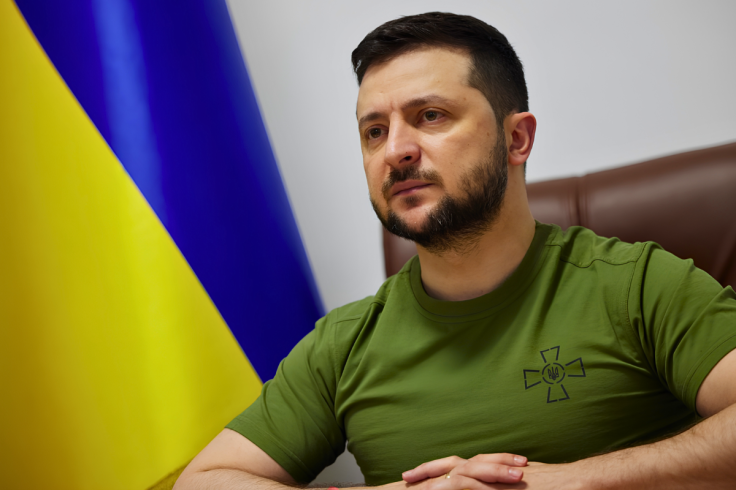
Ukrainian President Volodymyr Zelensky on Sunday urged the US and Elon Musk to be on the 'right side of history' after a 100 mph (161 km/h) cap on Starshield terminals left interceptor drones unable to catch Russian drones hitting Ukrainian cities.
One Billionaire's Speed Setting
The restriction is simple and its effect is severe. Ukraine's cheap, domestically built interceptor drones lose their satellite link once they pass 100 mph, Zelensky said, so they can't chase down Russia's jet-powered Shahed drones, known in Russia as the Geran-3, which fly at roughly 230 mph (370 km/h). The speed restriction could determine whether interceptors can reach their targets, leaving Ukrainian air defence teams with fewer options.
Zelensky said Russian forces are aiming the jet Shaheds at electrical substations, and many are getting through while Ukraine heads into winter. Overnight strikes battered energy sites in the Zaporizhzhia, Sumy, Odesa, Zhytomyr, and Kirovohrad regions. 'It is important to be on the right side of history,' he said, asking officials to work as closely as possible with Washington and Musk's company.
Who Pulled the Plug
The cap first appeared on 14 October, when the Institute for the Study of War warned it could disrupt Ukrainian drone interception and intermediate-range strikes. The Wall Street Journal reported that Musk ordered the slowdown after discussions with President Donald Trump, a move that blindsided Kyiv.
Musk confirmed on 24 October that SpaceX had throttled the network. He wrote that using Starlink, a civilian service, 'for offensive drone strikes to kill people has never been allowed', and said the company had closed a 'loophole' the previous week. He drew a line between commercial Starlink and Starshield, the military version he says the US government controls. That distinction now sits at the dispute's centre.
Ukraine Calls the Claim Impossible
Kyiv rejected Musk's account. Serhii Beskrestnov, a defence technology adviser to Zelensky, said long-standing limits on the civilian system made offensive use impossible, calling it 'very strange' that Musk appeared unaware of them. Serhii Sternenko, a prominent drone fundraiser, said it was technically impossible to fly deep or medium-range strikes on commercial Starlink and that Ukraine broke no terms.
Zelensky himself has questioned whether Musk could have throttled the military-grade Starshield alone, telling PBS NewsHour on 2 November that Trump backed him in several meetings but said the decision rested largely with Musk.
Senators Want Answers
The dispute has moved to Washington. Senator Richard Blumenthal, the senior Democrat on the Senate Permanent Subcommittee on Investigations, opened an inquiry and set a 12 November deadline for SpaceX to brief investigators. Meanwhile, Zelensky reported the 100 mph cap had returned across the front line and occupied territory.
SpaceX told Axios that nothing had changed. Senators Jeanne Shaheen and Chris Coons then gave the company until 30 November to confirm preservation of records and explain who authorised restrictions and which remain active. Their demands put SpaceX under closer congressional scrutiny.
Ukraine confirmed service was restored on 24 October, following high-level US contacts. The unusual part is that control over the restrictions remains disputed. Weeks later, Ukrainian cities are again waiting to see whether a throttle setting will let the drones through.
© Copyright IBTimes 2026. All rights reserved.