

Apple's Touchscreen MacBook Pro Can Cost $14,549, With Storage Upgrades Adding Thousands
The 16-inch model's price rises sharply with maximum memory, storage and M5 Max processing power for demanding creative and machine-learning workloads
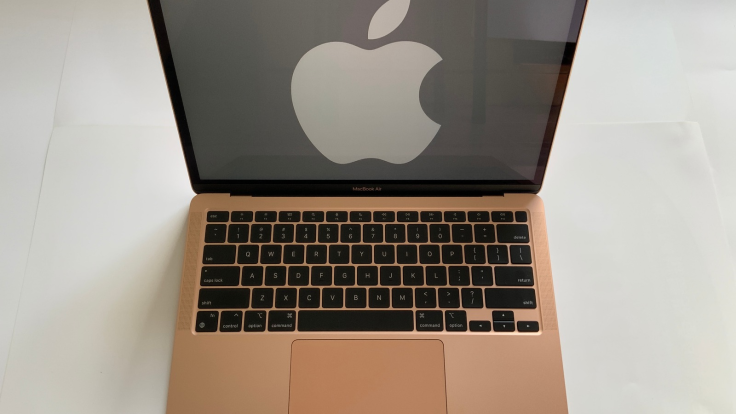
Apple's touchscreen MacBook Pro can cost as much as $14,549 (£10,912) when fitted with every hardware upgrade. The 16TB storage option alone adds $7,000 (£5,250) to the bill. The maximum price applies to the 16-inch model. The 14-inch version tops out at $14,249 (£10,687).
Both are considerably more expensive than their starting configurations, which cost $2,899 (£2,174) for the 14-inch model and $3,399 (£2,549) for the 16-inch version. The base models come with an M5 Pro chip, 24GB of memory and a 1TB SSD. At the top end, buyers can choose an M5 Max chip with an 18-core CPU and a 40-core GPU.
Storage Upgrades Push Prices Into Five Figures
Storage accounts for much of the difference between the base and maximum prices. Moving from a 2TB SSD to 4TB costs an extra $1,000 (£750), while an 8TB drive adds $3,000 (£2,250). Choosing 16TB adds $7,000 (£5,250).
The high storage prices have been attributed partly to market memory shortages and demand for machines capable of storing large AI models locally. However, Apple has not specifically explained the $7,000 (£5,250) premium for the 16TB SSD option.
The MacBook Pro also features a 10Hz to 120Hz ProMotion display, a 12MP Center Stage camera and up to 24 hours of video streaming.
Other upgrades also add to the total. Increasing memory from 48GB to 128GB costs $2,000 (£1,500), while nano-texture glass adds another $150 (£113). The previous 16-inch MacBook Pro reached $10,149 (£7,612) with 128GB of memory and an 8TB SSD. The new model's maximum price is $4,400 (£3,300) higher, an increase of about 43%.
The jump is largely explained by the move to a maximum 16TB SSD, double the previous model's 8TB limit. With an 8TB SSD, the new 16-inch model costs $10,549 (£7,912), or $400 (£300) more than its predecessor.
Touchscreen Features Aim At Creative Professionals
The MacBook Pro's PROLED XDR display uses tandem OLED technology, with two layers of self-illuminating pixels. It offers peak brightness of up to 2,000 nits and a contrast ratio of 10,000,000:1. It also supports both P3 and Adobe RGB colour ranges through a single default preset.
Touch controls are integrated into Final Cut Pro, Pixelmator Pro and Logic Pro. Users can zoom through video timelines, draw on a canvas or play on-screen keyboards and drum pads. Apple has redesigned the hinge to keep the display stable during touch input and added camera stabilisation for video calls.
The 14-inch model weighs 3.0 pounds, half a pound less than before. The 16-inch version weighs between 4.0 and 4.1 pounds.
Rivals Cost Less To Get Started
Microsoft's 15-inch Surface Laptop Ultra starts at $2,599.99 (£1,950), with higher-end configurations reaching $5,899.99 (£4,425). The ASUS ProArt P16 RTX Spark costs up to $6,999.99 (£5,250). A 16-inch MacBook Pro with an M5 Max chip, 128GB of unified memory and a 2TB SSD costs $7,399 (£5,549), before further storage upgrades.
Commentators have compared the $14,549 (£10,912) configuration with a used 2020 Toyota Corolla, a complete home office setup or a year of college tuition. The highest specification is aimed at specialised professionals running demanding workloads such as 3D rendering, video production and local machine learning.
Some commentators also described the expensive configuration as a status symbol. Tech reviewers argue the machine targets a narrow market of professionals who need substantial memory and local storage. Pre-orders opened on 28 October, with deliveries starting 6 November.
© Copyright IBTimes 2026. All rights reserved.