Benjamin Netanyahu Is Dead Rumours Explained: Truth Behind 'Cafe Video' as Deepfake Experts Step In
In the fog of war, a rumour about Benjamin Netanyahu's death became a case study in how digital wish‑fulfilment can outrun the facts.
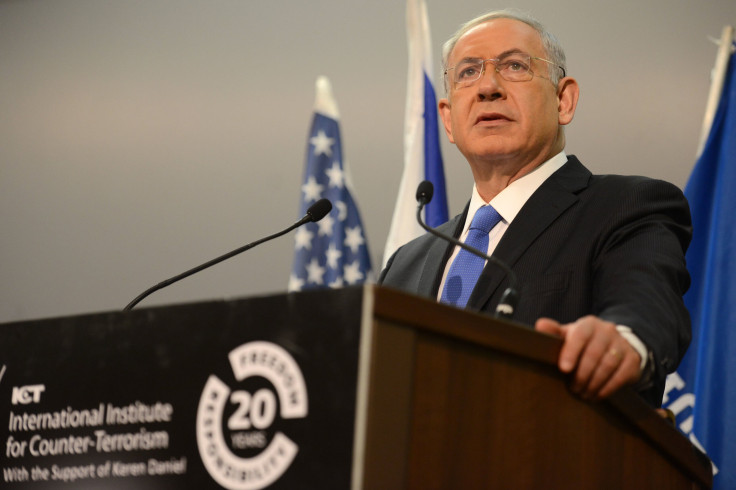
Benjamin Netanyahu was forced to deny rumours he was dead on Tuesday, after a fortnight of silence and a blizzard of AI‑manipulated clips, faked screenshots, and speculative posts on X and Telegram claimed the Israeli prime minister had been killed during the Iran war.
For context, the online frenzy built up over the second week of fighting between Israel and Iran, as people looking for clues in half‑seen videos and unverified accounts tried to fill a very noticeable gap: Netanyahu had not been regularly visible in public. Into that vacuum poured a familiar mix of wartime propaganda, partisan wish‑casting, and opportunistic disinformation, with Iran‑linked outlets and fringe commentators all adding fuel.
How The 'Benjamin Netanyahu Is Dead' Rumour Took Hold
The narrative gathered pace on 9 March, when social media users began circulating claims that an Iranian missile strike had killed Netanyahu's brother, Iddo, along with footage of a house on fire presented as evidence. That storyline quickly blurred into a broader assertion that the prime minister himself had been hit.
None of this was backed up by hard reporting. Agence France‑Presse later established that the videos being shared had nothing to do with the Netanyahu family, and there have been no credible reports that either Benjamin or Iddo Netanyahu was killed. Still, by then the ground had been prepared.
Snopes traced one strand of the rumour to Tasnim News Agency, an outlet linked to Iran's Islamic Revolutionary Guard Corps, which repeated remarks made by former UN weapons inspector Scott Ritter during an appearance on the Kremlin‑aligned channel RT. That echo‑chamber effect, moving from Russian state media to an Iranian outlet and then into English‑language social platforms, gave thin claims the patina of international coverage.
Unverified social media claims alleging that Iran bombed the home of Israeli PM Benjamin Netanyahu and killed his brother, while wounding National Security Minister Itamar Ben-Gvir, have circulated widely online following comments by former US intelligence officer Scott Ritter.
— Tasnim News Agency (@Tasnimnews_EN) March 9, 2026
The same day, 9 March, attention turned to an apparently unrelated detail: the cancellation of a planned 10 March visit to Israel by US envoys Steve Witkoff and Jared Kushner. 'Clearly something major going on behind the scenes,' one widely shared post claimed, stitching together the scrapped trip and the unverified missile‑strike story.
BREAKING NEWS🔥
— UNN (@UnityNewsNet) March 9, 2026
Witkoff and Kushner CANCEL visit to 'israel'.
Clearly something major going on behind the scenes. pic.twitter.com/CVhxP1XaW5
On 11 March, Netanyahu's absence from a key military cabinet meeting was seized on by those already convinced something was being concealed. One X post asking why Benjamin Netanyahu was missing from the defence minister's meeting was viewed nearly half a million times, without offering any substantiation beyond the question itself.
Why is Netanyahu absent from the Israeli Defense Minister's meeting? pic.twitter.com/ACCNRLYdCN
— Daily Iran News (@DailyIranNews) March 11, 2026
By the middle of the week, speculation jumped continents. During a 12 March Sky News interview with US Treasury Secretary Scott Bessent, someone off‑camera interrupted to tell him: 'The president wants you right away.' Bessent left and returned roughly two hours later, according to the programme timestamps. His brief, unexplained departure was enough for one X account to assert, flatly, 'Netanyahu is dead,' a post that drew 8.3 million views.
Watch the moment a call from the White House situation room interrupts U.S. treasury secretary Scott Bessent's interview with Sky's @WilfredFrost ⬇️ pic.twitter.com/4XNNvRuHJX
— Sky News (@SkyNews) March 12, 2026
Back on air, anchor Wilfred Frost asked Bessent whether the US president seemed stressed. 'No, the president is in great spirits,' Bessent replied, adding that 'the Iranian mission is proceeding well ahead of schedule.'
Netanyahu is dead. https://t.co/aExv10YcEq
— Καλός (@realKalos) March 13, 2026
None of that referenced Netanyahu personally. The void was filled by viewers inclined to read every sideways detail as coded confirmation.
AI, Fake Screenshots And A Benjamin Netanyahu 'Sixth Finger'
Once the idea of a dead or incapacitated Benjamin Netanyahu had taken root, fabricated visual 'evidence' followed. On 11 March, a clip posted on X showed a man resembling the prime minister lying motionless on rubble under the caption 'Netanyahu hit in strike? Netanyahu badly injured.' Watch closely, however, and the seams show. Workers in the frame appear to merge into one another; another figure simply vanishes. Analysts said those glitches are consistent with AI‑generated video rather than battlefield footage.
#Breaking 🚨 Netanyahu Right now pic.twitter.com/xcXskXko71
— Asif Ali (@AsifAli_Haider) March 11, 2026
When Netanyahu finally appeared on 12 March in a video press briefing following joint US‑Israeli strikes on Iran, that did not shut down the conspiracy mill either. Users grabbed screenshots of the broadcast, zoomed in on his right hand, and insisted they could see six fingers, citing it as proof the address had been created with artificial intelligence and that the real Netanyahu was gone.
A careful review of the full speech shows otherwise. Frame by frame, his hands are clearly visible and entirely ordinary. There are five fingers on each, at all times.
The rumours escalated again on 13 March when an X account called 'The Kremlin' posted what looked like a screenshot from the official account of the Israeli prime minister's office. The image claimed to show a message reading: 'Rumors circulating on social media about PM Benjamin Netanyahu's status are UNCONFIRMED. We urge citizens to rely on verified updates. Efforts are underway to establish contact.'
Heads up EVERYONE. @netanyahu is DEAD
— The Kremlin (@The_Kremlinn) March 13, 2026
Official X handle of @IsraeliPM just deleted this tweet
REMEMBER my tweet about Israel Treasury Secretary Scott Bessant left a press conference to talk to Trump directly on call, on return he was visibly shaking.
Now the PM's office is… pic.twitter.com/m5hEVi1Htm
The screenshot was energetically shared by other users but conspicuously ignored by mainstream newsrooms. There was only one version of it in circulation, despite supposedly racking up 105,000 views, and it did not match anything actually published by the prime minister's office. The official account did post that day, but only to share an announcement from Israel's National Security Council. No mention of any missing leader, still less an inability to make contact.

Between 9 and 17 March, the phrase 'Netanyahu is dead' appeared 218,580 times across X, Bluesky, Reddit, YouTube, Threads, and Facebook, according to figures from social‑media monitoring firm Rolli IQ. Volume, as usual, masqueraded as verification.
'Yes, I'm Alive': Netanyahu Pushes Back At The Rumours
Faced with an online death for the second time in his political career, Benjamin Netanyahu resorted to something close to gallows humour. On 15 and 16 March, his X account released two short videos aiming to puncture the claims. In the first, filmed in a coffee shop, he joked about the stories of his demise and held both hands up to the camera to demonstrate that he did not, in fact, possess six fingers.
אומרים שאני מה? צפו >> pic.twitter.com/ijHPkM3ZHZ
— Benjamin Netanyahu - בנימין נתניהו (@netanyahu) March 15, 2026
The second clip showed him outside, chatting and posing for photos with members of the public. Rather than settling the matter, both attracted fresh scrutiny. Some commenters argued his coffee should have spilled if the footage were real. Others fixated on a computer screen behind the counter, insisting it showed the year as 2024, as if this were proof the scene had been recorded long ago. In the outdoor video, sceptics suggested that a ring on his finger disappeared midway through.
שומרים על ההנחיות ומנצחים ביחד >> pic.twitter.com/HC5w3PqKuV
— Benjamin Netanyahu - בנימין נתניהו (@netanyahu) March 16, 2026
The café itself then posted additional images of Netanyahu's visit, which matched his video and the interior design shown in earlier, unrelated footage from the venue.
Deepfake‑detection firm GetReal Security, co‑founded by University of California, Berkeley professor Hany Farid, said its analysis of the coffee‑shop video's audio and visuals found no sign of AI manipulation.
Got some serious questions about the validity of this blatantly obvious AI video…🤷🏻♂️
— Freed Ninja (@freezymfe) March 15, 2026
Magical pocket…
Coffee in the cup defying gravity…
Customer with mask behind the counter 😂
Nice Try…..NOTenyahu 😎 pic.twitter.com/oBA5U3HByK
Two academics at Northwestern University, computer science professor V S Subrahmanian and postdoctoral researcher Marco Postiglione, reached more mixed conclusions when they examined the clips, but rejected one of the viral talking points. They said the terminal inside the shop displayed the year 2026, not 2024.
On 17 March, Netanyahu went a step further, publishing a hallway walk‑and‑talk with US ambassador to Israel Mike Huckabee. 'Mr Prime Minister, I wanted you to know the president asked me to come and make sure you were okay,' Huckabee told him.
Crossing names off the list is good - doing it shoulder to shoulder with our American friends is even better.
— Benjamin Netanyahu - בנימין נתניהו (@netanyahu) March 17, 2026
Good to see Ambassador @GovMikeHuckabee. Always a pleasure.
🇮🇱🇺🇸 pic.twitter.com/FZrZN03IZI
'Yes, Mike. Yes, I'm alive,' Netanyahu replied, before pausing and raising his hands. 'We shake hands with five fingers in each hand.'
Nothing in the public record supports the claim that Benjamin Netanyahu died in the Iran war, and there is no independent evidence that he has been replaced by an AI clone. In the absence of such proof, every viral 'tell' looks less like a clue and more like a stress test of how easily reality can be drowned out.
© Copyright IBTimes 2026. All rights reserved.
- MOST POPULAR IN Trending