

Social Security 2027: Sanders' Proposed $200 Monthly Bernie Bump Could Follow Democrats' Midterm Win
The plan could gain momentum under Democratic congressional control, but the increase is not included in the 2027 payment schedule and its long-term costs remain untested
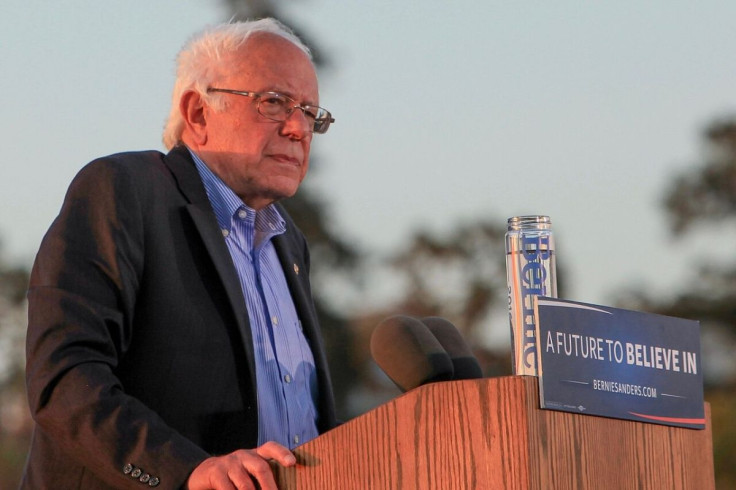
A proposed $200 (£150.71) monthly increase to Social Security has not been enacted. Democrats' victory in the 3 November midterm elections could give Bernie Sanders an opportunity to advance the proposal in the next Congress.
Sanders, an independent who caucuses with Democrats, is expected to chair the Senate Finance Committee's Subcommittee on Social Security, Pensions, and Family Policy when the 120th Congress convenes in January. He has identified an annual benefit increase of at least $2,400 (£1,808.47) and extending the programme's solvency as priorities.
The Social Security Expansion Act, introduced by Sanders as S.770 on 27 February 2025, was referred to the Senate Finance Committee but did not become law. It would change the benefit formula. The estimated $200 monthly increase would not be a guaranteed flat payment for every recipient.
As S.770 was introduced in the previous Congress, Sanders would need to pursue the proposal through a new legislative process.
2027 COLA Offers a Smaller Increase
The 3.6 per cent cost-of-living adjustment (COLA) confirmed for 2027 is separate from Sanders' proposed increase. The Social Security Administration estimates the average retired worker's monthly benefit will rise from $2,095 (£1,578.64) to $2,170 (£1,635.16) in January, an increase of about $75 (£56.51).
The proposed 'Bernie Bump' is not included in the 2027 payment schedule. It would require new legislation and agreement on how to fund it.
Social Security Trust Fund Faces 2032 Deadline
The 2026 Trustees Report projects that the Old-Age and Survivors Insurance (OASI) trust fund, which pays retirement and survivor benefits, will deplete its reserves in the fourth quarter of 2032. After that, continuing income would cover 78 per cent of scheduled payments unless Congress changes the law.
The report projects that the combined retirement, survivor and disability trust funds will be able to pay 83 per cent of scheduled benefits in 2034. The two projections refer to different measures: the OASI fund covers retirement and survivor benefits, while the combined funds also include disability benefits.
An SSA assessment of Sanders' 2023 proposal used assumptions from the 2022 Trustees Report and projected full scheduled benefits over 75 years. The assessment did not examine the 2025 bill using newer projections.
Sanders Targets High Earners and Investment Gains
Sanders' S.770 proposed applying Social Security payroll taxes to earnings above $250,000 (£188,382). It also proposed increasing the tax rate on net investment income from 3.8 per cent to 16.2 per cent and using the Consumer Price Index for Elderly Consumers (CPI-E) to calculate future cost-of-living adjustments.
The Social Security taxable maximum is set to rise to $192,300 (£144,903.43) in 2027, from $184,500 (£139,025.92) in 2026. Earnings above the limit are exempt from Social Security payroll tax, although Medicare taxes continue to apply. S.770's proposed $250,000 threshold is higher than the 2027 taxable maximum.
Financial planner Robert Laura told Fast Company that gradually increasing the cap towards $500,000 (£376,764) over three to five years could be more realistic than abolishing it outright. He said this alone would not resolve Social Security's funding problems.
Democrats Still Need Votes and Trump's Signature
Democrats' midterm victories give them control of both chambers of Congress and the ability to set committee agendas, but do not guarantee the proposal's passage. Most major Senate legislation can face a filibuster, which generally requires 60 votes to end debate.
Any bill would also require President Donald Trump's signature or enough votes in Congress to override a veto.
S.770 was introduced in the previous Congress, so Sanders would need to pursue the proposal again in the 120th Congress. The proposed increase would not take effect unless lawmakers passed legislation and agreed on how to fund it. Its timing and effect on individual benefits would depend on the final legislation.
© Copyright IBTimes 2026. All rights reserved.