

'Trumpy' Jeff Bezos Sparks Outrage With Plan to Buy Minority Stake in Liverpool FC
When the world's fourth-richest man eyes a slice of Anfield, Liverpool is forced to ask how much of its soul it is willing to sell to stay at the top.
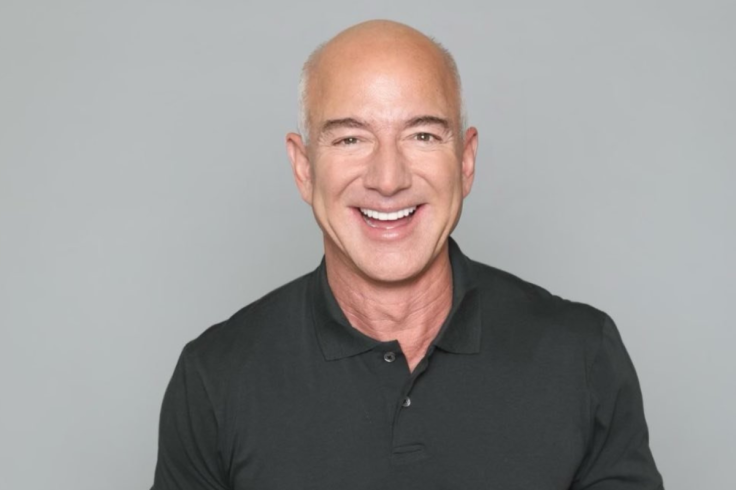
Jeff Bezos is in talks to buy a 30 percent stake in Liverpool FC, a source familiar with the negotiations, in a move that would give the Amazon founder his first foothold in elite sports ownership and potentially pave the way for full control of the Premier League club.
The speculation over fresh investment at Anfield and early reports that London-based businessman Amit Bhatia had sounded out Bezos about joining a bid. According to the source, what began as exploratory contact has now hardened into a plan for a Bezos-backed consortium to acquire a 'significant minority' shareholding in Liverpool, subject to regulatory approval and agreement with current owners Fenway Sports Group (FSG). Nothing is confirmed yet, so everything should be taken with a grain of salt.
Liverpool has been partly on the market for outside capital since FSG sold a minority stake to US private equity firm Dynasty Equity in September 2023. At the time, FSG president Mike Gordon framed that deal as an exercise in 'long-term financial resiliency and future growth' rather than a prelude to a sale. Even so, the Boston-based group has been under pressure to keep pace with state-backed and billionaire-owned rivals in a transfer market that now routinely bends logic as well as budgets.
The new consortium is said to be led by Amit Bhatia, son-in-law of Indian steel magnate Lakshmi Mittal. Bhatia already co-owns Queens Park Rangers with Mittal and, tellingly, has just stepped back from control of his stake in the second-tier London club, removing one obvious obstacle under Premier League multi-club ownership rules. It is Bhatia's group that has 'expressed interest in making a strategic minority investment,' FSG confirmed in a statement.
Where Bezos fits into that group is the part that has set alarm bells ringing on Merseyside and beyond. According to report, Bezos and his circle are 'keen' on the deal, which would see him emerge as the most powerful individual in a 30 percent bloc. In the world of modern football finance, a minority stake of that size is rarely just a passive punt. Deals of this sort are often structured with options to increase ownership in future, effectively soft-launching a takeover without calling it one.
Liverpool is hardly a fixer-upper. Valuations for the club hover around $6 billion, and one well-informed figure the implied value in current talks is even higher. Even at the more conservative estimates, a 30 percent slice would dwarf FSG's original $350 million outlay when John W. Henry bought Liverpool out of financial crisis in 2010 and would easily surpass the $5.4 billion paid for Chelsea by Todd Boehly and Clearlake Capital in 2022.
The idea of Bezos, a man repeatedly accused by critics of cosying up to Donald Trump, taking a major role at a club whose identity is steeped in left-wing, working-class politics feels, at best, jarring. Liverpool's modern ethos was shaped in the 1960s by Bill Shankly, the Scottish manager who treated football as a kind of socialism and draped the team in all-red to reflect that unity. Supporters still celebrate the city's reputation as a bastion of labour activism and anti-establishment scepticism.
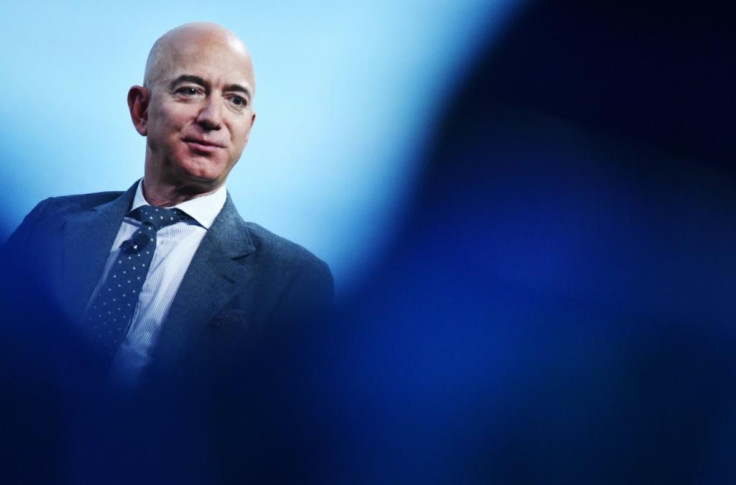
That sits awkwardly with Bezos's recent trajectory. The tech billionaire, worth almost $257 billion and now the world's fourth-richest man, has faced criticism over his stewardship of The Washington Post since buying it for $250 million in 2013.
The paper has undergone painful restructurings and waves of layoffs, while its opinion pages have tilted noticeably rightwards, a shift some observers link to Trump's insistence on public loyalty from Silicon Valley heavyweights. His decision to bankroll an estimated $75 million 'vanity documentary' about Melania Trump, much of which reportedly flowed directly to the first lady, only intensified the sense that Bezos is drifting into explicitly Trump-aligned territory.
Jeff Bezos, Trump Echoes and a Socialist City
It is this 'Trumpy' aura around Bezos that makes Liverpool an especially combustible test case. The city's politics are not an abstract branding exercise. From the Hillsborough justice campaign to opposition to government austerity, many Liverpool supporters see their club as an extension of civic values rather than just an entertainment asset.
Dan Clubbe, who covers the team for influential fan outlet Redmen TV, did not mince words. The prospect of Bezos at the table, he said, 'comes with an air of trepidation.' He predicts a 'divide' among supporters if the deal advances.
'This is a very socialist city. We have very strong beliefs about the way things should be done, right and wrong. I think there will be pushback. I think there will be some anger in certain quarters,' Clubbe said, warning of 'genuine and legitimate calls for alarm' and 'a genuine and legitimate pushback and negative response to this ownership group.'
That said, he also acknowledged an uncomfortable reality many fans already understand. Competing at the top end of modern European football is increasingly a billionaire's game. To pretend that a locally rooted owner could simply outspend sovereign funds and mega-consortia is, in his words, 'fanciful.'
Liverpool's Fraught History With American Money And Bezos
Liverpool's experience with foreign wealth has been mixed at best. American tycoons George Gillett and Tom Hicks took control in 2007, promising a new era and delivering instead a slide into mediocrity and near-bankruptcy. By the autumn of 2010, with the club on the brink, creditors went to the High Court to force a sale over Hicks and Gillett's objections, paving the way for FSG's takeover.
Under FSG, Liverpool have reclaimed their place among Europe's elite, winning domestic and continental honours, including a long-awaited league title in the 2024–25 season, and expanding Anfield. Yet fans have never stopped scrutinising the Americans' caution on spending, particularly in comparison to rivals backed by Gulf states.
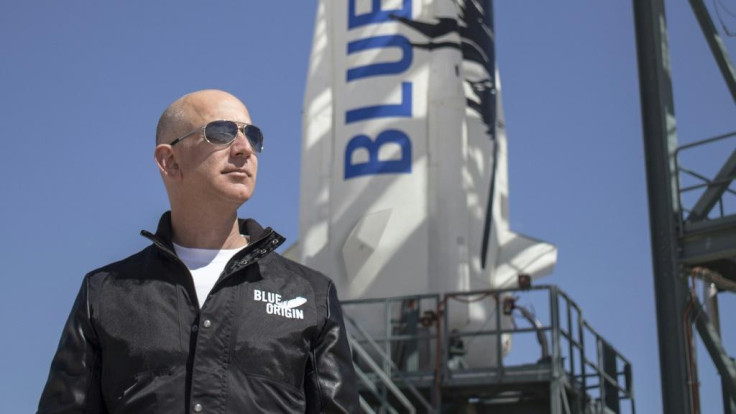
Against that backdrop, a Bezos-linked investment is both tempting and troubling. It promises unprecedented financial firepower at the cost of intertwining one of football's most defiantly socialist institutions with a figure whose politics, business record and personal alliances appear to cut hard in the other direction.
There is also the timing. As Clubbe pointed out, Liverpool's next season is just over a month away, and the rumour mill around Bezos risks overshadowing pre-season preparations. FSG, for their part, have been careful not to over-commit. People close to the talks told the Financial Times that a deal is far from certain, and the Premier League's ownership and directors' tests still loom over any agreement.
Liverpool FC, Bezos and Bhatia have all been approached for comment. Until they speak publicly or sign on the dotted line, this story remains a live negotiation rather than a done deal, and supporters are left to weigh an unpalatable choice between sticking with the status quo and inviting in money that may change the club more profoundly than any transfer ever could.
© Copyright IBTimes 2026. All rights reserved.